From Steel and Petrochemicals to Paper and Industrial Robots
"Technological Gap Narrows, Price Competitiveness Falls Behind"
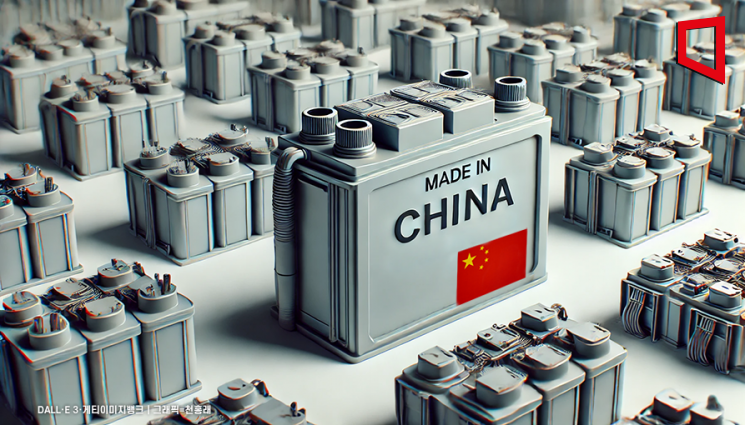
Industries are struggling as China and Japan, facing domestic demand slumps, engage in 'low-price dumping' by flooding the domestic market with surplus products. Domestic companies, ranging from steel and petrochemicals to paper and industrial robots, are responding by filing anti-dumping petitions.
The affected companies argue that these imports not only distort market prices by being sold at prices lower than domestic prices but also rapidly capture market share, threatening the industrial ecosystem. The problem is that the economic downturn in these countries is prolonged, and the technological gap compared to our products is narrowing, suggesting that this phenomenon will spread to other industrial sectors.
On the 10th, five domestic industrial robot companies, including HD Hyundai Robotics, submitted an anti-dumping petition to the Trade Commission of the Ministry of Trade, Industry and Energy against 4-axis or more vertical multi-joint industrial robots produced by Japanese and Chinese companies.
In the domestic industrial robot market, imported volumes surged from 9,080 units in 2021 to a provisional 13,445 units last year, with the market share of imported products rising from 75% in 2021 to 81% in 2023.
Domestic corrugated base paper companies such as Asia Paper are also planning to file anti-dumping petitions against Japanese paper companies Daio Paper and Oji Paper. Daio Paper and Oji Paper reportedly sell recycled corrugated base paper at over $500 per ton in Japan but sell it domestically at around $420 to $450 per ton.
Hyundai Steel applied for an anti-dumping investigation on Chinese and Japanese hot-rolled steel sheets to the Trade Commission last month. This follows the July application for an anti-dumping investigation on Chinese heavy plates, which is currently under investigation, and now they have again filed a petition concerning hot-rolled steel sheets.
According to the Korea Iron & Steel Association, among approximately 3.43 million tons of hot-rolled steel sheet imports from January to November this year, Chinese and Japanese products accounted for 1.53 million tons and 1.77 million tons respectively, making up 96.2% of total imports. These products are sold at prices up to about 30% lower than domestic products.

Recently, dumping imports of petroleum resins were recognized. On the 19th of last month, the Trade Commission of the Ministry of Trade, Industry and Energy ruled that there is a causal relationship between the dumping imports of petroleum resins from China and Taiwan and damage to the domestic industry, recommending the imposition of anti-dumping duties ranging from 4.45% to 18.52% to the Ministry of Economy and Finance.
Earlier, Kolon Industries filed an anti-dumping investigation, claiming damage caused by five Chinese companies and two Taiwanese companies supplying petroleum resins at low prices domestically. Kolon Industries estimated the dumping rates of Chinese and Taiwanese companies at 15.52% and 18.52%, respectively.
Dumping damage from imported products continues to occur. According to the Trade Commission, the number of anti-dumping damage investigation applications last year was 10, the highest in the past decade. Additionally, unfair trade practices such as intellectual property rights infringement reached 14 cases, the highest since 1992.
An industry official said, "The main reason imported products are rapidly spreading in the domestic market is their low price," adding, "Compared to domestic products, not only Japan but now even Chinese products have a small technological gap, so losing out on price competitiveness is a critical situation."
© The Asia Business Daily(www.asiae.co.kr). All rights reserved.
![Clutching a Stolen Dior Bag, Saying "I Hate Being Poor but Real"... The Grotesque Con of a "Human Knockoff" [Slate]](https://cwcontent.asiae.co.kr/asiaresize/183/2026021902243444107_1771435474.jpg)
















