Securities Firms Originally Facing 'Partial Business Suspension' by FSS
Sanctions Eased to 'Institutional Warning' in SFC's Revised Proposal
Fines Also Expected to Decrease to Around 27 Billion KRW
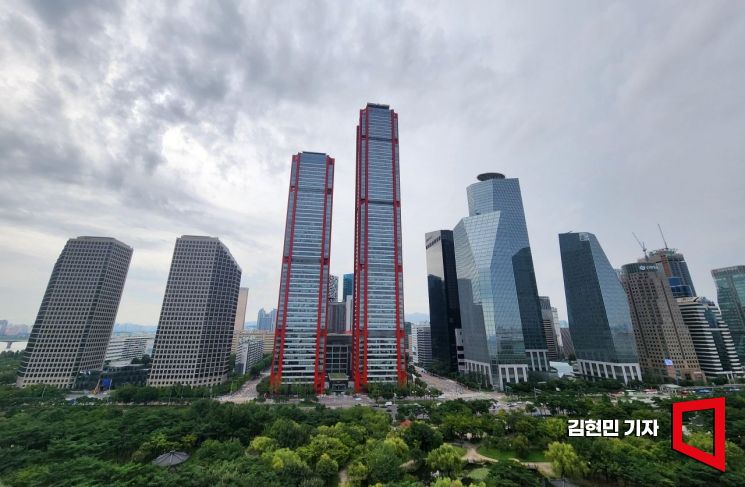
The severity of sanctions against nine securities firms involved in the revolving use of bond-type wrap accounts and specific money trusts (wraps and trusts), triggered by the 'Legoland incident,' was reduced after passing through the Financial Services Commission's Securities and Futures Commission (SFC). Except for Kyobo Securities, the disciplinary measures for the other eight firms were downgraded by two levels from the original Financial Supervisory Service (FSS) proposal to an 'institutional warning.' The fines are also expected to decrease from the original 35 billion KRW to 27 billion KRW.
According to financial authorities and the financial investment industry on the 13th, the Financial Services Commission will hold a Subcommittee on Agenda Review on the 20th of this month to discuss the SFC's revised proposal on the disciplinary measures related to the improper operation of wrap and trust accounts by nine securities firms (KB, Mirae Asset, Korea Investment, NH Investment, Hana, Kyobo, Eugene Investment, Yuanta, SK). The agenda reviewed by the subcommittee will be finally discussed and approved at the regular meeting of the Financial Services Commission.
The SFC's revised proposal lowered the sanction level by two steps from the FSS original plan, which included 'partial business suspension,' to an 'institutional warning.' However, in the case of Kyobo Securities, the partial business suspension sanction was maintained. It is understood that aggravated punishment was unavoidable as funds were also used in the revolving of wrap and trust accounts. The SFC also reduced the fines. The SFC decided to reduce the fines from the approximately 35 billion KRW included in the FSS original proposal to around 27 billion KRW.
This decision reflected factors such as the fact that there was virtually no damage to general investors, and that losses were absorbed through proprietary accounts to prevent harm to third parties. It was also considered that suspending all nine firms' operations could negatively impact corporate financing through bonds in a challenging market environment.
Previously, the FSS Disciplinary Committee notified KB Securities, Hana Securities, Mirae Asset Securities, Eugene Investment & Securities, Korea Investment & Securities, Kyobo Securities, and Yuanta Securities of business suspensions ranging from three to six months. NH Investment & Securities received a one-month business suspension, and SK Securities received an institutional warning. Institutional sanctions are divided into five levels: institutional caution, institutional warning, corrective order, business suspension, and cancellation of registration/authorization. Sanctions from institutional warning and above are classified as severe disciplinary actions, which require approval from the Financial Services Commission's SFC. Financial companies receiving sanctions at or above the institutional warning level cannot obtain regulatory approval for new business ventures for at least one year.
The portfolio managers of the nine securities firms transferred profits and losses between customer accounts through illegal self-trading (revolving) while redeeming wrap and trust accounts after the 2022 Legoland incident. This was done to guarantee the returns of customers whose contracts had matured. Although the securities firms claimed during the explanation process that this was a 'business practice,' the FSS judged it as a clear violation of the Capital Markets Act.
Meanwhile, after detecting the improper operation of wrap and trust accounts, the Financial Services Commission strengthened consumer protection regulations. According to the amendments to the 'Enforcement Decree of the Capital Markets and Financial Investment Business Act' and the 'Financial Investment Business Regulations,' which took effect in November last year, financial investment firms must obtain prior consent from customers to make maturity mismatch investments through wrap and trust accounts. Additionally, financial investment firms entering into wrap and trust contracts are required to establish risk management standards. In cases of market condition changes such as interest rate fluctuations, financial investment products with maturities longer than the wrap and trust contract period must adjust their management methods to minimize investor losses.
© The Asia Business Daily(www.asiae.co.kr). All rights reserved.
![Clutching a Stolen Dior Bag, Saying "I Hate Being Poor but Real"... The Grotesque Con of a "Human Knockoff" [Slate]](https://cwcontent.asiae.co.kr/asiaresize/183/2026021902243444107_1771435474.jpg)















