"You May Need Treatment for Both Scars and Tattoos If You Tattoo Over Scarred Areas"
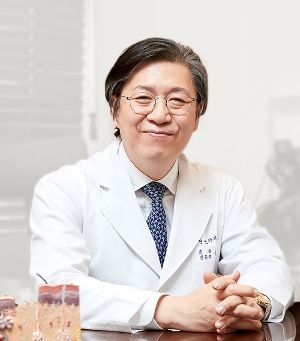 Kim Young-gu, Chief Director of Yonsei Star Dermatology Clinic Gangnam Branch. Yonsei Star Dermatology Clinic Gangnam Branch
Self-harm is perceived to occur only in a very small number of adolescents. This is because it is mainly known to affect children and adolescents who are victims of domestic and school violence, abuse, bullying, or those suffering from depression and anxiety disorders.
However, recently, patients with self-harm scars (hesitation marks) have been visiting hospitals due to factors other than the previously known risk factors. Excessive academic burden and exam stress are among these factors.
As competition for college entrance exams intensifies, there have been cases where children suffering from study-related stress since elementary school experience depression, anxiety disorders, and pressure, eventually leading to self-harm. There are also cases of international students who, while studying abroad early, suffered from academic pressure and feelings of isolation.
The number of adolescents experiencing depression and stress continues to rise. According to the 2024 Youth Health Behavior Survey by the Korea Disease Control and Prevention Agency, 32.5% of female students and 23.1% of male students reported experiencing depression. The perceived stress rate was 49.9% for female students and 35.2% for male students.
However, the parental generation does not understand that psychological pressure, depression, and anxiety disorders caused by academic stress among today’s young people in their teens and twenties can lead to self-harm attempts.
As a result, some patients hide their self-harming behavior, delaying scar treatment. There are also cases of patients who have inflicted self-harm again on areas with existing scars, resulting in double scarring.
Experts recommend that self-harm scars, like other traumas, should receive appropriate treatment early on. Kim Young-gu, Chief Director of Yonsei Star Dermatology Clinic Gangnam Branch, explained, "There have been cases where children hide their self-harm from their parents and use ointments or moist bandages found on personal SNS (social networking services) before eventually visiting a hospital. These methods do not fundamentally prevent or improve self-harm scars."
Kim added, "There are also frequent cases where patients tattoo over their scars to hide them, but later both the self-harm scars and tattoos may need treatment. It is advisable to receive scar treatment with laser methods such as the pinhole technique at an appropriate time."
The pinhole method is gaining attention as a scar improvement technique. "Pinhole" means a small needle hole. This treatment uses a laser to create numerous small, regular holes from the skin surface to the dermis layer in the scar area, delivering strong energy to break up tangled collagen and other fibrous tissues, allowing them to be neatly rearranged.
Kim Young-gu and a domestic research team have been accumulating treatment results after presenting the pinhole method, which improves scars by creating needle-sized holes in the skin with a laser to neatly rearrange tangled collagen and fibrous tissues beneath the scar, at the European Academy of Dermatology and Venereology.
© The Asia Business Daily(www.asiae.co.kr). All rights reserved.
![Clutching a Stolen Dior Bag, Saying "I Hate Being Poor but Real"... The Grotesque Con of a "Human Knockoff" [Slate]](https://cwcontent.asiae.co.kr/asiaresize/183/2026021902243444107_1771435474.jpg)















