Following a sharp drop in UK government bond prices, the British pound has also shown a concurrent decline. Long-term government bonds have currently fallen to their lowest levels since 1998. As concerns grow that the turmoil caused by the mini-budget in the second half of 2022, which led to the downfall of former Prime Minister Liz Truss, could be repeated, the UK government has promptly moved to calm fears by pledging to adhere to fiscal rules.
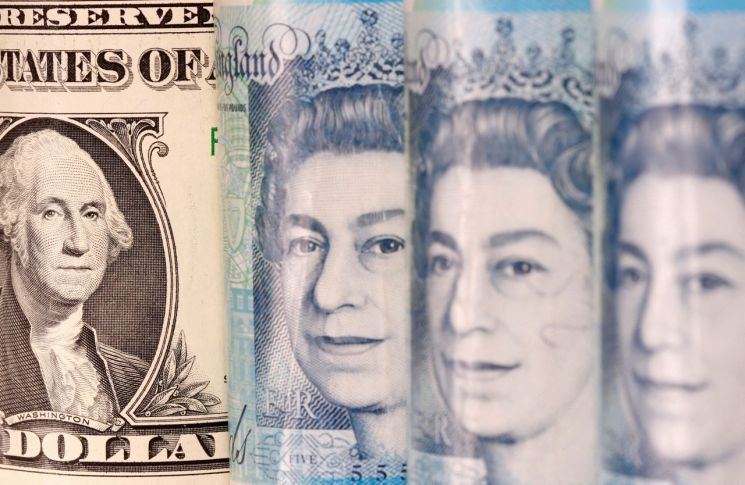
According to the daily Wall Street Journal (WSJ) and others, on the morning of the 9th (local time), the yield on 30-year UK government bonds surged to 5.455%, the highest level since 1998. The 10-year bond yield also rose to around 4.93%, breaking the highest mark since 2008 for the second consecutive day. Rising bond yields indicate falling prices. On the same day, the British pound also weakened. The pound exchange rate briefly dropped to around $1.223 during the session, marking its lowest level since November 2023. It later rebounded to about $1.23 but failed to reverse the recent downward trend.
Typically, when government bond yields rise (prices fall), the value of the pound increases. However, the simultaneous decline in both UK government bonds and the pound on this day suggests significant investor anxiety regarding the UK's fiscal and policy directions. Locally, this upward trend in bond yields has intensified since weak demand was confirmed at the 30-year bond auction on the 7th.
Matthew Ryan, Chief Market Strategist at Everi, described the volatility in UK government bonds as "extreme," adding, "Investors are particularly concerned about the UK economic outlook and public finances." Eva Sun-Wai, a manager at M&G Investments, also noted, "Confidence in the UK as an investment destination has deteriorated," evaluating that "(the sharp rise in bond yields alongside the fall in the pound) signals capital flight."
The WSJ pointed out that despite expectations of interest rate cuts in the US and other regions, recent bond sell-offs have been observed due to inflation concerns, but in the UK's case, it highlighted the possibility that these issues could translate into actual government fiscal problems. The outlet stated, "This raises the possibility that the Treasury may respond by increasing taxes or cutting fiscal spending to alleviate investor concerns," adding, "This would further slow the UK's fragile economic growth."
In particular, market participants are drawing comparisons to September 2022 during former Prime Minister Liz Truss's tenure, when a tax-cutting budget without fiscal backing caused the pound to plummet and bond yields to soar. That turmoil led to Truss resigning just 44 days after taking office and contributed to a change of government to the Labour Party in last year's early general election. Alejandro Cuadrado, an analyst at BBVA, expressed concern, saying, "As capital leaves the UK, bond yields rise and the pound's value falls," warning that "if fiscal concerns persist, it could become a mini version of the 'Truss moment.'" Bloomberg reported that "while the pace of bond selling has not triggered a sell-off as rapid as back then, investors are uneasy."
On the other hand, Jeffrey Yu, Chief Strategist at BNY, said, "While it is true that the UK has problems, comparing the situation suddenly to 2022 is excessive," and predicted that "the situation will bottom out." Nick Lees, a currency analyst at Monex Europe, suggested, "It is more likely an overreaction to the bond market turmoil that occurred during former Prime Minister Truss's time."
The government has also taken steps to calm the situation. Darren Jones, Deputy Chancellor at the UK Treasury, attending an emergency session of the UK Parliament, emphasized, "The UK government bond market continues to function in an orderly manner." He stressed adherence to fiscal rules, stating, "There should be no doubt that the government is committed to economic stability and sound public finances." Sarah Breeden, Deputy Governor of the Bank of England (BOE), also assessed at an event at the University of Edinburgh Business School that "the movements so far have been orderly." She added, "These reflect global factors from the US, Europe, and the UK," and said, "We will continue to monitor the situation."
ING forecasted that UK government bond yields are likely to continue rising due to factors such as entrenched inflation, concerns over fiscal spending, rising US government bond yields, and increased UK government bond issuance.
© The Asia Business Daily(www.asiae.co.kr). All rights reserved.
![Clutching a Stolen Dior Bag, Saying "I Hate Being Poor but Real"... The Grotesque Con of a "Human Knockoff" [Slate]](https://cwcontent.asiae.co.kr/asiaresize/183/2026021902243444107_1771435474.jpg)















