Forecast External Research Support Call for Papers
Mentioned Alongside Improvements in Differential Insurance Premium Rate System Evaluation
Active Evaluation Needed, Including Significant Increase in Internal Control Scoring
For Proper Assessment
"Utilization of Forecast's Exclusive Inspection Authority Also Necessary"
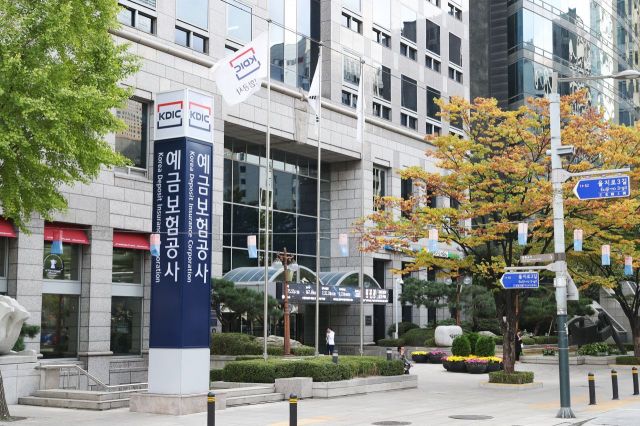
A study has emerged suggesting that the role of the Korea Deposit Insurance Corporation (KDIC) should be further expanded to strengthen internal controls within financial institutions. It is not only necessary to improve the evaluation indicators of the differential insurance premium system, which was created to encourage sound management of financial companies, but also to exercise the right to request data submission for proper evaluation, cultivate specialized personnel dedicated to evaluation tasks, and conduct joint inspections with the Financial Supervisory Service (FSS) as well as exercise the right to conduct independent inspections.
Seongbok Lee, Senior Research Fellow at the Korea Capital Market Institute, recently stated this in the externally supported research paper collection by KDIC titled “Measures to Strengthen Internal Controls of Financial Companies to Prevent Financial Failures.” Lee diagnosed that the fundamental cause of financial institution failures is usually the failure of internal controls within financial companies and emphasized the need to strengthen internal controls to prevent such failures. He first argued that the use of the differential insurance premium system, one of the deposit insurance schemes, should be expanded. This system evaluates management risks for each financial institution covered by deposit insurance and imposes different insurance premium rates accordingly. The purpose is to encourage sound management of financial companies by charging premiums commensurate with management risks. Lee said, “The internal control system must operate substantially and effectively, and to achieve this, the differential insurance premium system introduced by KDIC in 2014, which can provide economic incentives, should be utilized.”
He viewed that if insured financial institutions (those covered by deposit insurance) with well-established internal control systems are given reduced premiums to lower their cost burden, it would create incentives to strengthen internal controls. According to the current differential insurance premium system, the five major commercial banks (KB Kookmin, Shinhan, Hana, Woori, and NH Nonghyup) are estimated to have paid 144.1 billion KRW in premiums last year (calculated based on the average balance of regular deposits last year). Depending on the evaluation, a 10% discount is applied for grade 1, and a 10% surcharge for grade 5. The premium for each bank can differ by up to nearly 30 billion KRW depending on the grade.
Accordingly, he emphasized the need to revise the current evaluation model used to calculate differential insurance premiums. Lee pointed out, “The evaluation model for calculating premium rates is scored out of 100 points, but the internal control evaluation item is only allocated 4 points,” and added, “There is also a problem in that there are no additional points for proactive internal control activities by financial companies.” The improvement method he proposed for the evaluation approach is that the score allocated to the internal control evaluation item should be equal to the difference in the standard scores between the highest (grade 1) and lowest (grade 5) grades in the evaluation model. He argued that the allocation for internal control should be increased from the current level so that it can significantly influence the final grade that determines the premium rate. He also suggested that the entire internal control system should be evaluated on a 100-point scale, and the final score should be assigned by converting it into a weighted score within the evaluation model. He mentioned that the detailed evaluation indicators should be improved to focus less on the negative effects or outcomes of internal control failures and more on enabling substantive internal control activities.
Lee also believed that the effectiveness of evaluations must be enhanced to improve the evaluation model. He argued that KDIC should actively use its right to request data submission from financial companies to ensure proper evaluations. Additionally, he stated that it is necessary to prepare detailed evaluation indicator guidelines, cultivate specialized personnel dedicated to internal control evaluation tasks, and expand related organizations within risk departments by financial industry sector.
Furthermore, he suggested that the role and responsibility of KDIC should be expanded to ensure proper internal controls within financial companies. Based on the fact that KDIC can jointly participate in inspections conducted by financial authorities or request the authorities to conduct inspections under the Depositor Protection Act, he emphasized the active use of joint inspection and inspection request systems. He also proposed introducing a system that allows KDIC to independently inspect only the internal controls of financial companies.
KDIC has also been preparing improvements to the differential insurance premium system since last year. They are discussing a plan to subdivide the rating levels, which currently have five tiers, into seven tiers, with the aim of strengthening evaluation discrimination and enhancing risk management by financial companies. They are also discussing introducing new evaluation items related to climate risk and internal controls to accurately identify management risks and reflect them in the evaluation.
© The Asia Business Daily(www.asiae.co.kr). All rights reserved.
![Clutching a Stolen Dior Bag, Saying "I Hate Being Poor but Real"... The Grotesque Con of a "Human Knockoff" [Slate]](https://cwcontent.asiae.co.kr/asiaresize/183/2026021902243444107_1771435474.jpg)
















