President Yoon Suk-yeol's Martial Law Incident
Japanese Students Studying in Korea 'Embarrassed'
"Different from the Korean Image We Knew"
"Canceled Korea Travel Plans"
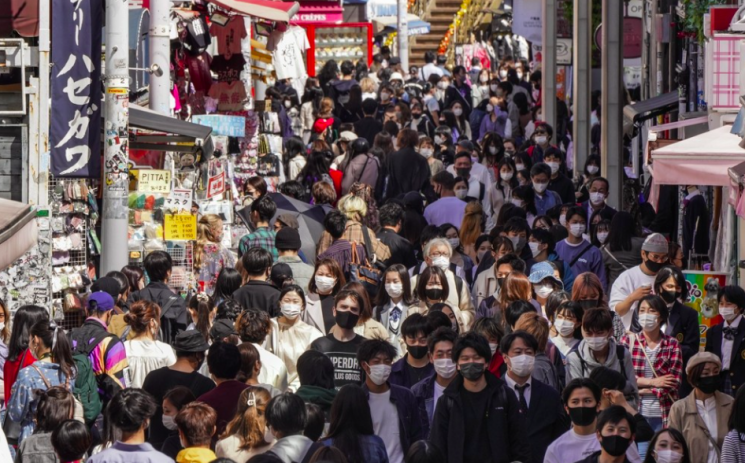
Following President Yoon Suk-yeol's declaration of emergency martial law on December 3, Japan is closely monitoring the situation in South Korea, and foreign media reports that unease is spreading among Japanese students studying Korea.
On the 8th (local time), Japan's Kyodo News reported on a public opinion survey conducted by Professor Kohari Susumu (Modern Korean and Joseon Society) at Shizuoka Prefectural University. The survey was carried out from the 6th to the 12th at Shizuoka Prefectural University and Keio University, targeting 88 students enrolled in Korean-related courses.
According to the report, the survey revealed reactions such as "The image of Korea I knew until now is different, which is perplexing." Respondents also expressed sentiments like "I am disappointed in President Yoon" and "I was worried that a war might break out." Some answers included "I had planned a trip to Korea during spring break but canceled it" and "I was impressed by the citizens opposing the martial law."
Professor Kohari, who conducted the survey, expressed concern, stating, "There is a common worry that if President Yoon, who was once understood in Japan, changes into an 'anti-Japan' president, the atmosphere between Korea and Japan might deteriorate."
Meanwhile, following the declaration of martial law, Japanese citizens are also paying close attention to the situation in Korea, and related debates are heating up. According to a recent Tokyo Shimbun report, the Korean martial law incident has sparked intense debate in Japan over the introduction of an 'emergency clause' that would concentrate government powers and restrict citizens' rights in emergencies. The ruling Liberal Democratic Party (LDP) defined large-scale disasters, armed attacks, and widespread infectious diseases as 'emergencies' in its constitutional amendment issue summary decided in September last year, allowing the government to issue emergency ordinances with the same effect as laws without parliamentary approval during emergencies.
Regarding this, Mizuho Fukushima, leader of the Social Democratic Party, wrote on her social media last month, "Both martial law and the LDP's emergency clause proposal destroy democracy by ignoring and attempting to abolish the parliament." On the other hand, the LDP and the second opposition party, Nippon Ishin no Kai, which support constitutional revision, advocate for the introduction of the emergency clause.
© The Asia Business Daily(www.asiae.co.kr). All rights reserved.
![Clutching a Stolen Dior Bag, Saying "I Hate Being Poor but Real"... The Grotesque Con of a "Human Knockoff" [Slate]](https://cwcontent.asiae.co.kr/asiaresize/183/2026021902243444107_1771435474.jpg)















