Building Core Infrastructure by Region... Realizing Extended Stays
Gwangyang City in Jeollanam-do has unveiled its 2025 Gwangyang Tourism Vision to become a global K-tourism city attracting ten million visitors, symbolized by the Year of the Blue Snake, which represents wisdom, change, and growth.
The city aims to create synergy by building core infrastructure in key areas such as Baegunsan, Gubongsan, and the Seomjingang River, and by securing growth engines through public-private collaboration, taking bold steps toward becoming a 'global tourism city.'
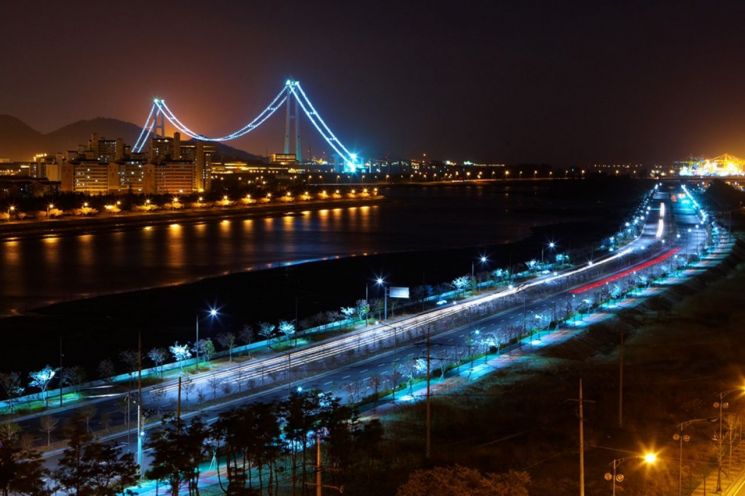 Gwangyang City has announced its 2025 tourism vision to realize a global K-tourism city attracting ten million tourists. Photo by Gwangyang City
In particular, the city plans to strengthen the integrated use of Gwangyang Bay’s unique and distinctive tourism resources, transforming Gwangyang into a stay-type tourism city where citizens enjoy daily life and tourists want to visit and stay.
▲ Accelerating the Construction of Core Tourism Infrastructure by Area
Gwangyang City plans to develop differentiated tourism projects that leverage the competitiveness of each area?Baegunsan, Gubongsan, and Seomjingang?to become a sustainable global tourism city attracting ten million visitors.
The Baegunsan area will be developed as a wellness tourism destination encompassing history, ecology, culture, and art, with projects such as the Doseon Guksa Cultural Tourism Belt, Forest Museum, Native Plant Garden, and Gwangyang-eup Media Art Tourism Landmark Project.
The Gubongsan area, centered around the Gubongsan Observatory, will be developed into a comprehensive mountain-type tourism and leisure destination for global visitors, featuring the Gwangyang Gubongsan Tourism Complex, Gwangyang Specialized Science Museum, Imagination Playground (a family-oriented children’s theme park), POSCO experiential sculptures, and the world’s longest Golden Suspension Bridge 770.
The Seomjingang area will create emotional and cultural spaces through projects such as the Jeonnam Regional Growth Strategy Project ‘Yoon Dongju’s Starlight Island in Seomjingang,’ the Southern Region Wide-area Tourism Development Plan ‘Artcation Tourism Stay,’ the Namdo Specialized Landscape Project ‘Starlight Naru Embracing Seomjingang,’ and the creation of Korea’s largest camping hub.
▲ Establishing a Brand Identity Reflecting Gwangyang’s Tourism Identity and Hosting Large-Scale Events
Gwangyang City will build tourism branding that reflects its identity and competitiveness and will continue to host large-scale events that attract global attention.
The city also envisions establishing Gwangyang’s tourism identity through the ‘Iron Art City’ project, which fuses iron and art, the development of infrastructure that encapsulates the value of Gwangyang tourism, the production of Maedori package goods and souvenirs, and the operation of pop-up stores.
Once new tourism facilities such as the Gubongsan Forest Campground and Gubongsan Experiential Sculptures are completed, the city plans to build strong branding through strategic events that will capture and leave a lasting impression on global audiences. Additionally, the Gwangyang Maehwa Festival, which has been steadily gaining attention through new initiatives, and the Gwangyang K-POP Festival, which has established itself as a popular tourism event, will be upgraded as killer content befitting their status as global festivals.
In particular, the city will foster stay-type tourism and seek solutions for revitalizing the local economy by launching the ‘Gwangyang Night & Light Festival,’ a city festival that adds emotional content to Gwangyang Bay’s emerging nighttime landscape?a key tourism keyword.
▲ Securing Sustainability through Strengthened Public-Private-Regional Collaboration and Resource Linkage
Gwangyang City is focusing its administrative capabilities on the successful progress of projects such as the Gwangyang Gubongsan Tourism Complex in cooperation with LF Resort Co., Ltd. and the Gwangyang Gubongsan Landmark Project (experiential sculptures) in partnership with POSCO.
With the goal of smoothly advancing the ‘Southern Region Wide-area Tourism Development Plan’?which develops tourism resources across five southern cities and provinces?the city plans to maximize synergy through ultra-regional collaboration. Gwangyang will also actively participate in the Southern Region Wide-area Tourism Promotion Project, where four cities and counties (Gwangyang, Gurye, Gokseong, and Hadong) are developing specialized Seomjingang Stay products, contributing to the creation of a wide-area tourism ecosystem.
Furthermore, in this local era where regional uniqueness and identity are crucial, the city will connect Gwangyang’s distinctive tourism resources, communicate with citizens and organizations, and make every effort to secure sustainability.
▲ Responding to Rapidly Changing Tourism Trends such as Digital Transformation and Strategic Promotion & Marketing
Gwangyang City is responding to the seismic changes in the travel ecosystem brought by digital transformation, such as the metaverse and smart tourism maps, enabling travelers to understand and enjoy destinations without the constraints of time and space.
In line with trends that emphasize experience and emotion, the city will continuously expose the slogan ‘Gwangyang Shining Day and Night’ and its BI (Brand Identity), which embody the value of Gwangyang tourism, to imprint the image of a tourism city. Seasonal and themed events will be held regularly, and Gwangyang Tourism SNS, Gwangyang City Tour, and Mobile Tourist Information Centers will be utilized to draw attention to Gwangyang tourism.
The city also plans to operate ‘G-Tourism Marketers’ using influential and impactful influencers to boost interest and awareness of Gwangyang’s tourism resources. Systematic and effective operation of tourist information centers and cultural tourism interpreters will ensure sustainable tourism readiness and help establish the image of a tourism city.
▲ Realizing an Inclusive Tourism Environment for All
As awareness of the right to travel spreads, the realization of tourism that everyone?including people with disabilities and the elderly?can enjoy is expanding. The city will implement a Happiness Travel Support Project for tourism-vulnerable groups aged six and older residing in Gwangyang, fostering a social atmosphere where all citizens live together harmoniously.
In addition, the city will provide a variety of travel support funds (incentives) for Yoon Dongju-themed tourism products, group tourists (domestic and international), and individual tourists. It will also enhance walking programs and create rest areas along the Namparang Trail Gwangyang Road, part of the Korea Dulle-gil, for walking travelers.
The city will continuously improve insufficient tourism infrastructure such as food and accommodation, replace and maintain outdated signage at tourist sites, and expand tourism capacity. At the same time, it will build governance among tourism stakeholders and foster a tourism mindset among all citizens, aiming to enhance the city’s image as a tourism destination through high-quality hospitality services.
Mayor Jung Inhwa of Gwangyang said, “Based on area-specific tourism projects in Baegunsan, Gubongsan, and Seomjingang, Gwangyang has been working tirelessly to respond to the rapidly changing tourism ecosystem and lead the fiercely competitive tourism market, with the goal of becoming a global tourism city attracting ten million visitors. Thanks to these efforts, Gwangyang is gaining attention as a promising tourism city, having been selected as a city good for travel, one of Korea Tourism’s Top 100, and one of the Top 10 Domestic Destinations to Watch.”
He added, “In the Year of the Blue Snake in 2025, based on the government’s long-term project ‘Southern Region Wide-area Tourism Development’ and the comprehensive tourism promotion plan that balances development and promotion as a key hub of the ‘ㅗ’-shaped tourism belt connecting the Seomjingang area, we will move beyond the trap of short-term achievements and steadily pursue stable and sustainable mid- to long-term projects, soaring to become a leading tourism hub in Korea, surpassing the Namhaean Namjung region.”
© The Asia Business Daily(www.asiae.co.kr). All rights reserved.
![Clutching a Stolen Dior Bag, Saying "I Hate Being Poor but Real"... The Grotesque Con of a "Human Knockoff" [Slate]](https://cwcontent.asiae.co.kr/asiaresize/183/2026021902243444107_1771435474.jpg)
















