Namgung In, Professor of Emergency Medicine at Ewha Womans University Mokdong Hospital
"Feels like the time when COVID-19 infection was unavoidable"
"Just act sensibly"
"Getting vaccinated is beneficial"
As the recent influenza (flu) outbreak rapidly spreads, Namgung In, a professor of emergency medicine at Ewha Womans University Mokdong Hospital, stated, "It feels like we are witnessing the last period when the entire nation could not avoid COVID-19 infection."
On the 7th, Professor Namgung said on his Facebook, "Everyone, from generally healthy individuals to the elderly, children, pregnant women, and cancer patients, is equally susceptible to the flu." He pointed out, "Flu typically spreads every winter when indoor activities increase and ventilation is poor. However, due to the pandemic's impact, viruses that had been dormant are now spreading all at once."
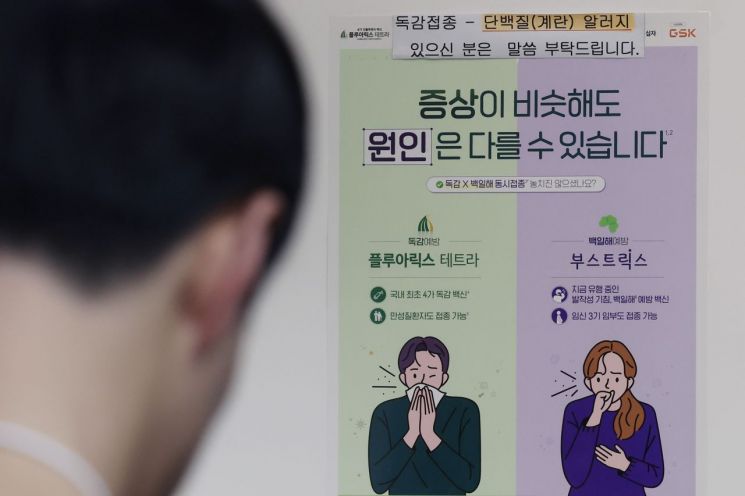 As influenza (flu) spreads on the largest scale in eight years, a poster related to flu vaccination is displayed at a clinic in Jongno-gu, Seoul, on the afternoon of the 7th. Photo by Yonhap News
He added, "All patients have severe symptoms. Half of the emergency room patients or phone inquiries are related to the flu," and "Many do not show typical symptoms." According to Professor Namgung, patients who complained of symptoms such as "My father cannot walk," "My grandmother had a stroke, but the strength in her left arm and leg has weakened," "My friend fainted," "It seems like a recurrent urinary tract infection," and "I am vomiting and have no energy at all" were all tested and found to have the flu.
Professor Namgung expressed concern, saying, "Especially, there has been an increase in patients visiting late at night with persistent fever. Compared to previous COVID-19 cases, progression to pneumonia or hospitalization is relatively rare. However, all respiratory viruses have the potential to worsen acutely." He added, "People in their thirties who were previously healthy are receiving ventilator treatment in intensive care units. Of course, hospitalizations among the elderly are also not uncommon."
He explained, "If there is hope, this flu is caused by strains that have circulated before. The outbreak may continue for a few more weeks but will improve over time. Therefore, there is no need to stop daily activities just because the flu is spreading now. Just act sensibly."
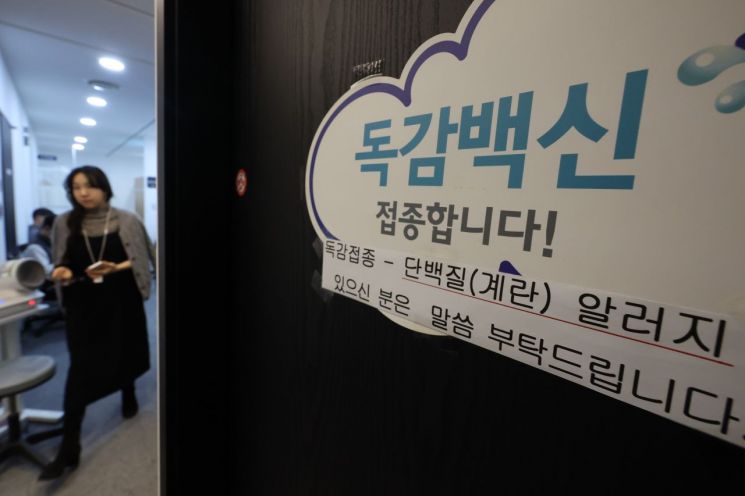 As influenza (flu) spreads on the largest scale in eight years, visitors at a clinic in Jongno-gu, Seoul, on the afternoon of the 7th are waiting for medical consultation and vaccination. Photo by Yonhap News
Furthermore, he urged, "The flu is a temporary viral infection in humans. Most people, including myself, will overcome the virus and regain health. So, manage your condition well, maintain hygiene as usual, drink warm water, get vaccinated, visit a hospital if symptoms appear, take medicine and rest until you recover, and if elderly people around you are in danger, seek help from medical staff."
When a netizen commented on the post, "If everyone was going to get infected anyway, why get vaccinated? It was unavoidable," Professor Namgung replied, "Vaccination reduces the probability of infection and lessens symptoms if infected. Getting vaccinated is definitely beneficial."
Meanwhile, as flu cases rapidly increase, especially among adolescents, the largest outbreak since 2016 is occurring. According to the Korea Disease Control and Prevention Agency, in the last week of 2024 (December 22?28), the influenza-like illness (ILI) rate, which indicates the number of suspected flu patients showing symptoms among 1,000 outpatients visiting 300 influenza sentinel surveillance medical institutions nationwide, was 73.9. This is a 136% increase from 31.3 per 1,000 patients one week earlier.
Compared to the ILI rates at the peak of previous flu seasons, this is the highest level since 2016, when it was 86.2. Last year it was 73.9, in 2023 it was 61.3, and in 2022 it was 60.7. During 2020 and 2021, when there was no flu outbreak due to COVID-19, the highest rates were 3.3 and 4.8, respectively.
© The Asia Business Daily(www.asiae.co.kr). All rights reserved.


















