Ahead of the General Election on the 23rd Next Month, Chancellor Scholz
"Interest in Securing Semiconductor Investment Despite Political Turmoil"
German Chancellor Olaf Scholz is reportedly courting Samsung Electronics to avoid falling behind in the semiconductor supremacy competition. Chancellor Scholz has promised to provide large-scale subsidies to global semiconductor companies in order to secure manufacturing facilities. It is reported that despite the significant political turmoil ahead of the general election on the 23rd of next month, he has expressed his determination to continue investing in the semiconductor industry, which he has carefully nurtured.
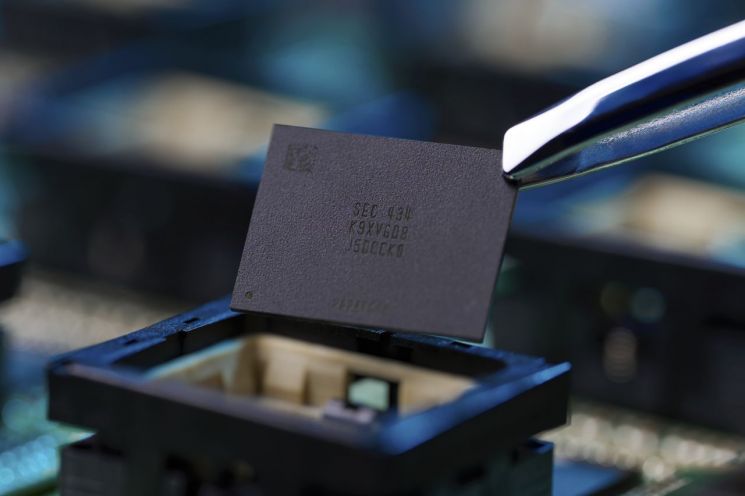
On the 7th (local time), Bloomberg News cited multiple sources within the German government, reporting that after Intel postponed its large-scale new factory construction investment plan in Germany last year due to financial reasons, Chancellor Scholz is seeking alternatives with hopes of transforming Germany into a semiconductor manufacturing hub. Bloomberg reported that a senior official mentioned Samsung Electronics as one of the alternatives, but also stated, "Samsung Electronics has never expressed interest in expanding production in Europe."
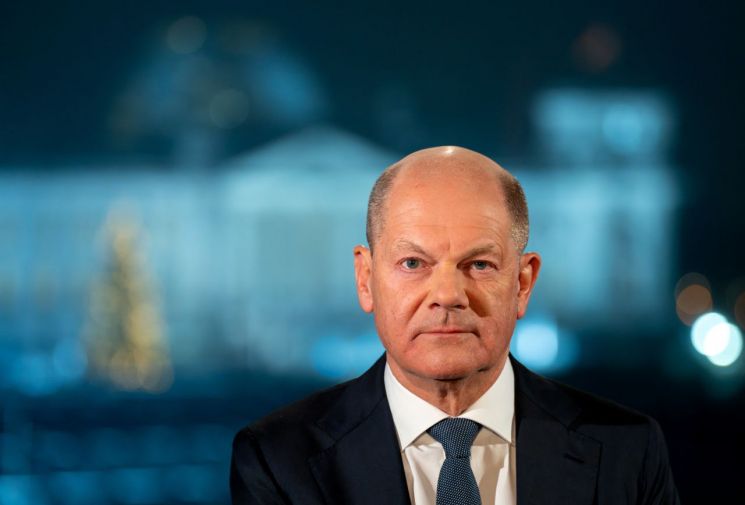
Since taking office in December 2021, Chancellor Scholz has been striving to expand semiconductor manufacturing facilities in Germany amid intensifying semiconductor supremacy wars centered around South Korea, Taiwan, the United States, and Japan. He collaborated with Ursula von der Leyen, President of the European Union (EU) Commission, to devise plans aimed at EU-wide subsidy support policies and also promised subsidies from the German government itself.
Based on this, Germany secured manufacturing facility investments from Taiwan's TSMC, the world's largest foundry (semiconductor contract manufacturing) company in 2023, and the U.S. semiconductor manufacturer Intel. Until the groundbreaking ceremony of TSMC's Dresden plant in August last year, attended by Chancellor Scholz and President von der Leyen, Scholz's dream seemed to be coming true.
However, a month later in September last year, Intel decided to postpone its investment plan in Germany. This was due to financial difficulties and the decision to spin off its foundry business unit. Intel had initially planned to invest 30 billion euros (approximately 45.3 trillion KRW) to build a semiconductor factory in Magdeburg, Germany, and was set to receive 10 billion euros in subsidies under the EU Semiconductor Support Act. Around the same time, U.S. semiconductor company Wolfspeed and German automotive parts manufacturer ZF Friedrichshafen AG also withdrew their investment plans in Germany.
The German government, facing the general election on the 23rd of next month, has not abandoned its semiconductor subsidy support policy. In November last year, Bloomberg reported, citing sources, that the German Ministry of Economic Affairs was preparing approximately 2 billion euros in new subsidies for the semiconductor industry. The government is reportedly willing to support 10 to 15 projects across the entire semiconductor supply chain, from wafer production to semiconductor assembly.
However, this situation is expected to depend on the election results. The German general election will be held on the 23rd of next month, and Chancellor Scholz is seeking re-election. Previously, Scholz collaborated with Vice Chancellor Robert Habeck of the Green Party and Minister Christian Lindner to devise subsidy support measures for semiconductor companies.
© The Asia Business Daily(www.asiae.co.kr). All rights reserved.


















