7 out of 10 Office Workers Say "Cafeteria is Essential"
However, Poor Meal Quality Can Backfire
Seven out of ten office workers prefer companies that have an 'in-house cafeteria,' drawing significant attention. As lunch prices soar due to the global rise in living costs, companies that provide meals on-site are gaining popularity.
The market research firm 'Embrain Trend Monitor' released the results of the '2024 Office Workers' Lunchtime and In-House Cafeteria Perception Survey' conducted on the 7th, targeting 1,000 office workers aged 19 to 59.
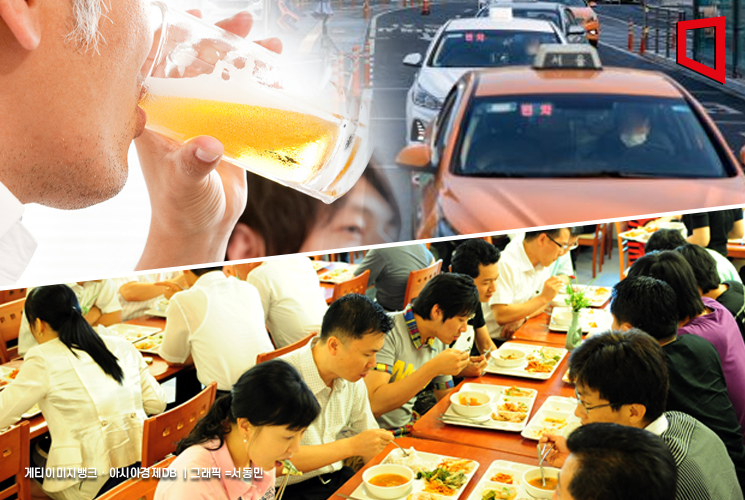
According to the survey, 76.7% of all respondents said that the in-house cafeteria is an 'important system for employee welfare.' Additionally, 65.5% considered it 'one of the essential welfare benefits.' This means that at least seven out of ten office workers prefer companies with in-house cafeterias.
There was also an opinion that in-house cafeterias positively influence the workplace atmosphere. 76.4% agreed that 'the quality of the in-house cafeteria directly affects employee happiness.'
However, providing a low-quality in-house cafeteria may have negative effects. Among respondents, 65.3% said, 'If the quality of the in-house cafeteria is not guaranteed, it is better not to have one,' and 62.4% agreed with the statement, 'I don't think it's necessary to go to an in-house cafeteria if the taste or quality of the food is poor.'
Regarding this, Embrain stated, "It was confirmed that the quality of meals provided is a more important factor than the mere existence of an in-house cafeteria in determining office workers' satisfaction and welfare effects." They also analyzed that "especially among office workers who have an in-house cafeteria at their workplace, satisfaction with menu variety and quality relative to portion size is evaluated relatively low."
They further predicted, "To maximize the effect of in-house cafeterias as a welfare benefit, improving the overall quality of meals could be the most crucial factor."
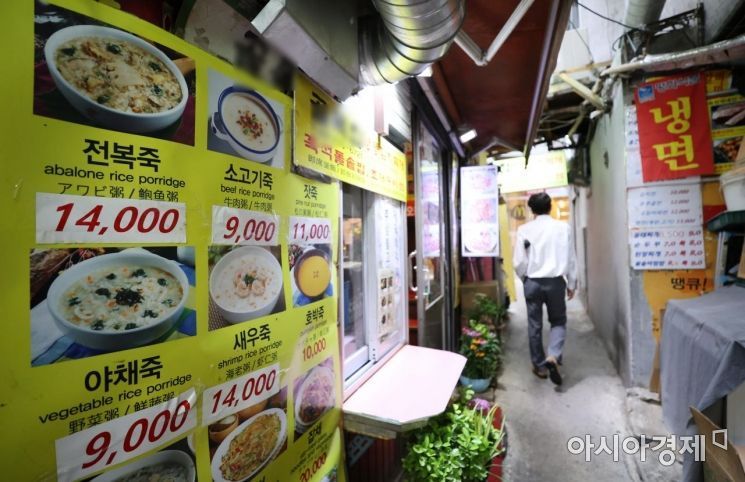
The growing popularity of in-house cafeterias among office workers appears to stem from the 'burden of meal expenses.' Eight out of ten respondents agreed that "as high prices continue, more office workers will feel the need for in-house cafeterias." Workers at companies without in-house cafeterias expressed discomfort due to "the burden of meal expenses" (44.7%) and "high prices at nearby restaurants" (41.5%).
The survey found that office workers currently spend an average of 9,000 to 10,000 KRW per day on lunch. Embrain pointed out, "This is a significantly increased level compared to previous surveys," suggesting that a considerable number of office workers feel burdened by meal costs.
© The Asia Business Daily(www.asiae.co.kr). All rights reserved.
![Clutching a Stolen Dior Bag, Saying "I Hate Being Poor but Real"... The Grotesque Con of a "Human Knockoff" [Slate]](https://cwcontent.asiae.co.kr/asiaresize/183/2026021902243444107_1771435474.jpg)
















