One Generation Only Experienced Zero Interest Rates
Investment Portfolios Are Too Risky
"We Must Accept New Common Sense"
The Bank of Japan ended the 'zero interest rate era' that lasted for decades by raising the benchmark interest rate to 0.25% in August last year. There are forecasts that the benchmark interest rate may be raised several more times this year. With this, Japan is entering an 'era with interest rates' for the first time in over 20 years.
Meanwhile, the younger generation in Japan in their 20s and 30s is bustling with activity. Those born between the 1990s and 2000s are literally the 'zero interest rate generation.' Having only experienced times when the benchmark interest rate was between 0.0% and 0.1%, they have no idea how to cope with an 'era with interest rates.'
Japan's 24 Years of 'Zero Interest Rates'
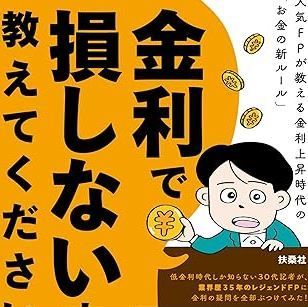 'New Common Sense of Money in the Era of Rising Interest Rates' is said to have been written for the Japanese MZ generation, who only experienced an era when the base interest rate was 0.0%. Photo by Amazon JP capture
On the 2nd (local time), a book attracted attention on Japanese social networking services (SNS) such as X. The title is The New Common Sense of Money in an Era of Rising Interest Rates. Written by Yasuhiko Fukano, a famous Japanese fund manager with 35 years of industry experience, this financial technology book targets 20s and 30s 'beginner investors' who have just started asset investment.
The reason this book gained attention is that it thoroughly explains the meaning of the 'benchmark interest rate,' which is very unfamiliar to Japan's younger generation. The Bank of Japan opened the zero interest rate era in March 2001 by freezing the call rate at 0%, and escaped from zero interest rates by raising it to 0.25% in July last year. In other words, the zero interest rate era has continued for about 24 years.
Currently, Japan's 20s and 30s generation were born and have only experienced the zero interest rate era, so many of them not only lack the idea that interest rates can rise but also have no concept of what interest rates are.
One Generation Only Experienced Zero Interest Rates... "Must Accept New Common Sense"
 The portfolio of Japan's MZ generation, who have only experienced zero interest rates, is criticized as 'too aggressive.' Irastoya
In fact, Mr. Fukano points out that the current investment portfolios of young Japanese are not suitable for an 'era with interest rates.'
At the end of last month, he published a typical portfolio of Japanese people in their 20s in a Japanese financial media article, which mostly consisted of stocks and cryptocurrencies. There were even many who engaged in foreign exchange trading (Forex·FX), known to be extremely risky for individual investors. Mr. Fukano pointed out, "Don't you think this is a 'too aggressive' portfolio in a rising interest rate phase?"
He advised, "In an era with interest rates, you need to know how to utilize interest rates," and "You should accept the 'new common sense' that you can increase the proportion of deposits and bond investments to protect the principal while growing assets, rather than focusing solely on stocks."
Japan Likely to Continue Raising Interest Rates This Year
Japan's zero interest rate policy lasted so long that it defined an entire generation. However, starting this year, Japan is likely to shift to a steep interest rate hike policy like other advanced countries. Earlier, Kazuo Ueda, Governor of the Bank of Japan, also stated, "If the economic and price situation continues to improve, it will be necessary to raise interest rates accordingly and adjust the degree of monetary easing."
Japan's major economic media, Nihon Keizai Shimbun (Nikkei), also analyzed in an article published on the 31st of last month that the possibility of additional interest rate hikes this year is high. In particular, ongoing yen depreciation, rising prices, and uncertainties such as the inauguration of Donald Trump's second administration on the 20th are reported as major concerns.
© The Asia Business Daily(www.asiae.co.kr). All rights reserved.
![Clutching a Stolen Dior Bag, Saying "I Hate Being Poor but Real"... The Grotesque Con of a "Human Knockoff" [Slate]](https://cwcontent.asiae.co.kr/asiaresize/183/2026021902243444107_1771435474.jpg)
















