Based on the Provisions of the Preliminary Appeal... Focus on Reconsideration by the Western District Court
The side of President Yoon Seok-yeol, against whom arrest and search warrants were issued on charges of rebellion and abuse of authority, filed an objection with the court on the 2nd to prevent the execution of the warrants. This is an additional response in the criminal procedure following the earlier application for a dispute over authority and a provisional injunction to suspend effectiveness filed with the Constitutional Court.
Yoon Gap-geun, the lawyer representing President Yoon, announced that he filed an objection with the Seoul Western District Court regarding the execution of the arrest and search warrants against President Yoon on the same day.
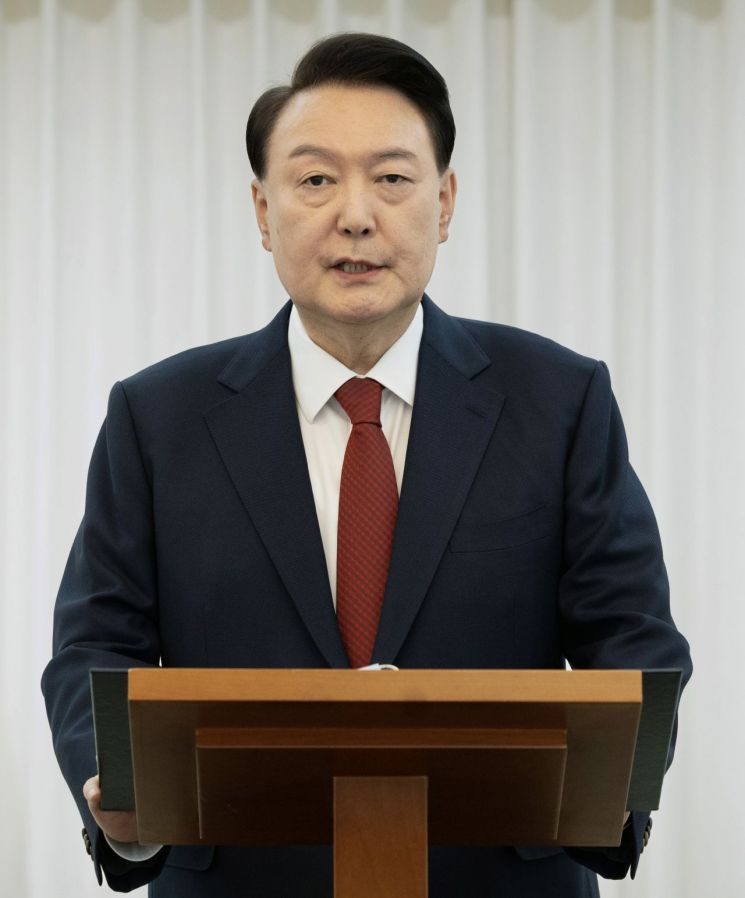
Lawyer Yoon Gap-geun, representing President Yoon, argued that the inclusion of the phrase "Articles 110 and 111 of the Criminal Procedure Act do not apply to this warrant" in the warrant obtained by the Corruption Investigation Office for High-ranking Officials (CIO) violates Article 12 of the Constitution. Article 12 of the Constitution stipulates that "no arrest, detention, search, or seizure shall be made except as provided by law," while Articles 110 and 111 of the Criminal Procedure Act prohibit the seizure or search of places and items containing military or official secrets without the consent of the person responsible.
Lawyer Yoon stated, "The President, as the Commander-in-Chief of the Armed Forces, inherently holds military secrets," and added, "The President's office, the official residence where the President stays, and the President's person, as places where the President performs official duties, cannot be searched or seized without the consent of the person responsible."
He continued, "Searches and seizures involving the President, which require military secrecy, fall under cases that harm the nation's significant interests, and thus consent can naturally be refused," and "Items possessed or stored by the President pertain to highly confidential official secrets, and their exposure would harm the nation's significant interests." He further stated, "The warrant issued with such conditions appended directly violates the provisions of Articles 110 and 111 of the Criminal Procedure Act," and "Since the court excluded the application of the law without any legal basis, the warrant is illegal and invalid."
Lawyer Yoon said, "In this exceptional case, where the fact of the arrest warrant request, the issuance of the warrant, and even the contents appended to the warrant have been disclosed, and the CIO has announced the execution of the warrant, the situation is considered as if the warrant has already been executed," and requested, "Even before execution, to ensure strict law enforcement, please prohibit the CIO from executing the warrant."
President Yoon's side cited provisions such as Article 417 of the Criminal Procedure Act, which states, "If there is an objection to the prosecutor's detention, seizure, or disposition regarding the return of seized items, a request for cancellation or modification of the disposition can be made to the competent court of the place where the duty is performed or the prosecutor's affiliated prosecution office," as reasons for the objection.
Considering that there is no "warrant appeal" system under the Criminal Procedure Act to appeal the issuance of an arrest warrant, it appears that they chose to challenge the CIO prosecutor's attempt to arrest itself rather than filing a quasi-appeal against the trial.
Additionally, President Yoon's legal team is arguing that the previous decision to issue the arrest and search warrants, which excluded the application of certain provisions of the Criminal Procedure Act, exceeded the "scope of authority allowed to judges by law."
However, looking only at the form of the objection, it is not a clearly defined method under the current Criminal Procedure Act. Under current law, an objection is a method of appealing a judgment within the same level of court, not an appeal to a higher court. While objection procedures are institutionalized in civil cases, they are not stipulated for criminal cases. In Korea, the method of appealing warrants involves reapplication if dismissed, and if issued, a separate procedure for reviewing appropriateness is provided.
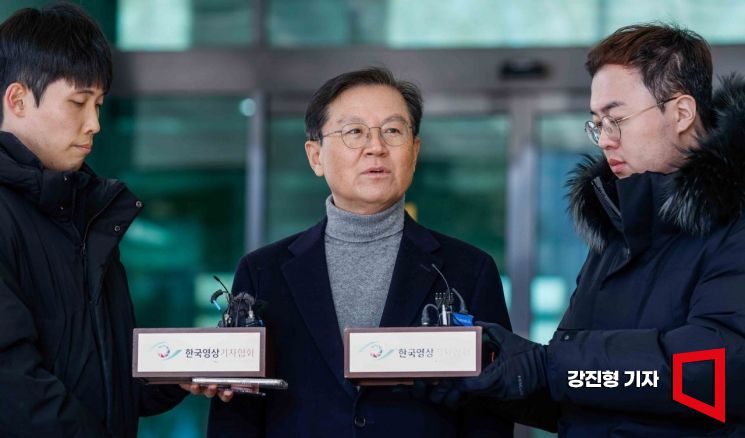 Yoon Gap-geun, lawyer for President Yoon Seok-yeol, is announcing the position regarding the arrest warrant issued against President Yoon on December 31 last year in front of the Seoul High Prosecutors' Office in Seocho-gu, Seoul.
Under the Korean legal system, which, like some foreign countries such as Germany, does not have a warrant appeal system, methods such as objection or appeal against warrants are not stipulated. Instead, the system operates by allowing reapplication if dismissed and a subsequent appropriateness review if issued.
However, considering the purpose of this objection and the seriousness of the matter, if the Seoul Western District Court finds that there is a "legal interest to make a judgment" and accepts it, the case is expected to be reviewed by Judge Lee Soon-hyung, the warrant-specialized chief judge who originally issued the arrest and search warrants, rather than by a higher court, other courts, or other judges or panels within the Western District Court. There is also an opinion that the objection filed by President Yoon's side based on Article 417 of the Criminal Procedure Act cannot be regarded as a request for suspension of execution of the arrest warrant.
Ultimately, attention is focused on how the court will rule on the request for reconsideration in the form of an objection, given that there is no method to appeal the warrant trial. The CIO requested arrest and search warrants after President Yoon failed to appear for three summonses, and on the 31st of last month, Judge Lee Soon-hyung of the Western District Court issued the warrants with the charge of rebellion as the main accusation. Immediately after the issuance of the warrants, President Yoon's side filed a dispute over authority with the Constitutional Court, arguing that the court's issuance of the warrant requested by the CIO, which lacks jurisdiction over rebellion charges, infringed on the President's authority, and also applied for a provisional injunction to suspend the warrant's effectiveness.
© The Asia Business Daily(www.asiae.co.kr). All rights reserved.
![Clutching a Stolen Dior Bag, Saying "I Hate Being Poor but Real"... The Grotesque Con of a "Human Knockoff" [Slate]](https://cwcontent.asiae.co.kr/asiaresize/183/2026021902243444107_1771435474.jpg)

















