Announcement of Electric Vehicle Purchase Subsidy Reform Plan
Performance Subsidy Reduced, Safety Subsidy Increased
Youth Receive 20% Discount on First Lifetime Purchase
Multi-Child Families Get Up to 4 Million KRW Discount
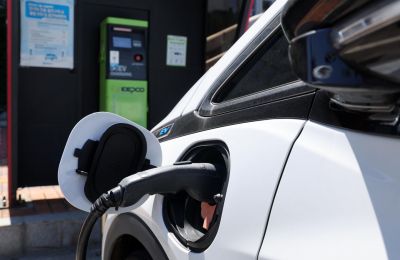
This year, the purchase subsidy for electric passenger cars has been finalized at a maximum of 5.8 million KRW, which is 700,000 KRW less than last year. Although the battery safety subsidy has increased, the performance subsidy has been significantly reduced. However, the incentive system has been restructured so that young people or multi-child families can receive even more subsidies.
On the 2nd, the Ministry of Environment announced that it will administratively notify the "2025 Electric Vehicle Purchase Subsidy Reform Plan (hereinafter referred to as the Subsidy Reform Plan)" containing these details.
According to the plan, this year’s electric passenger car subsidies can reach up to 5.8 million KRW for mid-to-large vehicles and 5.3 million KRW for small vehicles. Compared to last year, these amounts have decreased by 700,000 KRW and 200,000 KRW, respectively. For electric cargo vehicles, the subsidy for small vehicles slightly decreased from 11 million KRW to 10.5 million KRW, and for compact vehicles, from 8 million KRW to 7.7 million KRW. The subsidies for electric vans remain the same as last year: 70 million KRW for large and 50 million KRW for medium-sized vehicles.
Electric vehicle subsidies are calculated by adding performance, battery safety, technology, and various incentives. In this reform, the performance subsidy was cut. Last year, electric passenger cars received performance subsidies ranging from 2.5 million to 4 million KRW depending on size. However, this year, the performance subsidy has been significantly reduced to between 2 million and 3 million KRW. For electric cargo vehicles, the performance subsidy for small vehicles was adjusted from 11 million KRW to 10 million KRW, and for compact vehicles from 8 million KRW to 7.2 million KRW.
In particular, the subsidy differentiation based on single-charge driving range has been strengthened. Until now, electric passenger cars received reduced subsidies if the single-charge driving range was less than 400 km for mid-to-large vehicles or less than 250 km for compact and small vehicles. For mid-to-large vehicles, 68,000 KRW was deducted per 10 km, and for compact and small vehicles, 45,000 KRW per 10 km. This year, the thresholds have been expanded to less than 440 km and 280 km, respectively. The deduction amounts have also increased to 81,000 KRW and 50,000 KRW per 10 km, respectively.
Electric vans’ performance subsidies have also been restructured. For large electric vans, if the single-charge range is less than 500 km, the subsidy is reduced by 500,000 KRW per 10 km. If the range falls below 400 km, the deduction increases to 840,000 KRW per 10 km. For medium electric vans, the deduction threshold is below 400 km; if below 400 km, 300,000 KRW is deducted per 10 km, and if below 300 km, 660,000 KRW per 10 km is deducted.
Subsidy '0 KRW' if no insurance or charging information provided
On the other hand, the battery safety subsidy has been increased. Currently, electric passenger cars receive a 200,000 KRW subsidy when equipped with a vehicle information collection device. Starting this year, new subsidy items have been added: 200,000 KRW for providing battery status information and 100,000 KRW for the battery management system (BMS) alert function. A new 500,000 KRW subsidy for battery safety has been introduced for electric cargo vehicles, which previously had none. For electric vans, the regulation has been changed so that the BMS alert function must be installed to receive the safety subsidy.
However, new non-payment regulations have been added for all electric passenger cars, vans, and cargo vehicles. If the vehicle manufacturer is not enrolled in "product liability insurance" or does not provide charging amount information to fast or slow chargers, the subsidy will not be paid at all.
The subsidy amount will vary depending on the discount amount. For electric passenger cars, the more the manufacturer discounts the vehicle, the higher the subsidy. For electric passenger cars priced below 53 million KRW, 20% of the discount amount up to 5 million KRW is subsidized, and 40% of any discount exceeding 5 million KRW is subsidized. For vehicles priced below 45 million KRW, 20% of the discount up to 2 million KRW and 40% for discounts between 2 million and 4 million KRW are subsidized.
In some cases, additional discounts exceeding the maximum subsidy can be received. Young people purchasing an electric vehicle for the first time in their life receive an additional 20% subsidy. Previously, additional support was only available for low-income households. The multi-child family benefit, which was a 10% additional support, has been expanded to provide 1 million KRW for two children, 2 million KRW for three children, and 3 million KRW for four children. This measure was implemented early in November last year. Additionally, a 200,000 KRW additional subsidy is provided when a vehicle that cannot update the BMS is scrapped and a new electric vehicle is purchased. This subsidy will be paid only until the end of next year.
Electric vans have a separate subsidy for children’s school transportation. The subsidy unit price is higher than usual, with up to 115 million KRW for large vans and 100 million KRW for medium vans planned.
For electric cargo vehicles, considering their characteristics, an additional 10% support is provided for farmers. The subsidy, which was previously 20% of the vehicle price discount, has been expanded to 20?40%.
© The Asia Business Daily(www.asiae.co.kr). All rights reserved.
![Clutching a Stolen Dior Bag, Saying "I Hate Being Poor but Real"... The Grotesque Con of a "Human Knockoff" [Slate]](https://cwcontent.asiae.co.kr/asiaresize/183/2026021902243444107_1771435474.jpg)















