Over 4,500 Medical School Freshmen Confirmed... Medical Community's Effort to Block Increase Ultimately Fails
Government Pushes Ahead with Medical Reform Drive... Second Implementation Plan to Be Released Early This Month
The conflict between the medical community and the government triggered by the increase in medical school quotas has failed to find a resolution as the new year begins. With significant changes such as the election of the president of the Korean Medical Association and discussions on reducing medical school quotas expected early in the year, the government is also set to undertake a major reform of indemnity insurance and non-reimbursable medical services, which promote excessive medical expenses and avoidance of essential medical care, signaling further conflicts ahead.
According to the government and the medical community on the 2nd, the issue of increasing medical school quotas, which sparked the conflict, was settled as the regular admissions for the 2025 academic year began on the 31st of last month. The 105 unfilled early admission spots were transferred to regular admissions, meaning the medical community’s demand to halt the quota increase was not reflected at all. From now on, discussing the scale of quota increases for the 2026 academic year to find a compromise is the only available measure.

Discussion on Reducing Medical School Quotas in 2026 Amid Impeachment Crisis
The original plan announced by the government in February last year was to increase medical school admissions by 2,000 students annually for five years, adding up to 10,000 additional doctors by 2035. However, the Ministry of Health and Welfare has not disclosed any basis or related meeting minutes for this quota increase, and now with President Yoon Seok-yeol himself facing impeachment proceedings at the Constitutional Court, the policy’s momentum has effectively been lost.
In response to the medical community’s demands, the National Assembly, led by opposition parties, is pushing legislation to reduce medical school quotas for the 2026 academic year. The 'Amendment to the Act on Support for Healthcare Personnel,' jointly proposed by Democratic Party lawmakers Kang Seon-woo and Kim Yoon, establishes a Healthcare Workforce Supply and Demand Estimation Committee under the Health and Medical Workforce Policy Deliberation Committee of the Ministry of Health and Welfare. This committee will forecast supply and demand at national and regional levels and review and decide on appropriate numbers. Notably, Kang’s bill includes a special provision in the supplementary rules allowing quota reductions if social side effects from previous quota increases occur, making it possible to reduce the 1,509 medical school admissions increased in the 2025 academic year by the same amount the following year.
The medical community is pinning hopes on this quota reduction bill. If passed, it could provide justification to encourage residents and medical students who left hospitals and schools to return. However, there are concerns that the supply and demand estimation committee might become a mere rubber stamp for the Ministry of Health and Welfare. Ultimately, the government, medical community, and political circles need to narrow their differences, but resolving the conflict is expected to be difficult. Minister of Health and Welfare Cho Kyu-hong reiterated his intention to push medical reform in his New Year’s address, stating, "We will establish an excellent medical workforce training system that both the public and medical professionals can agree on and will radically innovate the medical delivery and compensation systems to ensure that regional and essential medical care are no longer neglected."
Draft for Non-Reimbursable Services and Indemnity Insurance Reform to Be Released Soon
The government aims to release the second phase of medical reform implementation measures as soon as possible, especially focusing on reforming indemnity insurance and non-reimbursable services, which are considered the most urgent issues to prevent the deterioration of the National Health Insurance finances. A public hearing to disclose the draft is planned soon.
Non-reimbursable services, which are not covered by National Health Insurance benefits, have so far been largely subject to doctors’ discretion regarding pricing and usage. As a result, they have been used as a means to generate revenue in private clinics. With the majority of the public subscribing to indemnity insurance that covers non-reimbursable services, this has led to side effects such as excessive medical treatment, rising indemnity insurance premiums, moral hazard, and the concentration of doctors in popular specialties while other specialties collapse. In particular, parallel treatment involving both reimbursable and non-reimbursable items has been a major cause of rapid deterioration in National Health Insurance finances. Since the government’s financial support to maintain emergency medical systems after last year’s medical crisis has already exceeded 2 trillion won, and with a significant reduction in the budget for supporting residents this year, urgent and drastic measures are needed to prevent further financial deterioration.
Currently, the government is expected to strengthen management of non-severe excessive non-reimbursable treatments such as manual therapy and reduce the coverage of indemnity insurance. Through re-evaluation of medical technologies, problematic non-reimbursable items will be phased out, and some items will be restricted from parallel treatment with reimbursable services by banning mixed treatment. If non-reimbursable service controls become a reality, private clinic groups, which will be directly affected financially, are expected to strongly oppose the measures. On the surface, they express concerns about the reduction of doctors’ treatment rights and limitations on patients’ medical choices, but since they have relied heavily on non-reimbursable services for most of their revenue, worsening business conditions are inevitable.
The government is also considering repurchasing first-generation indemnity insurance policies from subscribers and launching fifth-generation indemnity insurance with higher out-of-pocket rates. The repurchase would likely involve insurers providing certain compensation to first-generation policyholders to encourage switching to the new indemnity insurance. However, this approach faces high chances of subscriber backlash, and skepticism remains. A medical community official pointed out, "While we agree on the need to eliminate the vicious cycle that causes unnecessary medical use and ultimately leads to indemnity insurance premium increases, the current proposals are unfair as they reduce insurers’ losses while demanding sacrifices from hospitals and patients."
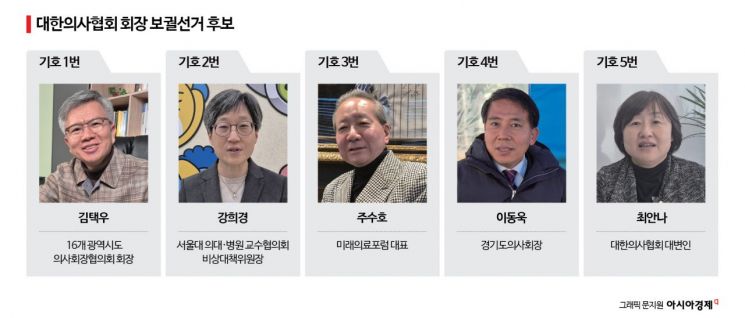
Meanwhile, voting to elect the new head of the Korean Medical Association, the only legally recognized medical organization, begins today. The newly elected president, chosen from five candidates, will bear the heavy responsibility of leading the direction of medical-government conflicts regarding the government’s second phase of medical reform implementation, the start of resident training in March, and the normalization of medical school classes.
© The Asia Business Daily(www.asiae.co.kr). All rights reserved.


















