Free for Children, Half Price for Youth and Seniors: Gwangju G-Pass
Integrated Care with Medical Services... Customized Support for AI Companies
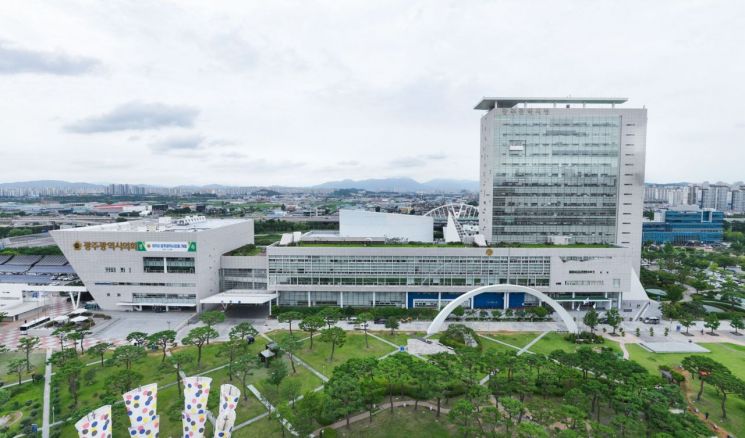
Gwangju City announced on the 31st that a total of 53 policies and systems across six sectors?including welfare and care, children and childcare, youth, economy and jobs?will be newly implemented or changed in 2025.
◇ Welfare and Care Sector
The Gwangju-daum Integrated Care, which first implemented the "Anyone Care" system nationwide, is set to undergo a transformation. By combining medical services with Gwangju-daum Integrated Care, "daily support" and "treatment/recovery" will be connected into a single system. The delivery system for medical care will be expanded through personalized medical management, joint management with the Public Health Center Integrated Care Health Center, the introduction of home-visit nursing and oral care services, and the connection of public health center home-visit medical activities, thereby broadening the scope of Gwangju-daum home-visit medical services.
A new Self-Sufficiency Success Support Fund will be introduced. If participants who have exited the welfare system through private employment, etc., maintain their status for six months, they will receive 500,000 KRW, and if they continue for an additional six months, they will receive an extra 1,000,000 KRW, totaling up to 1,500,000 KRW in self-sufficiency success funds.
The criteria for the Basic Livelihood Security System will be relaxed, and support will be expanded for daily care services, senior center rice subsidies, activity services for people with developmental disabilities, and disability pensions. The settlement allowance for those leaving sexual violence protection facilities will be increased from 5 million KRW to 10 million KRW.
◇ Children and Childcare Sector
A new tailored childbirth and childcare support project will be introduced for small business owners with long working hours, such as night and holiday operations. Small business owners residing in Gwangju who are raising children will receive up to 600,000 KRW per month for six months, totaling 3.6 million KRW, as support for using child care services. Single female self-employed individuals will receive up to 1 million KRW per month for three months, totaling up to 3 million KRW, as substitute labor costs.
To provide balanced meals and improve meal quality for children at risk of malnutrition, such as those from low-income or single-parent families, the meal support subsidy per child will be increased from 9,000 KRW to 9,500 KRW.
Support programs for child care services, foster child care subsidies, and child-rearing expenses for single-parent and adolescent single-parent families will be expanded. A new infant and toddler development consulting project will be launched for three-year-old children attending daycare centers in Gwangju to detect developmental delays or maladaptive behaviors early.
◇ Youth and Young Adult Sector
The Gwangju Youth Dream Allowance and activity support services will be further expanded. To help local unemployed youth enter society and become independent, job search activity support of 500,000 KRW per month will be provided for up to six months, totaling up to 3 million KRW, and job competency enhancement and company exploration programs will be expanded.
To create a vibrant city through youth exchange, the "Youth, How About Gwangju" program will offer opportunities for young people to visit Gwangju. During the "Three Days in Gwangju" program, participants can enjoy various programs and content that support experiences such as Gwangju's culture and festivals. Experience and accommodation costs will be supported accordingly.
In addition, the "Youth-tong" integrated information system will be operated to provide a comprehensive view of various youth policies, and support will be expanded for the Youth Growth Project, independence support allowances for youth leaving shelters, and menstrual product support for low-income female adolescents. New services will be introduced to support isolated and reclusive youth and high-risk groups for lonely deaths among young people.
◇ Economy and Jobs Sector
The number of incentives provided to small and medium-sized businesses implementing the "10 a.m. Start for Elementary School Parents" system will be greatly increased from 300 to 500 cases. The amount of support per case will also be raised from 374,000 KRW to 400,000 KRW per month.
To foster the artificial intelligence (AI) industry, a tailored support project for AI companies will be implemented. AI companies located in or attracted to Gwangju will receive support for the production, commercialization, and investment attraction of AI minimum viable products, as well as marketing, demonstration, market development, and certification tailored to each company.
The scale of the Gwangju-style Youth Job Mutual Aid Support Project and the Senior Job Support Project will be expanded. The payment rates for living wages, New Work Women Intern Support, and strategic crop direct payment will be increased. Seventy percent of the industrial accident insurance premiums (employee share) for delivery workers will be supported, and up to 2 million KRW in incentives will be provided to substitute workers employed by small and medium-sized enterprises in Gwangju.
◇ Living Infrastructure Sector
To improve public transportation convenience for Gwangju citizens and establish a city centered on public transportation, bicycles, and walking, the "Gwangju G-Pass" public transportation discount policy will be fully implemented. All Gwangju citizens will be able to use public transportation at a discounted (refunded) rate. Children will ride for free, youth at half price, and adults will receive an additional refund through the K-Pass, resulting in a 30% (youth) to 50% (seniors aged 65 and over) discount on public transportation fares.
A dedicated call taxi service will be introduced for seniors unfamiliar with digital culture to support their convenience of use.
In the medical sector, the support criteria for infertility treatment costs will be changed and expanded from per couple to per birth, and the pre-pregnancy health management support will be expanded from couples hoping to conceive to all men and women aged 20 to 49, with up to three essential fertility checkups covered.
The target for child oral health management support will be expanded to include first, second, fourth, and fifth grade elementary school students. The number of medical support institutions for independence patriots and their descendants will increase by seven to a total of twelve, covering all five autonomous districts.
Gwangju City will construct a new building at the Gwangju Animal Protection Center, operating two buildings directly to systematically and professionally protect lost and abandoned animals.
In the housing and education sector, the standard rental fee for housing benefits will be increased by about 5%, and the repair cost for maintenance benefits will be raised by about 29%, resulting in higher housing benefit payments.
The eligibility for lifelong education vouchers will be expanded to include people with disabilities, basic livelihood recipients aged 19 and over, and the near-poor, with the number of recipients greatly increasing from 250 to 2,788.
To nurture diverse local talents, the Bittgoeul Scholarship will be expanded to include academic encouragement, arts and sports talents, youth with migration backgrounds, and those who honor the city. The scholarship amounts will also be significantly increased to 500,000 KRW for middle school students, 800,000 KRW for high school students, and 2 million KRW for university students, helping to close the education welfare gap and support the dreams and futures of outstanding local talents.
◇ General Administration Sector
On weekends and holidays, the lawn plaza, commemorative tree hill, rose garden, and the first-floor citizen hall inside and outside City Hall will be opened as wedding venues. Venue rental is free, and usage fees are minimized to cost price: 10,000 KRW per day for outdoor facilities, and 10,000 KRW per hour for the indoor citizen hall.
The honor allowance for national merit recipients and veterans will be expanded and increased. Non-combat disabled veterans will be newly included as recipients, and the monthly payment will increase from 50,000 KRW to 65,000 KRW. The honor allowance for general veterans, previously 100,000 KRW (ages 65-79) and 130,000 KRW (age 80 and above), will be raised to 115,000 KRW and 155,000 KRW, respectively.
The integrated cultural voucher (Culture Nuri Card) support will be increased from 130,000 KRW to 140,000 KRW per year. To revitalize local commercial districts, the ratio of non-residential (commercial) use in mixed-use buildings within commercial areas will be relaxed from 15% to 10% of the total floor area. Administrative procedures for citizen convenience, such as the implementation of the one-stop service for registration license tax and the promotion of the integrated review system for redevelopment projects, will be simplified.
Jeon Eunok, Director of Policy Planning, stated, "As these policies and systems are closely related to daily life, we ask for the citizens' keen interest," adding, "For more details on eligibility or implementation schedules, please refer to the announcements on the Gwangju City website."
© The Asia Business Daily(www.asiae.co.kr). All rights reserved.
![Clutching a Stolen Dior Bag, Saying "I Hate Being Poor but Real"... The Grotesque Con of a "Human Knockoff" [Slate]](https://cwcontent.asiae.co.kr/asiaresize/183/2026021902243444107_1771435474.jpg)















