National Housing Transactions Down 13.2%
Unsold Units Post-Completion Increase for 16 Months
Housing Permits Sluggish... "Will Improve"
Due to loan regulations, apartment transactions in Seoul have decreased for four consecutive months. As transactions in Seoul, the metropolitan area, and other regions have slowed, the nationwide housing transaction volume fell by 13.2% compared to the previous month. Meanwhile, post-construction unsold units classified as malignant recorded the highest number in 4 years and 4 months.
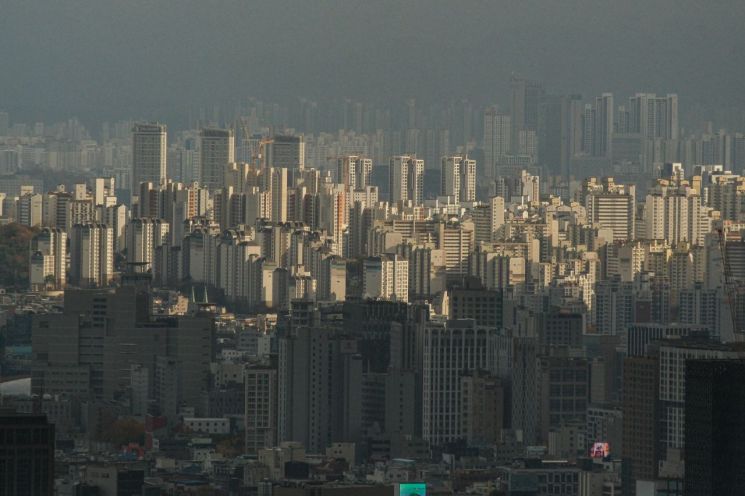
According to the 'November Housing Statistics' released by the Ministry of Land, Infrastructure and Transport on the 31st, the number of apartment transactions in Seoul last month (based on the reporting date) was 3,773, down 5.7% from the previous month (4,000). This marks a decline for four consecutive months since July.
The Ministry analyzed that the decrease in transaction volume is due to weakened expectations of housing price increases caused by strengthened loan regulations. Seoul apartment transactions increased for seven consecutive months from December last year (1,790) to July this year (9,518). However, after the government began enforcing loan regulations in August, the number dropped to 7,609, then fell further to 4,951 in September when the second stage of the Debt Service Ratio (DSR) stress test was applied, and last month it fell to the 3,000 range.
As a result, the total housing transactions in Seoul, including apartments, surpassed 10,000 units for the first time in 2 years and 11 months in July but collapsed within two months. The numbers continued to decline with 8,206 in September, 7,164 in October, and 6,803 in November.
Previously, regions outside Seoul that had seen an increase in housing transactions in October also turned to a decline. Last month, housing transactions in other regions totaled 27,337, down 13.4% from the previous month (31,568). Nationwide, housing transactions (49,114) decreased by 13.2% in one month.
Nationwide monthly rental and lease transactions totaled 191,172, down 9.5% from the previous month (211,218). Lease transactions (79,892) decreased by 12.6%, and monthly rent transactions (111,280) decreased by 7.1%. From January to November this year, the share of monthly rent in rental transactions was 57.4%, up 2.6 percentage points compared to the same period last year.
As of the end of November, nationwide unsold housing units (65,146 households) have decreased for five consecutive months. While the metropolitan area (14,494 households) increased by 3.9% compared to the previous month, other regions (50,652 households) decreased by 2.4%.
However, post-construction unsold housing units nationwide increased by 337 units (1.8%) to 18,644 households in one month. This number has been rising for 16 consecutive months since August last year. It is also the highest figure in 4 years and 4 months since July 2020 (18,560 households).
The increase in post-construction unsold units was notable in Daegu, Gyeongbuk, and Seoul. Malignant unsold units in Daegu rose by 233 units from 1,579 in October to 1,812 in November. During the same period, Seoul increased by 80 units from 523 to 603. The region with the most post-construction unsold units nationwide last month was Jeonnam with 2,452 households.
Meanwhile, housing supply indicators showed a sluggish trend in permits, which are leading indicators.
Last month, nationwide housing permits totaled 28,344 households, down 0.6% from the same month last year (28,519 households). The cumulative total from January to November was 273,121 households, 17.6% less than the same period last year (331,263 households). Apartment permits decreased by 15.5%, and non-apartment permits such as villas decreased by 29.6%. However, the Ministry of Land, Infrastructure and Transport stated, "Considering public housing (over 130,000 households) currently undergoing final administrative procedures and usual trends, total permits this year are expected to improve compared to last year's performance (429,000 households)."
Housing starts were 21,717 households, down 37.5% from the same month last year (34,738 households) due to the base effect. However, cumulative housing starts from January to November were 239,894 households, up 21.4% from the same period last year (197,611 households). Sales (based on approvals) and completions increased by 37.2% and 10.4%, respectively, compared to the same month last year. On a cumulative basis from January to November, sales reached 211,726 households, up 29.5% from the same period last year (163,509 households). Completions also increased by 4.9% to 403,908 households compared to last year (384,891 households).
© The Asia Business Daily(www.asiae.co.kr). All rights reserved.

















