Refusal to Comply with 3rd Appearance Request by Public Corruption Investigation Office
Majority Opinion: 'Requirements Met' for Issuance
Potential Conflict with Security Office Remains
No Legal Grounds to Block Enforcement
The Joint Investigation Headquarters (Joint Headquarters), composed of the High-ranking Officials' Crime Investigation Unit (HOCI) and the police, filed an arrest warrant request against President Yoon Seok-yeol at the Seoul Western District Court at midnight on the 30th. With the arrest warrant request becoming a reality after President Yoon failed to comply with the HOCI's third summons, the investigation into the martial law incident has reached a critical turning point.
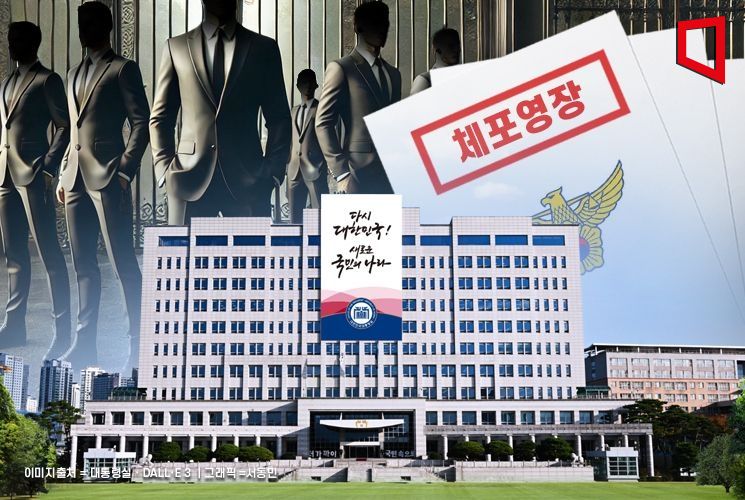
Arrest Warrant Request? ... Conditions for Issuance 'Met'
The request for an arrest warrant against a sitting president is an unprecedented event in constitutional history. Previously, the HOCI requested President Yoon to appear three times on charges of leading a rebellion and abuse of authority to obstruct the exercise of rights, but the president's side did not respond at all. They also did not submit any separate absence justification or lawyer appointment notice.
If a suspect fails to comply with a summons from investigative authorities without justifiable reasons, an arrest warrant can be requested and issued by the court to forcibly secure the suspect's custody. An arrest warrant is issued when there is 'substantial reason to suspect the suspect has committed a crime' and 'when the suspect does not respond or is likely not to respond to the summons without justifiable reasons.'
In the indictment against former Minister of National Defense Kim Yong-hyun, who was previously prosecuted for involvement in important tasks related to rebellion, it was stated that President Yoon ordered, "Break down the door and pull them out even if you have to shoot." This contains evidence of disrupting the constitutional order. Since the basic charges have been substantiated and President Yoon did not comply with the three prior summons, the HOCI judged that the conditions for issuing an arrest warrant have been met.
HOCI Has No Jurisdiction Over Rebellion Investigation? ... Less Persuasive
President Yoon's side argues that the HOCI does not have investigative authority over rebellion charges. The current HOCI Act does not include rebellion as a subject of investigation. However, it allows investigation of crimes directly related and recognized during the investigation process. Based on this provision, the HOCI is investigating rebellion charges as crimes recognized during the investigation of abuse of authority.
During the previous investigation, the court effectively recognized the legitimacy of the HOCI's rebellion investigation. The court issued an arrest warrant requested by the HOCI against former Intelligence Commander Moon Sang-ho on charges of involvement in important tasks related to rebellion. The prosecution, which also does not have direct jurisdiction over rebellion charges, similarly arrested and indicted former Minister Kim on charges of involvement in important tasks related to rebellion and abuse of authority. When issuing the arrest warrant, the court stated that "it is judged to be within the scope of crimes that the prosecutor can initiate investigation."
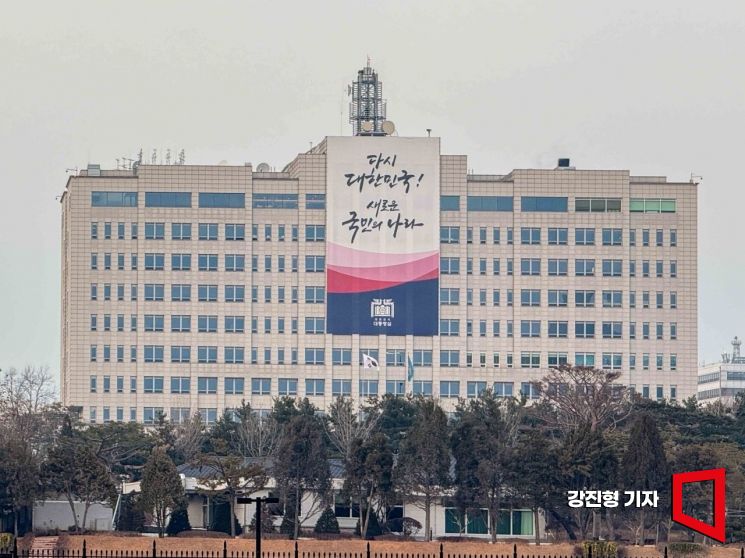
What If the Presidential Security Service Blocks? ... Obstruction of Official Duties
Even if the arrest warrant is issued, there remains a possibility of conflict with the Presidential Security Service during its execution. The Security Service has already previously blocked the execution of search warrants on the police at the presidential office, residence, and private quarters. According to the Criminal Procedure Act, the consent of the person in charge is required for searches of places demanding official or military secrecy. However, there is no basis to block the execution of an arrest warrant. If such obstruction occurs, it constitutes the crime of obstruction of official duties. Especially, if the obstruction is carried out by a group or by force of many people, it constitutes special obstruction of official duties. The penalty for special obstruction of official duties is increased by 50%.
Oh Dong-woon, head of the HOCI, said, "The execution of arrest and detention warrants cannot be obstructed on grounds of official secrets," and added, "We will send an official letter to the Presidential Security Service warning that special obstruction of official duties and abuse of authority to obstruct the exercise of rights may be established in the name of the HOCI chief."
© The Asia Business Daily(www.asiae.co.kr). All rights reserved.
![Clutching a Stolen Dior Bag, Saying "I Hate Being Poor but Real"... The Grotesque Con of a "Human Knockoff" [Slate]](https://cwcontent.asiae.co.kr/asiaresize/183/2026021902243444107_1771435474.jpg)

















