Muheop, 'Prospects and Implications of Tax Reform under the New US Trump Administration' Report
Federal Corporate Tax 21%→20%
US Manufacturing Firms Aim for Reduction up to 15%
The next Trump administration is expected to pursue tax reforms, including corporate tax cuts, focused on domestic manufacturing companies, prompting calls for Korean companies investing in the U.S. to pay close attention.
According to the report titled "Prospects and Implications of Tax Reform under the New U.S. Trump Administration," published on the 30th by the Korea International Trade Association (KITA) Institute for International Trade and Commerce, President-elect Trump is likely to promote manufacturing investment activation through tax reforms centered on extending the "Tax Cuts and Jobs Act (TCJA)" implemented during his first term and lowering the federal corporate tax rate. In particular, with the Republican Party controlling both the House and Senate, there is a high possibility that the pace of tax reform efforts will accelerate. The TCJA (Tax Cuts and Jobs Act) was a 2017 tax reform measure under Trump’s first administration, including provisions for reducing corporate and individual income tax rates.
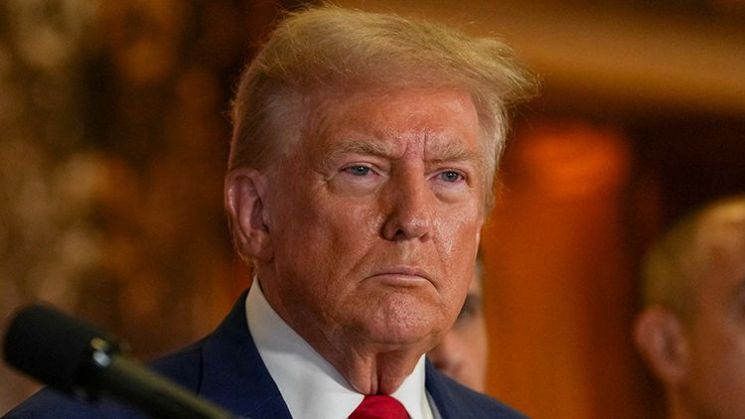
During his campaign, President-elect Trump pledged to reduce the federal corporate tax rate from the current 21% to 20%, a 1 percentage point cut, and to implement additional tax cuts for U.S.-based manufacturing companies, potentially lowering their rate to as low as 15%. However, the criteria for what qualifies as manufacturing within the U.S. are expected to be similar to the "Domestic Production Activities Deduction (DPAD)" that was abolished with the enactment of the TCJA during Trump’s first term, but have not yet been concretely defined, which could cause confusion among companies. The DPAD (Domestic Production Activities Deduction) provided up to a 9% tax credit on income generated from production, construction, and development activities within the U.S.
The report also forecasts that alongside corporate tax cuts, revisions to the TCJA are likely to extend or make permanent existing tax benefits such as bonus depreciation. Originally, the TCJA was passed using the Budget Reconciliation Process, which required that long-term fiscal goals not be undermined, so many tax cut provisions were set to expire. However, with Trump’s re-election, there is potential for these provisions to be extended or made permanent before expiration. Nonetheless, some Republican lawmakers have expressed concerns about the fiscal deficit, and since the composition of standing committees differs from the first term, the revision process may face difficulties.
On the other hand, legislation on digital taxes and a global minimum tax is expected to be unlikely in the near term within the U.S. The Republican Party has opposed the introduction of digital taxes at the OECD level, viewing them as a surrender of tax sovereignty and discrimination against American companies. Instead, the Trump administration is expected to pursue independent tax reforms related to international taxation, which could weaken the international tax cooperation framework involving over 140 countries over the past decade.
Kang Geum-yoon, Senior Researcher at the Korea International Trade Association, stated, "With the Republican Party controlling both chambers, the likelihood of realizing Trump’s tax cut pledges has increased. Tax cut policies such as corporate tax reductions could partially alleviate uncertainties surrounding subsidy policies under the Inflation Reduction Act (IRA), which have yet to be concretely defined. Therefore, not only companies already invested in the U.S. but also those considering future investments need to carefully consider tax reforms when formulating their business strategies."
© The Asia Business Daily(www.asiae.co.kr). All rights reserved.
![Clutching a Stolen Dior Bag, Saying "I Hate Being Poor but Real"... The Grotesque Con of a "Human Knockoff" [Slate]](https://cwcontent.asiae.co.kr/asiaresize/183/2026021902243444107_1771435474.jpg)















