Yoon Orders Parliament Blockade and Control of the National Election Commission
Former Minister of National Defense Kim Yong-hyun, who is accused of proposing martial law to President Yoon Suk-yeol and leading the situation, has been brought to trial.
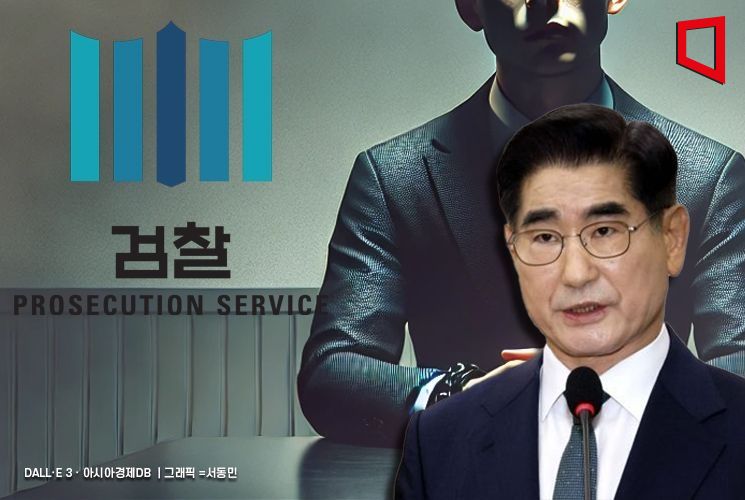
The Special Investigation Headquarters for Martial Law under the prosecution (headed by Park Se-hyun, Chief Prosecutor of Seoul High Prosecutors' Office) announced on the 27th that Kim, the former minister, was arrested and indicted on charges of engaging in important duties related to rebellion and abuse of authority obstructing the exercise of rights. Kim is accused of conspiring with President Yoon by proposing an unconstitutional and illegal declaration of martial law to the president and ordering martial law commanders to deploy forces to the National Assembly and the Central Election Commission (CEC), thereby leading a rebellion.
'Night of Martial Law' under Yoon's orders... Orders to block the National Assembly and seize the CEC
According to the prosecution's investigation, after the declaration of martial law on the night of the 3rd, Kim, following President Yoon’s orders, issued directives to the military command to prevent the National Assembly from passing a resolution to lift martial law.
First, through Park An-soo, appointed as the martial law commander and Chief of Staff of the Army, Kim requested Police Commissioner General Jo Ji-ho to "reinforce police at the National Assembly and block access to the National Assembly in accordance with the proclamation order." Additionally, he instructed Lee Jin-woo, Commander of the Capital Defense Command, to block the National Assembly to prevent the passage of the resolution demanding the lifting of martial law.
Even after the National Assembly passed the resolution to lift martial law at around 1:03 a.m. on the 4th, Kim, under President Yoon’s orders, repeatedly called Commander Lee, asking, "Why can't we enter the plenary session hall? Why is it not allowed?" and ordered the enforcement of these directives.
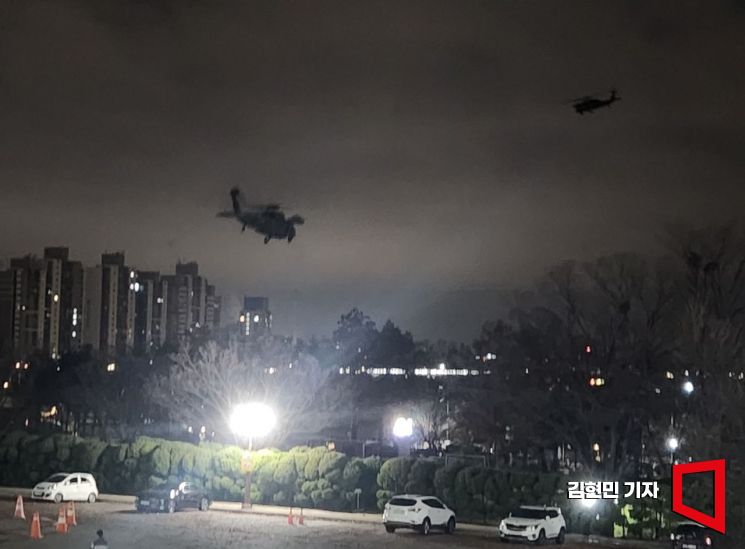 Since the declaration of martial law on the 4th, military helicopters have been flying over the main building of the National Assembly. Photo by Kim Hyun-min
The prosecution also viewed Kim as playing a leading role in deploying elite special forces to the National Assembly. Kim ordered Special Warfare Commander Kwak Jong-geun to dispatch special forces troops from the presidential office reception room. He also said, "Prevent the number of lawmakers from reaching 150," and "Open the door, go inside, and take the lawmakers out."
Furthermore, to block the National Assembly’s resolution, Kim instructed Yeo In-hyung, Commander of the Defense Counterintelligence Command, to arrest the three key figures: National Assembly Speaker Woo Won-shik, Democratic Party leader Lee Jae-myung, and People Power Party leader Han Dong-hoon. The prosecution confirmed that Commander Yeo relayed this order to the head of the counterintelligence investigation unit.
Kim also actively issued orders to the military command regarding the occupation of the CEC and seizure of servers. He instructed Commander Yeo, Intelligence Commanders Moon Sang-ho and former Commander No Sang-won to seize the CEC and secure electronic data. Subsequently, intelligence troops took control of the CEC immediately after the declaration of martial law, followed by counterintelligence and special forces troops attempting to remove servers.
Prosecution: "Recognized as an act to disrupt the constitutional order"
The prosecution judged that this martial law incident constitutes an act aimed at disrupting the constitutional order, i.e., the crime of rebellion. Specifically, they cited President Yoon’s unconstitutional and illegal declaration of martial law, mobilization of armed military and police to block the National Assembly, and attempts to arrest and detain lawmakers and CEC staff without warrants.
They also confirmed the intent to mobilize military and police forces to prevent the National Assembly’s resolution to lift martial law, neutralize the National Assembly, and establish a separate emergency legislative body. This corresponds to acts that made it impossible for the National Assembly, lawmakers, and the CEC?institutions established by the Constitution?to exercise their authority.
Moreover, the prosecution viewed these acts as constituting a "riot," a requirement for the crime of rebellion under criminal law. The deployment of numerous armed martial law troops and police disrupted peace in areas including Yeouido and Gwacheon, violated the principle of warrant requirement, and attempted to seize constitutional institutions, thus amounting to inciting a riot. The start of the riot was determined to be the time when orders were given to deploy troops and police were mobilized to control access to the National Assembly.
The prosecution found that President Yoon had discussed martial law with Kim multiple times since at least March of this year, and that practical preparations began in November.
© The Asia Business Daily(www.asiae.co.kr). All rights reserved.
![Clutching a Stolen Dior Bag, Saying "I Hate Being Poor but Real"... The Grotesque Con of a "Human Knockoff" [Slate]](https://cwcontent.asiae.co.kr/asiaresize/183/2026021902243444107_1771435474.jpg)

















