Active Small-Capital Startups Among Youth Like Bungeoppang Street Vendors
Popular Marketing Reflecting MZ Generation Characteristics
Changing Perceptions of Street Vendors and Employment Challenges as Background
Kim (26), whom we met in Yangcheon-gu, Seoul, said this while skillfully putting red bean paste and custard cream into the dough and baking Bungeoppang. He smiled and said, "There's nothing special, but thankfully, many regular customers have come, and sometimes there is a line extending to the back at closing time."
There were customers waiting even before the first Bungeoppang was fully baked. Kim, who has been selling Bungeoppang since 2019, said, "I started it once before getting a job after graduating from university, and I have been doing it ever since," adding, "I want to try working at a company too, but the advantage of working hard for six months and resting for six months is really big."
 SNS account operated by Jeong Sang-yeop (21), who runs a Bungeoppang street stall in Dongdaemun-gu, Seoul. He promotes his business by posting content such as adding ingredients requested by customers or creating coupons. Provided by Jeong.
Recently, small-capital startups have emerged as a new livelihood item for the MZ generation (a term combining Millennials and Generation Z). Traditionally considered a livelihood business mainly for middle-aged and older people, street stalls have now become businesses with various purposes and forms among young people. The appeal to young people lies in the ability to freely adjust working hours and use the time to do other work or prepare for their dreams.
A representative of a Bungeoppang franchise company explained, "Recently, inquiries have come more from college students and younger generations than from older age groups," adding, "Because of the low initial cost and almost no risk of loss, the risk burden is low. Also, unlike in the past when street stalls were common, now they operate by renting private spaces in front of restaurants or cafes, so the perception has changed a lot."
Jung Sang-yeop (21), a student at Seoul National University of Science and Technology, started selling in October after his military discharge to take on a new challenge. He increased sales through various methods such as holding events using social networking services (SNS) and adding ingredients upon customer requests. Jung said, "I wanted to start a business, and the timing was right. It seemed like a good opportunity to try without big risks, so I started," adding, "Rather than just selling, I operated by properly setting up a logo and store concept to create a brand."
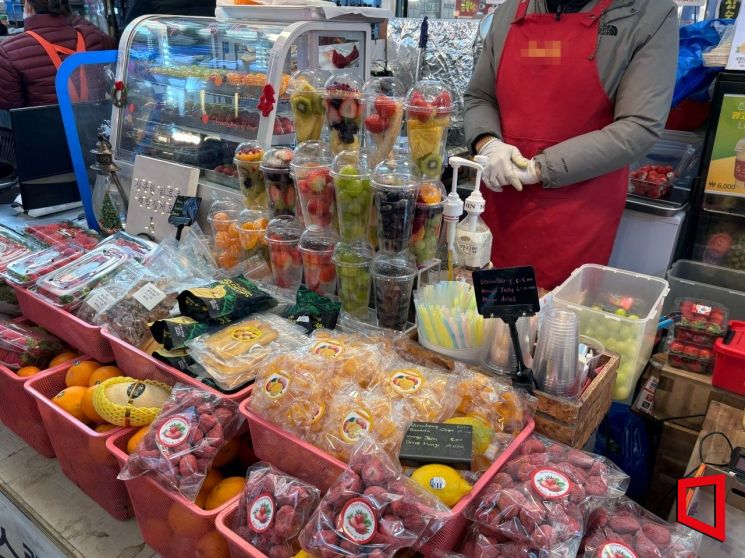 A fruit juice store operated by Kim Mo (34) at Gwangjang Market, Jongno-gu, Seoul. Photo by Yeom Da-yeon
Shim Seung-hoo (27), who sells Bungeoppang in Jinju, Gyeongnam, also said, "After trying various jobs, I wanted to earn money independently rather than working under someone, so I started a Bungeoppang street stall last month," adding, "The initial capital is almost zero, which is an advantage of Bungeoppang business. I was able to start under the condition of exclusive supply of ingredients from a franchise company."
Shim added, "There is a gas flame, so the upper body is fine, but the lower body is exposed and really cold. Also, if there is a demolition order or complaints, I have to stop selling, which is a difficulty," but added, "Although it's not a lot of money, I place orders, sell, and settle accounts all by myself from start to finish, so I think I am gaining good experience."
Moreover, there are more and more 'young bosses' operating stores in markets. Kim (34), who runs a fruit juice store in Gwangjang Market, Jongno-gu, Seoul, said, "I felt unsatisfied with my salary and overall aspects while working at a company, so I started selling at Gwangjang Market last year," adding, "There are difficulties, but it's more fun and better than when I worked at a company, so I am satisfied."
Hwang (63), who runs a snack bar in Gwangjang Market, said, "Nowadays, young generations operate stores directly and help their families, so they are often seen in the market," adding, "Maybe because it's hard to find a job and the economy is tough, but the world seems to be changing a lot."
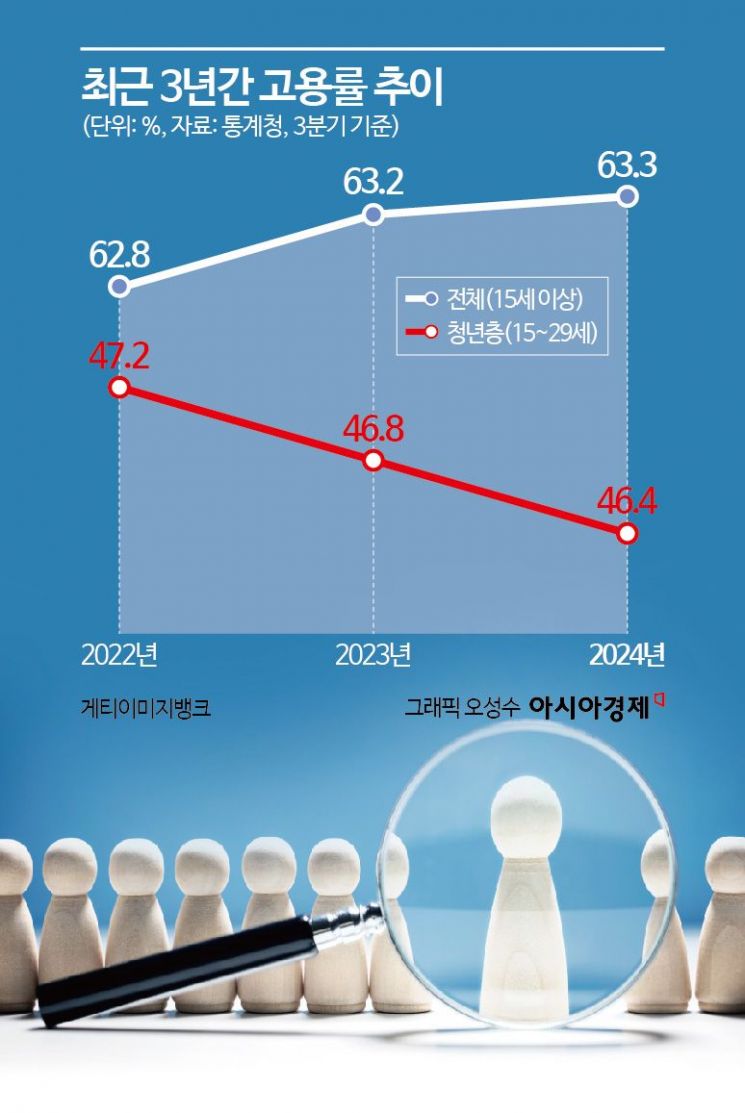
This phenomenon is interpreted as a reflection of the changing perception of street stalls among young people and the ongoing reality of employment difficulties. In fact, the employment rate of young people continues to decline. According to the Economically Active Population Survey by Statistics Korea, the employment rate of young people in the third quarter of this year is 46.4%. While the overall population's employment rate has increased for three consecutive years, the employment rate of young people has steadily decreased, making the younger generation inevitably feel the 'employment cold wave.'
Professor Gu Jeong-woo of the Department of Sociology at Sungkyunkwan University said, "In a situation where it is difficult for young people to find jobs and there is an economic recession, businesses like Bungeoppang stalls or market street stalls always have demand, so it is positive that the younger generation, with their sensitivity, is entering these businesses," adding, "Opening a street stall and becoming a small business owner is something anyone can do regardless of gender or age, so there is no need to have prejudice or preconceptions."
© The Asia Business Daily(www.asiae.co.kr). All rights reserved.
![Clutching a Stolen Dior Bag, Saying "I Hate Being Poor but Real"... The Grotesque Con of a "Human Knockoff" [Slate]](https://cwcontent.asiae.co.kr/asiaresize/183/2026021902243444107_1771435474.jpg)


















