Gwangju City, Gyeonggi Province (Mayor Bang Se-hwan) is facing calls for urgent expansion and supplementation of related regulations after being excluded from the special disaster area declaration despite suffering massive damage from a record-breaking heavy snowfall at the end of November.
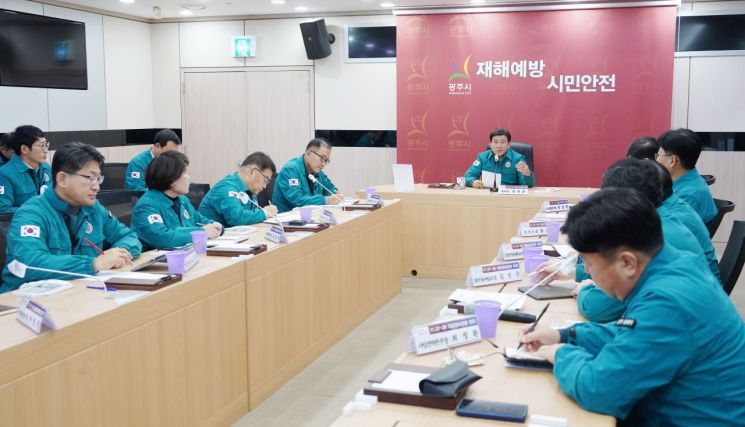 Gwangju City suffered enormous damage from record-breaking heavy snowfall at the end of November but was excluded from the special disaster area declaration, raising urgent calls for the expansion and supplementation of related regulations. Photo by Gyeonggi Gwangju City
According to the city on the 27th, from 10 p.m. on November 26 to 7 a.m. on November 28, Gwangju experienced 43.7 cm of heavy snowfall. This was the second highest snowfall amount in Gyeonggi Province after Yongin City, resulting in a total property damage of 39.536 billion KRW in Gwangju.
Detailed damage includes 4.22 billion KRW to agricultural and forestry facilities, 636 million KRW to forest facilities, 166 million KRW to housing, 4 million KRW to public facilities, 25.666 billion KRW to factories, and 8.841 billion KRW to small business owners. Notably, damage to factories and small business owners accounted for 87.28% of the total damage in Gwangju.
Accordingly, the city requested the government to designate the area as a special disaster zone but was excluded under current regulations.
Under the current "Regulations on the Standards for Burden of Relief and Restoration Costs for Natural Disasters," damage amounts to factories and small business owners are excluded from calculation.
As a result, the damage amount in Gwangju was confirmed to be 5.03 billion KRW, which does not meet the national treasury support standard of 5.7 billion KRW required for the special disaster area declaration.
This outcome has increased dissatisfaction among residents, and the city is making multifaceted efforts to expand and supplement the regulations.
Gwangju City plans to propose amendments to the regulations to Gyeonggi Province and the government, and will continuously request expansion of the regulations through the Gyeonggi Province Mayors and Governors Council and nationwide local government meetings. Additionally, cooperation with local members of the National Assembly will be strengthened to work on institutional improvements.
Mayor Bang Se-hwan said, “As Gwangju is a mixed urban-rural city with many factory-dense areas, the damage ratio to factories and small business owners is high, but under current regulations, these amounts are excluded from calculation, resulting in exclusion from the special disaster area declaration. Although it is regrettable that the comprehensive consideration of the special disaster area declaration criteria was not reflected, we will prepare multifaceted measures to ensure that residents affected by the exclusion from the special disaster area do not suffer disadvantages.”
Meanwhile, on the 18th, the government declared Yeoju City, Pyeongtaek City, Yongin City, Icheon City, Anseong City, Hwaseong City, and Eumseong County in Chungbuk as special disaster areas and began swift recovery and support efforts.
© The Asia Business Daily(www.asiae.co.kr). All rights reserved.
![Clutching a Stolen Dior Bag, Saying "I Hate Being Poor but Real"... The Grotesque Con of a "Human Knockoff" [Slate]](https://cwcontent.asiae.co.kr/asiaresize/183/2026021902243444107_1771435474.jpg)















