8 out of 10 People Say "It Feels Empty Without Kimchi on the Table"
Proportion of Kimjang Families Drops from 41% in 2010 to 17% This Year
High Demand for Ready-Made Products Among Small Households and Older Adults
"Difficult to Store and Annoying... Also Burdened by Kimjang Costs"
Koreans' love for kimchi remains strong, but the perception that it is better to buy kimchi from the market rather than making it at home is expanding. Additionally, the soaring prices of kimjang ingredients have increased the economic burden associated with making kimchi itself.
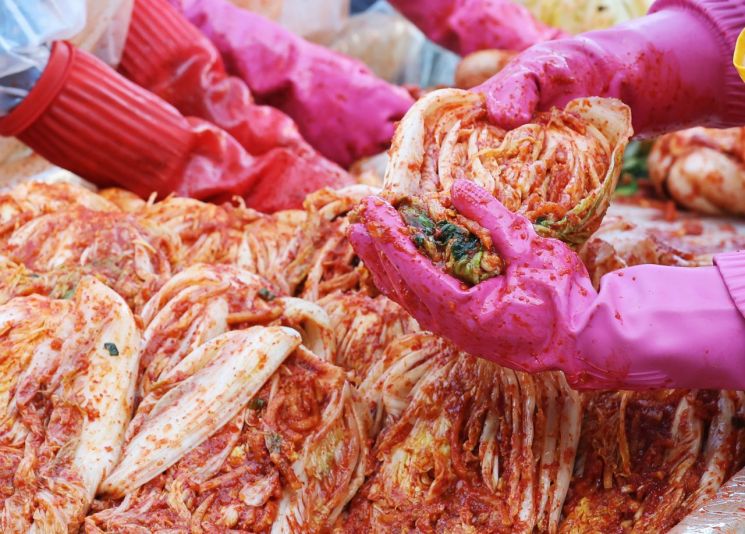
According to the "2024 Kimjang and Winter Preparation Survey" conducted on the 28th by market research firm Embrain, targeting 1,000 married women aged 30 to 59 nationwide who have been married for over a year, 75.4% of respondents said, "I feel empty if there is no kimchi on the table." The perception that "As a Korean, one must eat kimchi (65.4%)" was also high, reflecting an attitude that regards kimchi as an essential side dish representing Korea's tradition and identity.
However, more than half of respondents agreed with statements such as "Who makes kimjang these days? (58.1%)" and "It seems that many households no longer eat kimchi at home these days (52.7%)," indicating that traditional kimjang culture and home consumption patterns are gradually changing. Notably, the belief that kimchi tastes best when made at home dropped significantly from 73.6% in 2016 to 48.4% this year.
As perceptions about kimjang have changed, the usual consumption of kimchi has also slightly decreased. The percentage of respondents who said they eat a lot of kimchi fell from 37.3% in 2016 to 33.4% this year. Since making kimchi requires considerable time and effort, the demand for ready-made kimchi that can be easily purchased is increasing. In fact, the proportion of people who make kimchi themselves steadily declined from 40.7% in 2010 to 28.9% in 2016 and 17.0% this year, while those who buy kimchi as needed rose from 15.8% in 2010 to 18.0% in 2016 and 28.7% this year.
Especially among older age groups and respondents who consume less kimchi, purchasing kimchi was more common. Since these groups tend to have fewer family members or lower consumption, maintaining freshness during bulk storage is difficult, making it more reasonable to buy small amounts as needed.
Meanwhile, the main reason for purchasing kimchi was "It saves time compared to making kimchi at home," cited by 44.6% of respondents, followed by "Making kimchi is bothersome (43.1%)" and "I temporarily buy kimchi when homemade kimchi runs out (40.8%)." Kimchi is mainly purchased at large discount marts (45.2%, multiple responses allowed), online platforms (37.2%), and local stores such as side dish shops near home (18.2%). Subscription services for regular kimchi delivery still have a low usage rate of 3.5%.
Overall, the decrease in kimchi consumption and the fading of kimjang culture appear to be significantly influenced by the soaring prices of kimjang ingredients. Currently, 85.6% of respondents feel that "Even making one batch of kimchi is burdensome," and 88.4% agree that "Stabilizing the price of napa cabbage is necessary" in Korea.
© The Asia Business Daily(www.asiae.co.kr). All rights reserved.
![Clutching a Stolen Dior Bag, Saying "I Hate Being Poor but Real"... The Grotesque Con of a "Human Knockoff" [Slate]](https://cwcontent.asiae.co.kr/asiaresize/183/2026021902243444107_1771435474.jpg)















