Health Insurance Coverage for 'Jireukonia' Implants for 65 and Older
Health Insurance Review Committee Expands Dental Caries Examination to Age 15
Extension of 12 Projects Including 'Tertiary Hospital In-depth Consultation Fee Pilot Program'
Health insurance implant benefits for seniors aged 65 and older will be expanded from the existing non-precious metal porcelain-fused-to-metal (PFM Crown) prosthetic materials to include zirconia. Additionally, dental caries examinations (using quantitative light-induced fluorescence devices), which currently apply only to children aged 5 to 12, will be extended to cover those up to 15 years old.
On the 27th, the Ministry of Health and Welfare held the "25th Health Insurance Policy Deliberation Committee Meeting of 2024," where it approved ▲expansion of dental coverage, ▲performance evaluation of health insurance pilot projects, ▲improvement plans for the management system of health insurance pilot projects, and ▲reports on the activities of the Medical Cost Analysis Committee.
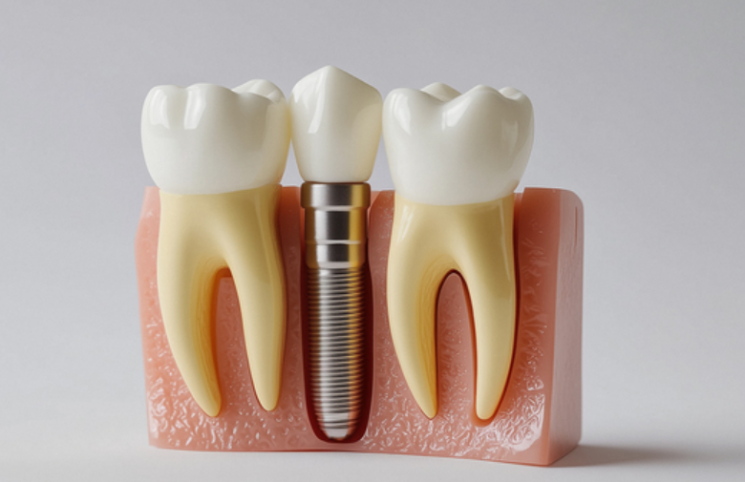
First, regarding dental implants, health insurance currently applies only to partially edentulous patients aged 65 and older, limited to two implants per person, and only when the prosthetic restoration is performed using PFM Crown, a detachable implant material embedded in the jawbone. However, considering the gradual shift of implant prosthetic materials to zirconia, health insurance will now also cover zirconia prosthetic materials. Dental caries examinations for children and adolescents will be covered by health insurance every three months for those aged 15 and under, which is expected to contribute to improving oral health in this age group.
At the meeting, the committee also reviewed the performance evaluation results and extension decisions for 13 health insurance pilot projects that are set to conclude this year. These include ▲the "Tertiary Hospital In-depth Consultation Fee Pilot Project," which guarantees that patients with severe and rare incurable diseases can receive extended consultations of 15 minutes or more at tertiary hospitals; ▲the "Rapid Response System Pilot Project," which detects and immediately responds to unexpected deterioration in general ward inpatients to prevent cardiac arrest or death; ▲the "Rehabilitation Medical Institution Fee Pilot Project," which minimizes disabilities in recovery patients requiring intensive rehabilitation and provides customized integrated rehabilitation services at rehabilitation medical institutions; ▲the "Cancer Patient Home Medical Care Pilot Project," which enables cancer patients who have undergone colostomy or urostomy to receive continuous management at home to prevent complications; ▲the "Referral and Return Visit Fee Pilot Project," which compensates fees for electronic referrals and returns between cooperating hospitals; as well as ▲the Acute Patient Discharge Support and Community Linkage Pilot Project, ▲Tuberculosis Patient Home Medical Care Pilot Project, ▲Nurse Support Pilot Project for Local Medical Institutions, ▲Severe Pediatric Home Medical Care Pilot Project, ▲Primary Care Korean Medicine Home Visit Fee Pilot Project, ▲Primary Care Chronic Disease Management Pilot Project, and ▲4-stage Medical Collaboration Pilot Project. These 12 projects will each be extended for three years. However, the "Continuous Treatment Support Pilot Project for Mental Illness Patients" will only convert some parts aimed at activating acute phase treatment into full projects.
 Park Min-su, the 2nd Vice Minister of Health and Welfare, is speaking at the '25th Health Insurance Policy Deliberation Committee Meeting of 2024' held on the 27th. Photo by the Ministry of Health and Welfare
The Ministry of Health and Welfare also plans to improve the operation of the "Health Insurance Pilot Projects," which are conducted under Article 44 of the Framework Act on Health and Medical Services and related ordinances, by clarifying criteria for project initiation, termination, and extension, establishing mid-term reporting and financial expenditure monitoring systems, among other measures. The previously separately determined copayment rates for each pilot project will now adhere to the statutory copayment rates as a principle, with exceptions applied only when the Pilot Project Deliberation Committee recognizes the need to set different rates.
Meanwhile, at the meeting, the results of the "2024 Medical Cost Analysis Committee" activities aimed at resolving fee imbalances through cost-based fee adjustments were also reported. The Ministry of Health and Welfare improved fee imbalances partially by increasing inpatient fees and surgery/procedure fees and abolishing surcharges for specimen and imaging tests through the third relative value revision implemented earlier this year. Furthermore, to enable rapid fee adjustments reflecting medical field realities, the revision cycle will be shortened from the previous 5 to 7 years to 2 years.
© The Asia Business Daily(www.asiae.co.kr). All rights reserved.
![Clutching a Stolen Dior Bag, Saying "I Hate Being Poor but Real"... The Grotesque Con of a "Human Knockoff" [Slate]](https://cwcontent.asiae.co.kr/asiaresize/183/2026021902243444107_1771435474.jpg)

















