15% Drop in LA Film and Music Jobs After Strike
Q3 Film Production Also Down 5% Year-on-Year
Hollywood, the holy ground of the global entertainment industry, has been struggling to recover from the internal damage caused by last year's massive strike. Although the treatment of Hollywood workers has improved through labor-management agreements, a cold wave of employment has hit as film companies facing increased production costs move to other regions.
The New York Times (NYT) reported on the 26th (local time) that "painful stories are repeating in Hollywood, including screenwriters who visit food banks (free meal centers for low-income people) every two weeks, cinematographers who left for Georgia seeking better opportunities, and art department coordinators who applied for administrative jobs to cover rent," adding that "the failure of the film industry to recover has cast a shadow over the economic outlook of Los Angeles (LA)."
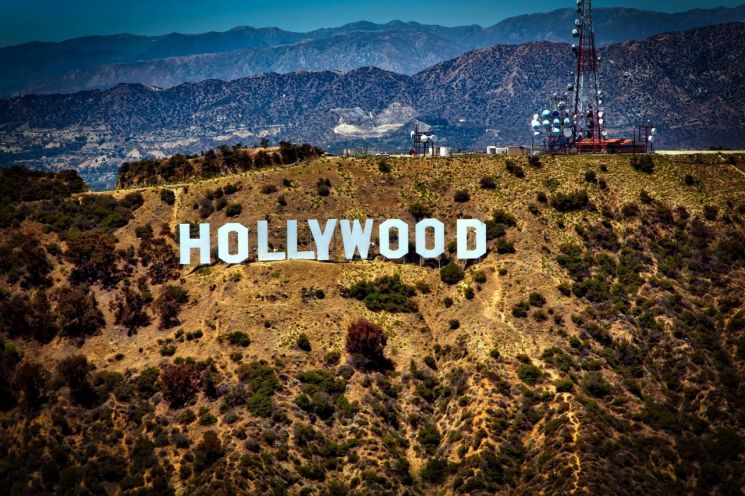
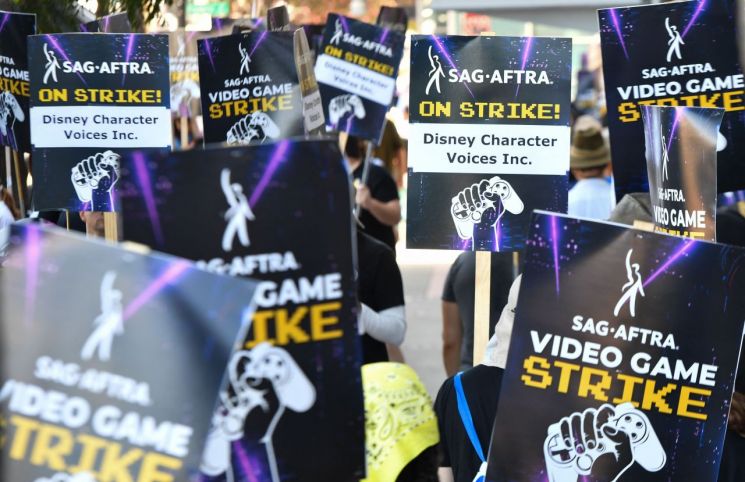
Last year's massive strike by the U.S. writers and actors unions, centered in Hollywood, demanding improved treatment such as base salary increases, has come to an end, but the film production industry remains in a slump. According to FilmLA, the official film office of LA, the Hollywood film production (Shooting Days) index for the third quarter of 2024, compiled independently, decreased by 5% compared to the same period last year. Jobs in film and music recording in LA also dropped by 15% since the start of the U.S. writers' strike in May 2023.
Patrick Adler, co-founder of Westwood Economics and Planning Associates, which studies Hollywood trends, diagnosed that labor strikes in Hollywood usually lead to higher production costs, and due to the strike, film production executives have reevaluated costs and have incentives to move filming to other regions such as New Mexico or Georgia.
NYT also explained, "Georgia offers unlimited tax benefits worth billions of dollars to film companies, and New Mexico has successfully enticed film companies with tax incentives, beautiful natural scenery, and proximity to California." Netflix, which made the drama series "Stranger Things," set in Georgia and New Mexico, a hit, is reportedly investing about $900 million (approximately 1 trillion KRW) to expand its New Mexico film studio.
California Governor Gavin Newsom, facing the urgent crisis of Hollywood's slump, announced in October a plan to more than double the annual tax incentives for the state's film industry to $750 million. According to the Los Angeles Economic Development Corporation (LAEDC), the entertainment industry generates an economic scale and jobs in the LA area worth $115 billion (approximately 169 trillion KRW) and 681,000 jobs respectively, making the revival of Hollywood an issue that California authorities cannot overlook.
However, there are concerns in the industry that even if California's new tax credit program is realized, it may be too late to recover the damage. Vince Gerbasi, CEO of Trisynic Production, a film set service company, pointed out, "People have suffered tremendous financial losses," adding that government support should have come much earlier. Trisynic, which generates annual sales of $25 million, saw its revenue decrease by about $9 million last year due to the strike and other effects.
© The Asia Business Daily(www.asiae.co.kr). All rights reserved.
![Clutching a Stolen Dior Bag, Saying "I Hate Being Poor but Real"... The Grotesque Con of a "Human Knockoff" [Slate]](https://cwcontent.asiae.co.kr/asiaresize/183/2026021902243444107_1771435474.jpg)

















