Fair Trade Commission Survey of 12,000 Franchise Stores
Only 37.7% of Headquarters Allow Card Payment for Goods
This year, 55 out of 100 franchise store owners, including convenience stores and chicken restaurants, reported experiencing unfair practices from headquarters, such as inflating expected sales figures and unjustly shifting advertising costs, commonly referred to as gapjil (abuse of power).
Only 37 out of 100 headquarters allow franchisees to pay for goods via card payments.
The Fair Trade Commission announced the results of the "2024 Franchise Sector Written Survey" on the 27th. The survey was conducted on 200 franchise headquarters and 12,000 franchise stores across 21 industries.
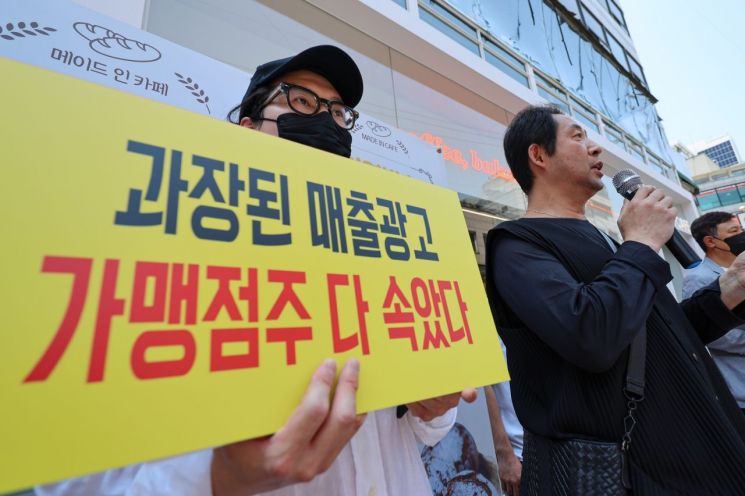
The proportion of franchisees who reported experiencing unfair practices from headquarters this year reached 54.9%, an increase of 16.1 percentage points from 38.8% a year ago.
The most common form of gapjil identified by franchisees was the provision of inflated expected sales information (20.5%). Other frequent issues included unjustly shifting advertising costs (18.0%) and failure or delay in providing important written documents such as disclosure statements (12.1%).
The survey included, for the first time this year, items related to payment methods for goods and the handling of mobile gift certificates, which have recently been controversial.
Regarding payment for goods, only 37.7% of franchise headquarters allowed card payments, and among them, 39.5% restricted card usage to on-site payments only.
Additionally, 26.5% of franchise headquarters handled mobile gift certificates, with franchisees bearing a higher average share of the mobile gift certificate fees (69.4%) compared to headquarters (30.6%).
The main types of unfair practices related to mobile gift certificates experienced by franchisees were "handling mobile gift certificates without franchisee consent (67.6%)" and "charging franchisees for the difference between the face value of the gift certificate and the product sale price (60.0%)."
As many as 78.7% of franchisees responded that there were unnecessary items among the mandatory items set by headquarters. Franchisees cited high prices, designation of unnecessary items, and quality degradation as major issues related to mandatory items.
Earlier, the Fair Trade Commission implemented an amended Franchise Business Act from June to address these issues, requiring contracts to specify the details and pricing methods of mandatory items. The enforcement decree, effective this month, mandates consultation with franchisees when changing mandatory item transaction conditions unfavorably for them.
Regarding the bill pending in the National Assembly that would mandate collective bargaining by franchisee associations, 61.5% of headquarters opposed it, while 69.4% of franchisees supported it, showing a clear divide.
The Fair Trade Commission stated, "We will faithfully convey the industry's concerns regarding the bill and respond sincerely to the National Assembly's discussions. Through measures such as the mandatory consultation system on mandatory item transaction conditions, which will be implemented next year, we plan to make active efforts to establish a healthy culture of consultation between headquarters and franchisees."
© The Asia Business Daily(www.asiae.co.kr). All rights reserved.
![Clutching a Stolen Dior Bag, Saying "I Hate Being Poor but Real"... The Grotesque Con of a "Human Knockoff" [Slate]](https://cwcontent.asiae.co.kr/asiaresize/183/2026021902243444107_1771435474.jpg)















