Hospitalized Patients Increase 1.9 Times in 4 Weeks
Highly Contagious and May Lead to Pneumonia
Concerns are growing that various respiratory infectious diseases may spread this winter. As the number of influenza patients has continued to rise for nearly a month, a nationwide 'Influenza (Flu) Epidemic Alert' was issued on the 20th. Amid this, caution is also required regarding RSV (Respiratory Syncytial Virus) infection, a respiratory disease similar to the flu.
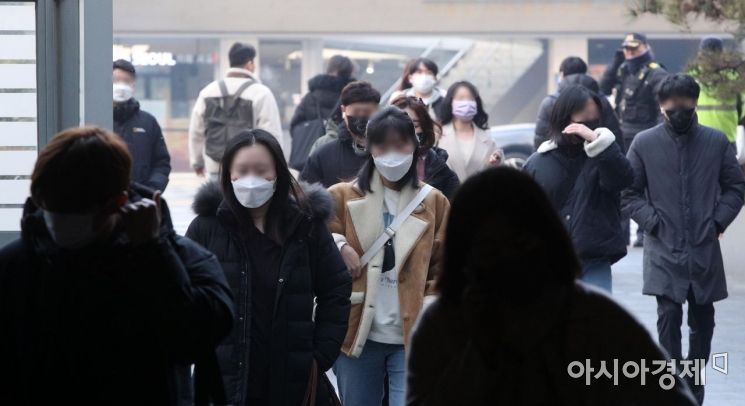 On the 6th, when emergency fine dust reduction measures were implemented in the Seoul metropolitan area including Seoul, Incheon, Gyeonggi, and Sejong regions, commuters near Seoul City Hall hurried on their way to work wearing masks. Photo by Hyunmin Kim kimhyun81@
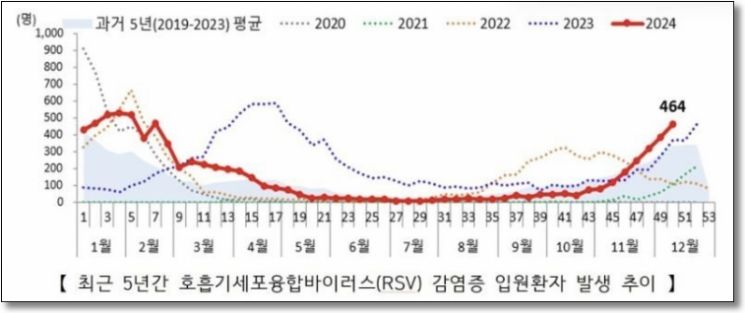
According to the Korea Disease Control and Prevention Agency on the 27th, a sample surveillance of 220 hospitals nationwide with 200 or more beds from the 8th to the 14th of this month recorded 464 hospitalized patients with RSV infection. This is a 1.9-fold increase compared to 248 patients four weeks earlier. The increase in RSV infection cases, which began in earnest last month, is also occurring at a faster pace than the same period last year.
RSV infection, which is prevalent during the winter season (October to March) and requires particular caution in winter, is examined here.
If you hear 'ssik-ssik' or 'geureureung-geureureung' breathing sounds, a hospital visit is necessary
RSV infection is an acute respiratory infectious disease caused by the 'Respiratory Syncytial Virus,' belonging to the Pneumoviridae family. It is classified as a Class 4 legally notifiable infectious disease along with influenza and COVID-19.
RSV infection is as serious a disease as influenza and COVID-19. Common symptoms include runny nose, sore throat, cough, and sputum, with nasal congestion, hoarseness, and characteristic wheezing sounds described as 'ssik-ssik' or 'geureureung-geureureung' (wheezing) caused by narrowing inside the bronchi. However, because the symptoms are similar to other respiratory diseases, distinguishing it is not easy.
As of 2023, the cumulative number of hospitalized RSV infection patients in South Korea is 10,533. According to South Korea's infectious disease statistics, a total of 5,555 RSV infection patients have been reported domestically from the beginning of this year through June. From February to April, the incidence rate was even higher than that of influenza, a representative respiratory infectious disease. Moreover, due to ▲low awareness of the disease ▲symptoms similar to common respiratory infections such as cough, sputum, headache, and sore throat, diagnostic testing is often insufficient, so the actual number of patients is estimated to be higher.
Can spread through droplets and lead to pneumonia and other complications
RSV infection is as contagious as influenza and can be dangerous as it may cause complications such as pneumonia, especially in high-risk groups. Therefore, it is one of the diseases that impose significant physical and economic burdens on high-risk groups.
The main high-risk groups for RSV infection are ▲infants and young children ▲elderly people aged 60 and above ▲patients with chronic heart and lung diseases. In infants and young children, 20-30% of RSV infections progress to bronchiolitis, pneumonia, and other conditions. In severe cases, intensive care treatment may be required, or it may lead to death. Most infants experience RSV infection within two years after birth and can have recurrent infections anytime, requiring lifelong management.
The elderly are no exception. Typical complications from RSV infection include pneumonia, chronic respiratory diseases, hypoxia, and respiratory distress. Additionally, in cases with comorbidities such as asthma, chronic obstructive pulmonary disease (COPD), and congestive heart failure (CHF), RSV infection can worsen the underlying conditions.
Strict personal hygiene such as 'proper handwashing' is essential
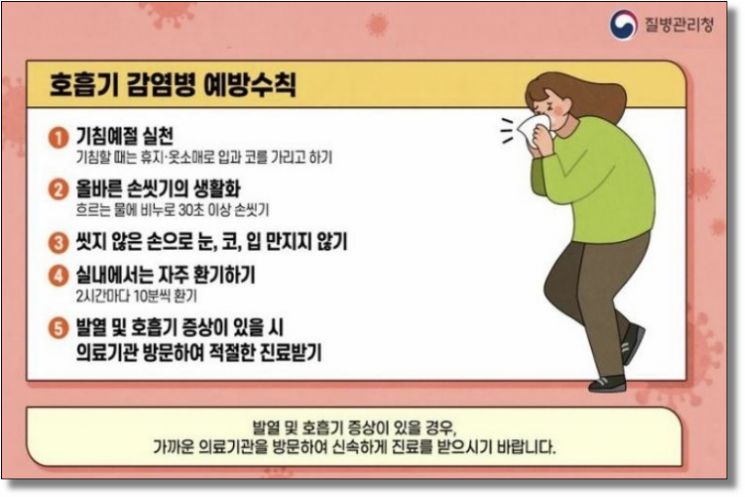
RSV is easily transmitted through droplets from the nose and mouth of infected individuals. However, it can be prevented by maintaining personal hygiene habits such as handwashing, observing cough etiquette, and wearing masks in daily life.
There is currently no specific treatment (antiviral drugs) for RSV infection like the common cold. Only supportive symptomatic treatment such as fluid supply and antipyretics can alleviate symptoms. This winter, when infectious diseases are prevalent, if symptoms such as runny nose, sore throat, cough, or wheezing appear, it is important to visit a nearby medical institution for an accurate diagnosis and receive appropriate treatment to prevent further transmission.
© The Asia Business Daily(www.asiae.co.kr). All rights reserved.
![Clutching a Stolen Dior Bag, Saying "I Hate Being Poor but Real"... The Grotesque Con of a "Human Knockoff" [Slate]](https://cwcontent.asiae.co.kr/asiaresize/183/2026021902243444107_1771435474.jpg)

















