Future Mobility and Advanced Marine Industry Stabilization
"Need for Improvement in Digital and Advanced Convergence Industries"
The Busan Institute for Science and Technology Promotion (BISTEP, Director Kim Young-bu) published the report titled "Busan Science and Technology Workforce Supply and Demand Diagnosis Study" on the 26th, analyzing the growth potential of Busan's advanced industry sectors and the current status of science and technology workforce supply and demand.
This report comprehensively analyzed the employment characteristics of graduates from universities located in Busan (majoring in science and technology) and the job vacancy status in the regional science and technology workforce employment market, deriving the actual conditions of workforce supply and demand in the local advanced industry sectors.
According to the study, among Busan's advanced industry sectors, digital finance, future mobility, and advanced marine industries have relative strengths, but the competitiveness of digital new industries, advanced convergence industries, and eco-friendly energy and carbon-neutral industries is limited.
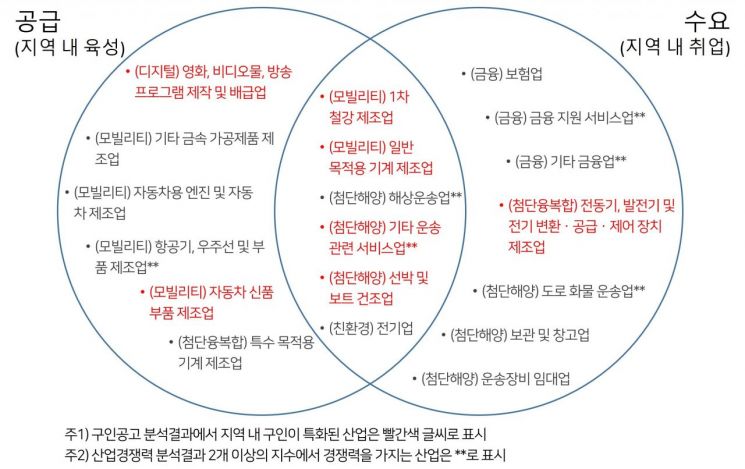
Additionally, based on the employment status of science and technology graduates over the past five years (2018?2022), the analysis of supply and demand in advanced industry sectors showed that the science and technology workforce graduating from local universities (supply) is specialized in advanced marine industries and future mobility sectors, while the science and technology workforce employed within the region (demand) shows competitiveness not only in advanced marine industries and future mobility but also in digital finance.
The sub-industries where both supply and demand of science and technology workforce are simultaneously specialized were identified as follows: primary steel manufacturing and general-purpose machinery manufacturing in future mobility; maritime transport, other transportation-related services, and ship and boat building in advanced marine industries; and electrical work in eco-friendly energy and carbon-neutral industries.
Analysis of employment data for science and technology talent in advanced industry sectors revealed that company size influences regional choice more than wages when seeking employment. This result implies that policies for attracting and retaining talent should reflect not only simple wage support but also strengthened talent growth support systems and improvements and support for residential environments.
Based on these analysis results, the study suggested policy directions including: tailored industry-academia cooperation education programs and expanded re-education programs considering the characteristics of each advanced industry sector to support region-specific career growth; improvement of residential environments to attract mid-level managers and highly experienced senior talent; enhancement of comprehensive welfare benefits such as housing, education, and medical support to induce stable workforce settlement; and promotion of policies to nurture convergent high-level talent that meet the job demand and characteristics of each industry sector.
Senior Researcher Chae Yoon-sik of BISTEP stated, "For Busan's advanced industries to leap forward as a global hub city, creating an environment where local excellent talent can fully demonstrate their careers and capabilities within the region is key," adding, "It is necessary to prepare comprehensive policies that organically link customized workforce development, corporate competitiveness enhancement, and residential environment improvement."
The full report can be accessed through the BISTEP website.
© The Asia Business Daily(www.asiae.co.kr). All rights reserved.
![Clutching a Stolen Dior Bag, Saying "I Hate Being Poor but Real"... The Grotesque Con of a "Human Knockoff" [Slate]](https://cwcontent.asiae.co.kr/asiaresize/183/2026021902243444107_1771435474.jpg)















