A dog collar engraved with initials, a teddy bear wearing a sweater, a model of the Mar-a-Lago estate in Florida. President-elect Donald Trump has taken it upon himself to play 'Santa Claus' this Christmas. However, gifts must be purchased with money.
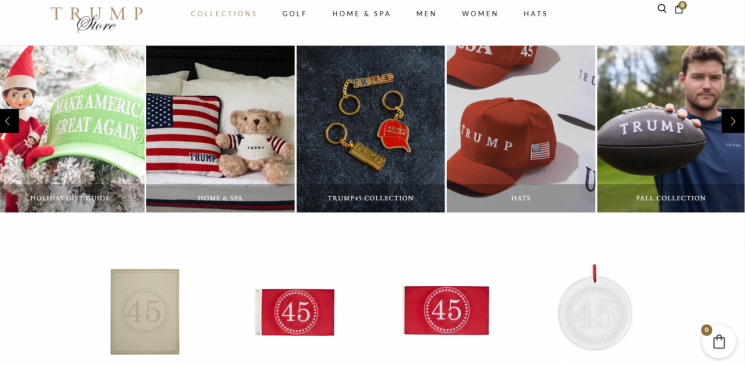
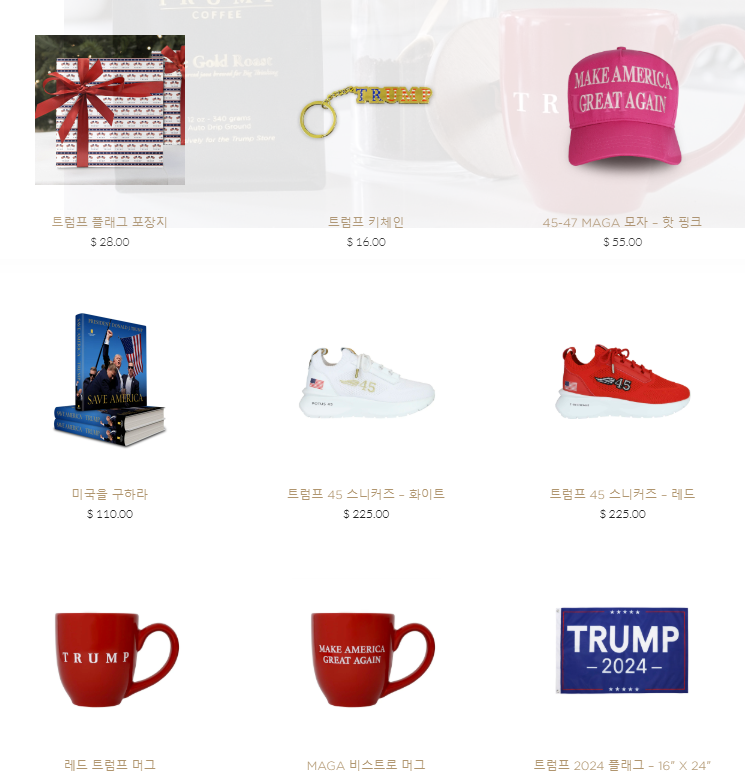
Trump, who profited from merchandise sales during the U.S. presidential election, has introduced new products for Christmas. On Trump’s online store, the 'Trump Store,' items such as sweaters ($195), ashtrays ($85), and MAGA (Make America Great Again) baseball caps ($38) are sold, all featuring the lettering '45-47' highlighting his status as the 45th and 47th (president-elect) president.
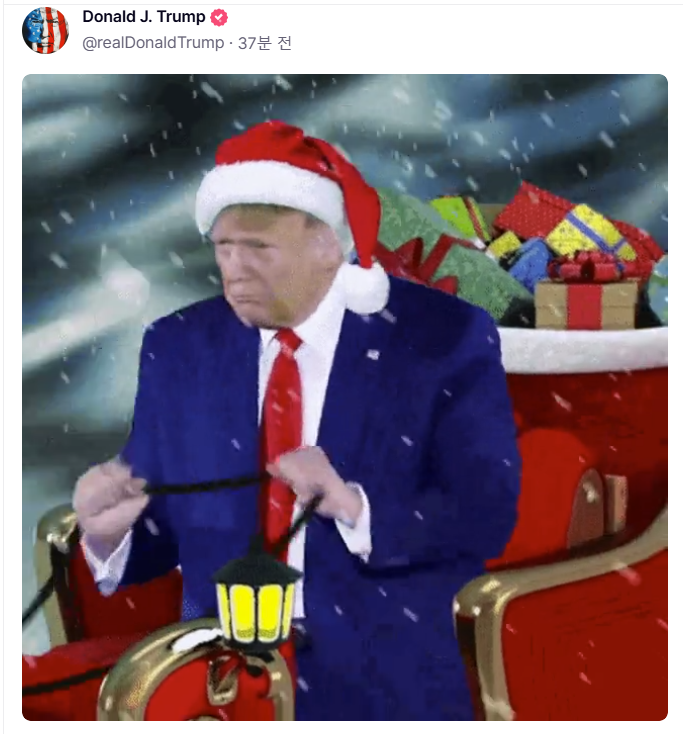 A composite image of Santa posted by Donald Trump, the President-elect of the United States, on Truth Social on the 25th (local time).
There are more than just souvenirs commemorating the election victory. The store also offers pet gifts such as dog collars and leashes engraved with Trump’s initials, as well as various stickers and dolls for children. The store encourages customers to gift-wrap these items in Trump wrapping paper ($28) or place them in Trump paper bags (2 for $14).
Trump’s 'merchandise selling' is nothing new. He has long sold all kinds of goods, including digital income cards, expensive sneakers and watches, and Bibles signed with his name. During the election period, he also used licensing agreements to monetize his name and image. Recently, while posting his views on current issues such as the Syrian civil war and government budget on Truth Social, he intermittently promoted Christmas products. Melania Trump, who will become First Lady, also promoted her Christmas decorations and necklace in a Fox News interview.
With the inauguration scheduled for next month, the president-elect’s focus on making money from Christmas sales right up until the inauguration has sparked heavy criticism locally. The progressive-leaning Washington Post (WP) stated, "The revenue from merchandise sales goes not to political or charitable activities but to the Trump Organization, the Trump family’s business," adding, "While politicians sometimes sell merchandise to raise campaign funds or presidents earn money from speeches and memoirs after leaving office, it is highly unusual for Trump to seek personal profit from election-related products."
Jordan Libowitz, vice president of Citizens for Responsibility and Ethics in Washington (CRE), a nonprofit organization in Washington D.C., also responded cynically, asking, "How much will the presidency be exploited to sell Trump merchandise?" Libowitz pointed out that although Trump sold products related to his real estate business during his first term, this time the overlap between business and politics is even greater.
However, Trump’s camp insists there is no problem. Caroline Leavitt, spokesperson for the transition team, argued, "President Trump stepped away from his multibillion-dollar real estate empire to run for president and gave up his presidential salary, becoming the first president whose net worth actually decreased during his term," defending the legitimacy of the merchandise business.
Previously, Trump was excluded from Forbes’ 2021 list of the 400 richest Americans for the first time in 25 years. However, WP explained this was due to a sharp decline in real estate values caused by the pandemic. Trump later reappeared on the Forbes list this year thanks to the rise in stock price of Trump Media & Technology Group (TMTG), the parent company of the social networking service (SNS) Truth Social, which he founded.
Unlike previous U.S. presidents, Trump has been criticized for being passive in efforts to avoid conflicts of interest. During his first term, it was estimated that he owned about 400 properties nationwide, including luxury condos and mansions worth approximately $250 million, but concerns about conflicts of interest arose because ownership and sales status were not properly tracked. Instead of selling his TMTG shares, he placed them in a trust managed by his eldest son, Donald Trump Jr., leaving room for domestic and foreign companies and governments to potentially funnel business his way.
© The Asia Business Daily(www.asiae.co.kr). All rights reserved.
![Clutching a Stolen Dior Bag, Saying "I Hate Being Poor but Real"... The Grotesque Con of a "Human Knockoff" [Slate]](https://cwcontent.asiae.co.kr/asiaresize/183/2026021902243444107_1771435474.jpg)

















