3rd Animal Roadkill Reduction Measures
Roadkills Threatening Human Safety and Animal Lives
AI Alerts in Advance of 'Animal Appearance'
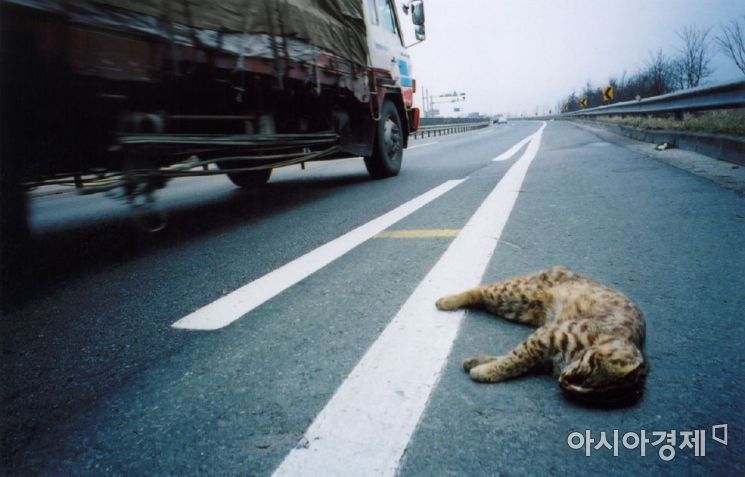
The government is establishing an artificial intelligence (AI) prevention system to prevent so-called "roadkill" animal road accidents. Guidance fences and warning signs will be installed in 100 sections nationwide where accidents frequently occur, and amphibians and reptiles have been newly added as protected targets.
On the 26th, the Ministry of Environment and the Ministry of Land, Infrastructure and Transport announced that they have formulated the "3rd Animal Road Accident Reduction Plan (2025~2027)" containing these measures and distributed it to road management authorities and related organizations. According to the plan, the government will operate the AI prevention system in Yangpyeong, Hoengseong, and Namwon, where accidents frequently occur. The AI analyzes wild animals appearing on the road and warns drivers through an electronic display board 200 meters ahead. Since October last year, the government has been piloting the AI system on roads in Hallyeohaesang National Park, confirming its effectiveness as no accidents occurred during the trial.
Additionally, the Ministry of Environment will install guidance fences in 59 sections where wild animals can enter due to the absence of fences. In four sections where continuous fence installation is difficult, ground entry prevention facilities disliked by hoofed animals such as gorani (water deer) will be constructed. In 51 sections near villages, LED warning signs visible at night will be installed at the start of accident-prone sections, and cameras for speed reduction guidance will be placed in 13 sections. Locations with frequent animal road accidents will be notified to drivers through navigation systems.
The scope of accident investigations has also been expanded. Previously, the government only investigated accidents involving mammals like gorani or birds. Going forward, accidents involving amphibians and reptiles will also be investigated. Separate passageways and fences will be created in three sections with frequent toad road accidents.
This reduction plan will be implemented in 100 sections with many related accidents. The number of reduction sections has doubled from 50 when the first plan was established in 2020.
There has been a strong call for measures as animal road accidents threaten both driver safety and animal lives. Last year, animal road accidents totaled 79,278 cases, a 23.8% (15,289 cases) increase from 63,989 cases the previous year. Compared to 21,397 cases five years ago, the number has increased about 2.7 times. 48.4% (38,432 cases) of road accidents occur on city, county, and district roads, and regionally, 33.2% (26,336 cases) are concentrated in the Seoul metropolitan area.
The most frequent animals involved in road accidents were cats, accounting for 48.1% (38,143 cases) of the total. Gorani (water deer) followed with 18,267 cases, then birds (14,612 cases), raccoons (4,011 cases), dogs (2,575 cases), roe deer (968 cases), and badgers (510 cases).
The Ministry of Environment expects this plan to significantly reduce animal road accidents. After implementing the first plan, the average number of accidents over three years in 50 sections dropped to 346 cases from 1,197 cases before implementation, a 71% (851 cases) reduction.
Kim Tae-o, Director of the Nature Conservation Bureau at the Ministry of Environment, emphasized, "We will promote institutional improvements to enhance the effectiveness of ecological passages that facilitate smooth movement of wild animals and ensure systematic management."
© The Asia Business Daily(www.asiae.co.kr). All rights reserved.
![Clutching a Stolen Dior Bag, Saying "I Hate Being Poor but Real"... The Grotesque Con of a "Human Knockoff" [Slate]](https://cwcontent.asiae.co.kr/asiaresize/183/2026021902243444107_1771435474.jpg)















