Garibong 1 District, Up to 45 Floors·2,259 Households
Gocheok-dong 253 Area, Up to 29 Floors·1,469 Households
Hong Eun 15 District, 1,844 Households... Sangbong 13 District, 1,249 Households
Hawolgok 1 District, 34 Floors·1,900 Households
Speeding Up Redevelopment Review with New Planning Method
At the end of this year, a large number of redevelopment project permits using the rapid integrated planning method in Seoul have been approved. Although it is still in the early stages of the project, a total of more than 8,700 housing units will be supplied in the outskirts of Seoul, including Guro, Seongbuk, and Jungnang districts.
On the 24th, the Seoul Metropolitan Government held the 14th Urban Planning Committee Rapid Integrated Planning Redevelopment Project and Authorization Subcommittee and announced on the 25th that redevelopment plans for ▲Gari-bong 1 District in Guro-gu ▲Area 253, Gocheok-dong, Guro-gu ▲Hong-eun 15 District in Seodaemun-gu ▲Ha-wolgok 1 District in Seongbuk-gu ▲Sangbong 13 District in Jungnang-gu were approved.
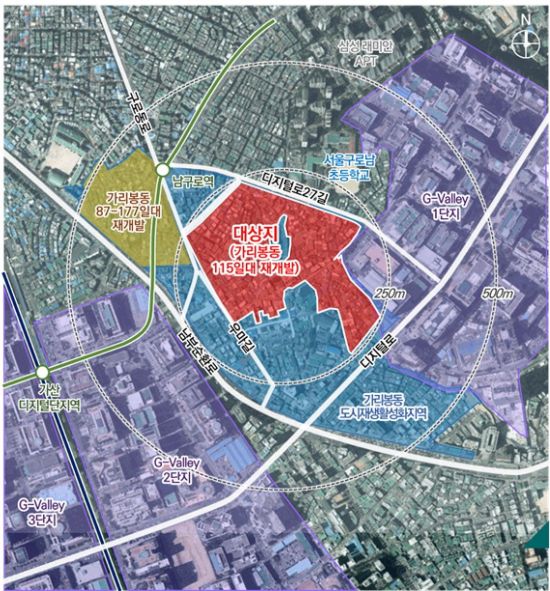
Acceleration of Redevelopment in Guro-gu... About 3,700 Housing Units in Gari-bong-dong and Gocheok-dong Areas
With this approval, a total of 3,728 housing units will be supplied in Gari-bong-dong and Gocheok-dong areas of Guro-gu.
Gari-bong 1 District is planned as a complex residential area ranging from three basement floors to a maximum of 49 floors above ground, with a total of 2,259 housing units (609 rental units). Additionally, 106 officetel units are planned to meet the diverse housing demands of G-Valley workers.
The Gari-bong-dong area serves as a metropolitan center for Gasan-Daerim and functions as a residential area supporting G-Valley. It was designated as Gari-bong New Town in 2003 but was canceled in 2014, followed by various urban regeneration projects, facing many challenges. To accelerate redevelopment and improve project feasibility, the city upgraded zoning from Type 3 General Residential Area and Semi-Residential Area to higher categories, applied a project feasibility correction factor, and increased the floor area ratio (FAR) incentive to 349.64%. As a result, the number of saleable units increased by 49 compared to the public inspection plan. The estimated average contribution per union member is expected to decrease by about 25 million KRW.
Along with Gari-bong 1 District, the Area 253 in Gocheok-dong, selected as a candidate site for the 2022 rapid integrated planning, will be transformed into a maximum 29-floor building with a total of 1,469 housing units (239 rental units) following this approval. Low to mid-rise buildings are planned around the elementary school (Segok Elementary), and high-rise tower-type buildings are arranged near the park to secure a scenic axis. This area also reflected a project feasibility correction factor (2.0), increasing the floor area ratio and adding 90 saleable units. The estimated average contribution per union member is expected to decrease by about 31 million KRW.
Han Byung-yong, Director of the Housing Office at Seoul City, said, "This approval result is a case where the '2030 Urban Residential Environment Maintenance Basic Plan' was applied to areas where development is difficult to secure project feasibility and gain momentum for promotion."
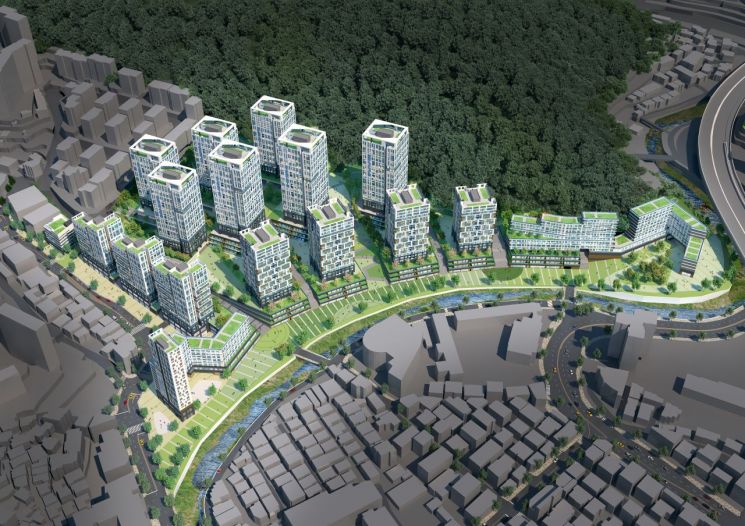
Hong-eun 15 District Surrounded by Hongje Stream and Bukhansan... Redevelopment of Aging Residential Areas in Ha-wolgok and Sangbong
This approval also passed redevelopment plans for aging residential areas in Hong-eun-dong, Seodaemun-gu; Ha-wolgok-dong, Seongbuk-gu; and Sangbong-dong, Jungnang-gu.
Hong-eun 15 District (area 8-400, Hong-eun-dong) is located near Hongje Stream and the Bukhansan foothill trail but has narrow and steep roads making access difficult, with many old and dilapidated buildings requiring large-scale redevelopment. However, due to elevation differences within the district, self-development was challenging.
After joining the rapid integrated planning, a redevelopment plan was prepared considering the characteristics of the site and surrounding environment, including zoning upgrades, hillside-adaptive land development, and area-specific specialized plans, which passed the review. Hong-eun 15 District is planned to have a total of 1,844 housing units, an increase of 234 units compared to the public inspection plan. The estimated average contribution per union member is expected to decrease by about 90 million KRW. The redevelopment plan includes constructing a waterside plaza along Hongje Stream, cultural classrooms, a library, and other community facilities, as well as creating a circular pedestrian path connecting the Bukhansan foothill trail, Hongje Stream, and residential streets.
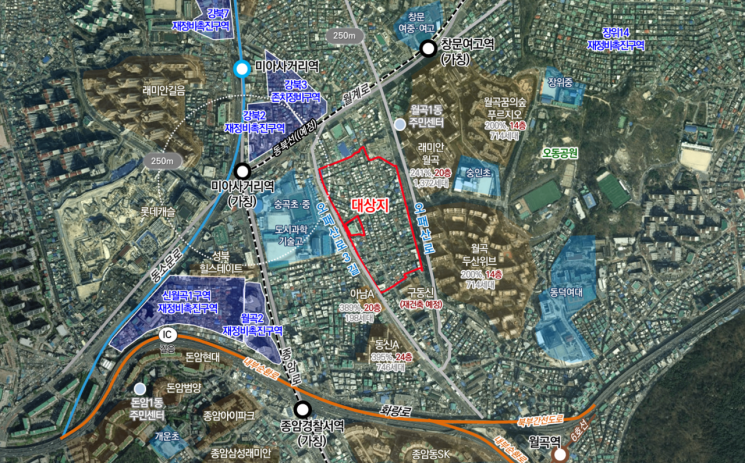
Ha-wolgok 1 District (area 70-1, Ha-wolgok-dong) will also be reborn as a maximum 34-floor complex with about 1,900 housing units (approximately 410 rental units) following this approval. A park of about 5,700 square meters will be divided and created on the west side of the site, and public libraries and leisure facilities will be developed on the south side in connection with the park. Additionally, a scenic axis will be established from the adjacent Sunggok Elementary and Middle Schools to Odong Park behind the site to secure openness.
After joining the rapid integrated planning in 2021, the zoning was upgraded to Type 3 General Residential Area, and the floor area ratio was increased by applying a project feasibility correction factor (1.56), resulting in about 90 more saleable units compared to the public inspection plan. The estimated average contribution per union member is expected to decrease by about 35 million KRW.
Furthermore, Sangbong 13 District will be reborn as a maximum 37-floor complex with a total of 1,249 housing units (270 rental units) following this approval. The site has a high concentration of old multi-family and multi-household houses, narrow roads, and insufficient parks and sports facilities, making redevelopment necessary. According to the redevelopment plan, a cultural park and community sports facilities will be created on the east side of the site to reflect station area demand due to the new Myeonmok Line. Neighborhood living facilities and community-use facilities will be placed along major residential streets such as Bongujae-ro.
Sangbong 13 District also applied a project feasibility correction factor (1.64), increasing the floor area ratio and adding 43 saleable units. The estimated average contribution per union member is expected to decrease by about 60 million KRW.
Han Byung-yong, Director of the Housing Office, said, "These areas have gained momentum for redevelopment by applying the project feasibility improvement system. It is expected to revitalize not only the complexes but also the entire surrounding areas."
© The Asia Business Daily(www.asiae.co.kr). All rights reserved.
![Clutching a Stolen Dior Bag, Saying "I Hate Being Poor but Real"... The Grotesque Con of a "Human Knockoff" [Slate]](https://cwcontent.asiae.co.kr/asiaresize/183/2026021902243444107_1771435474.jpg)

















