"Military Deployed Under Martial Law Without Notifying US Forces Korea... Concerns Over Alliance Coordination"
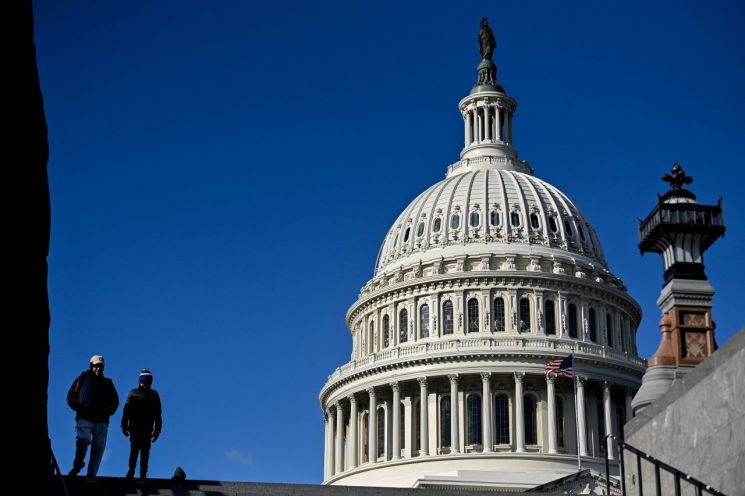
The U.S. Congressional Research Service (CRS) analyzed that the Yoon Suk-yeol administration's policies, including trilateral cooperation among South Korea, the U.S., and Japan, may not be sustainable due to South Korea's martial law and impeachment crises.
CRS, which provides information necessary for legislative activities of the U.S. Congress, stated this in its report titled "South Korea's Political Crisis: Martial Law and Impeachment" on the 23rd (local time).
Regarding the geopolitical impact of the political crisis in South Korea, CRS analyzed, "Since President Yoon Suk-yeol took office in 2022, he has cooperated more closely with the U.S. on issues related to North Korea, China, Japan, and Ukraine," and "the Democratic Party of Korea, which consistently polls in double digits higher than the People Power Party, tends to support markedly different policies." As an example, it cited the first impeachment motion in the National Assembly, which included content stating that "the administration insisted on a bizarre diplomacy centered on Japan, hostile to North Korea, China, and Russia, disregarding geopolitical balance."
The report explained, "U.S. policymakers and Congress face the question of whether to raise concerns about the state of U.S.-South Korea alliance coordination in relation to President Yoon deploying South Korean troops to enforce martial law without prior notification to the U.S. Forces Korea commander."
It also analyzed that under an acting presidential system, if the next Donald Trump administration pursues policy changes affecting U.S.-South Korea relations?such as tariffs, the scale of U.S. Forces Korea deployment, semiconductor and other technology policies, or revision or termination of the U.S.-South Korea defense cost-sharing agreement?it could be disadvantageous for South Korea to advocate its position.
CRS raised questions about the sustainability of several diplomatic policies pursued by President Yoon, citing the possibility of his suspension and impeachment decision by the Constitutional Court. While the Yoon administration has implemented relatively hardline policies emphasizing deterrence against North Korea, which it regards as an existential threat, South Korean progressives tend to emphasize dialogue policies.
Furthermore, President Yoon aimed to integrate South Korea into the U.S.-led Indo-Pacific alliance network and make South Korea a global pivotal state, but many progressives have criticized such policies.
CRS explained that although President Yoon has publicly criticized China more than previous presidents, Lee Jae-myung, leader of the Democratic Party of Korea, questioned this approach.
The improvement of relations with Japan and strengthening of the South Korea-U.S.-Japan alliance, which are core to President Yoon's foreign policy, involved compromises on historical issues with Japan, and Lee evaluated this as shameful.
© The Asia Business Daily(www.asiae.co.kr). All rights reserved.
![Clutching a Stolen Dior Bag, Saying "I Hate Being Poor but Real"... The Grotesque Con of a "Human Knockoff" [Slate]](https://cwcontent.asiae.co.kr/asiaresize/183/2026021902243444107_1771435474.jpg)
















