Bank of Korea New York Office Collects Major IB Economic Forecasts
Unemployment Rate Expected at 4.3%, Inflation Rate at 2.5%
Interest Rate Outlook Varies Based on 'Trumplation' Assessment
As the U.S. economy maintains steady growth, Wall Street investment banks (IBs) have projected that it will continue to achieve a growth rate in the 2% range next year, successfully realizing a "no landing" scenario?sustained growth without a recession. Regarding next year's interest rate outlook, 6 out of 10 IBs expect 2 to 3 rate cuts. There was significant variation in rate forecasts among institutions; IBs anticipating 4 to 5 aggressive rate cuts warned that "Trumpflation" (inflation caused by policies of President-elect Donald Trump) could materialize, rapidly cooling the U.S. economy.
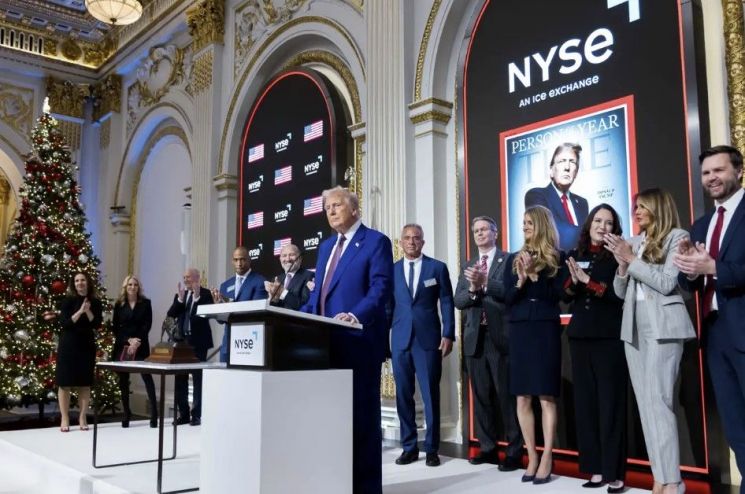
According to the "2024 U.S. Economic Trends and 2025 Outlook" report released on the 23rd (local time) by the Bank of Korea's New York office, the median economic growth forecast for 2025 among 83 Wall Street investment banks was 2.1%. This is below this year's growth forecast of 2.7% but exceeds the U.S.'s estimated potential growth rate in the high 1% range.
The Bank of Korea's New York office stated, "The U.S. economy in 2025 is expected to experience somewhat slower growth due to the cumulative effects of monetary tightening," but added, "Consumption and investment are expected to maintain relatively robust momentum and grow favorably." It further analyzed, "In particular, consumption is likely to remain a key driver of growth next year, supported by a strong labor market and rising household asset values."
Although the labor market is gradually easing, it remains solid, and consumption is strong, leading to a general Wall Street consensus that the U.S. economy will continue steady growth without recession next year. Wall Street IBs forecast the U.S. unemployment rate to rise from 4.1% in 2024 to 4.3% in 2025. While the Trump administration's second term policy to ban illegal immigration could reduce labor supply, overall labor market supply-demand balance is expected to be maintained due to gradual demand slowdown. Inflation, measured by the Fed's preferred core Personal Consumption Expenditures (PCE) price index, is expected to decline from 2.8% to 2.5% over the same period. However, the Bank of Korea noted that uncertainty remains high regarding next year's economic outlook due to difficulties in predicting the timing and effects of the Trump administration's policy implementation.
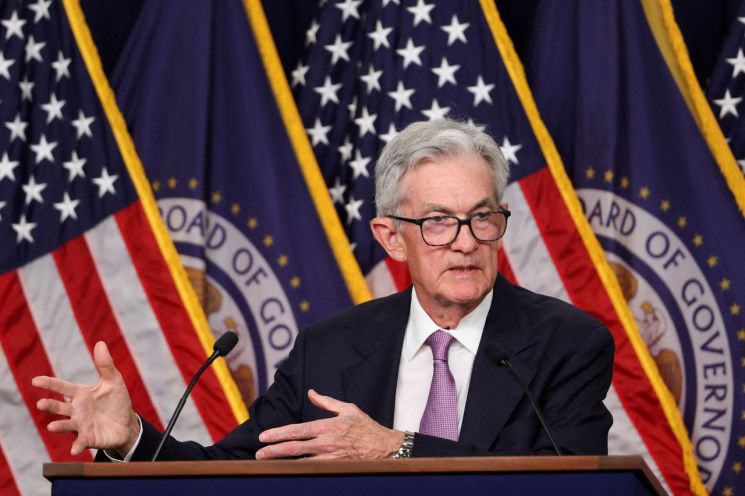
Regarding next year's interest rate outlook, 6 out of 10 investment banks expect 2 to 3 rate cuts. Barclays, Bank of America (BoA), and Morgan Stanley forecast that the Fed will cut the benchmark interest rate, currently at 4.25?4.5%, twice by 0.25 percentage points each next year. Earlier, at the Federal Open Market Committee (FOMC) meeting on the 18th, the Fed sharply reduced its expected number of rate cuts next year from 4 times (a total of 1.0 percentage point cut) to 2 times (a total of 0.5 percentage point cut), aligning with the monetary authorities' outlook. Goldman Sachs, JP Morgan, and Wells Fargo expect the Fed to lower rates three times by 0.25 percentage points each next year.
Nomura Securities expects the Fed to cut rates once by 0.25 percentage points next year, while Deutsche Bank predicts no rate cuts at all. TD Securities forecasts four rate cuts totaling 1.0 percentage point, and Citigroup expects five cuts totaling 1.25 percentage points.
The difference in views on the impact of President-elect Trump's economic policies, starting in January next year, on inflation and growth rates is reflected in the varying interest rate forecasts. The market anticipates that Trump's promised tariff increases, illegal immigration bans, and tax cuts will push up prices and prolong the high interest rate environment. According to Goldman Sachs, the core PCE inflation rate is expected to be 2.2% by the end of next year, but if Trump's tariff policies materialize, it is estimated to rise to 2.4%.
The Bank of Korea's New York office explained, "Divergent assessments of the cumulative impact of Trump's second-term policies on growth and inflation have led to differing policy rate forecasts among IBs. In particular, IBs expecting 4 to 5 rate cuts next year believe that Trump's policies will pressure economic activity and dampen consumption, prompting the Fed to aggressively cut rates to support growth recovery."
Regarding the timing of the Fed's rate cut cycle end, 5 out of 10 IBs expect it to occur in the second to third quarter of next year, while the remaining 5 foresee it in 2026.
The Bank of Korea's New York office noted, "Although U.S. inflation is expected to gradually decline next year due to slowing wage growth, upward risks will increase in the second half of the year due to tariff policies. The intensification of U.S.-China trade conflicts, fiscal deficit issues, and heightened geopolitical tensions in the Middle East are also major risk factors for the Fed's policy rate path outlook."
© The Asia Business Daily(www.asiae.co.kr). All rights reserved.


















