USTR Launches Semiconductor Investigation on China Under Section 301 of Trade Act
Final Decision Expected in Trump’s Second Term
Retaliatory Tariffs and Import Bans Anticipated as Sanctions
The U.S. administration under Joe Biden has launched an investigation into unfair trade practices by China targeting Chinese-made general-purpose semiconductors used in automobiles and home appliances, about a month before the new government takes office. The aim is to weaken China's dominance in the semiconductor market by expanding pressure not only on advanced semiconductors but also on general-purpose semiconductors. Donald Trump, the U.S. president-elect who will be inaugurated in January next year, is expected to impose retaliatory tariffs and import bans on Chinese general-purpose semiconductors based on the results of this investigation, which is expected to take several months.
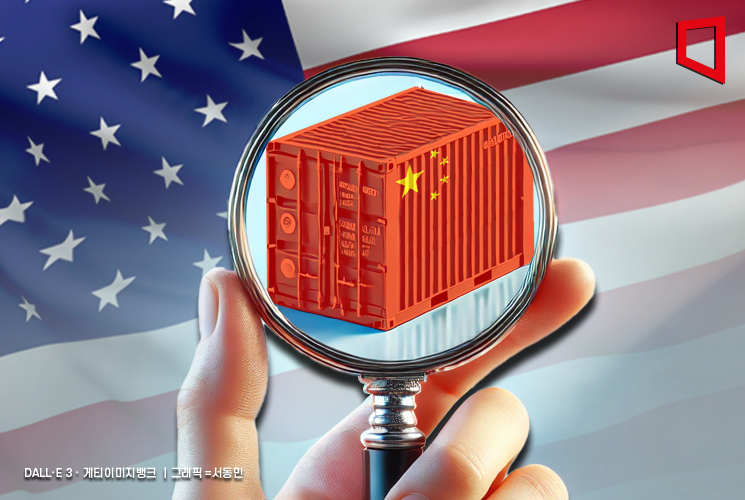
The U.S. Trade Representative (USTR) announced on the 23rd (local time) that it has launched an investigation under Section 301 of the Trade Act into China's semiconductor dominance practices, policies, and conduct.
The USTR believes that China set market share targets to dominate the semiconductor market and extensively employed unfair and non-market-based measures using government subsidies. Katherine Tai, USTR Representative, stated, "We have found evidence that China aims to dominate the global market in the semiconductor industry, similar to its goals in industries such as steel, aluminum, solar panels, electric vehicles, and critical minerals," adding, "Through these (government subsidies), companies rapidly expand production capacity, artificially lower semiconductor prices, causing significant harm to market-oriented competitors while potentially threatening to eliminate them."
The USTR plans to examine not only the impact of Chinese general-purpose semiconductors but also how these semiconductors are integrated into final products in key industries such as defense, automotive, medical devices, aerospace, telecommunications, power generation, and power grids. Chinese-made silicon carbide substrates and semiconductor wafers are also included in the investigation.
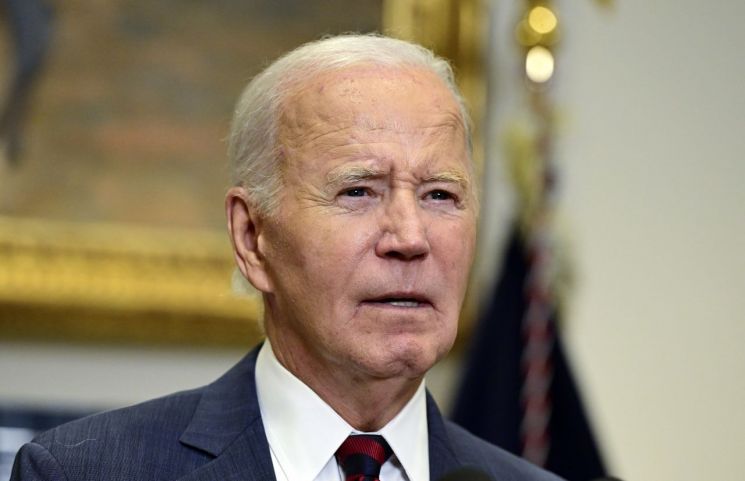
Gina Raimondo, U.S. Secretary of Commerce, said, "The Commerce Department's investigation found that Chinese general-purpose semiconductors are embedded in two-thirds of U.S. products, and half of U.S. companies, including those in the defense industry, do not know the origin of their semiconductors." She added, "China aims to account for more than 60% of the world's new general-purpose semiconductor production capacity over the next decade," pointing out that "this suppresses investment in other regions and causes unfair competition."
The Section 301 of the Trade Act, which is the basis for this investigation, grants the U.S. president broad authority to impose trade retaliation measures, including tariffs, against countries engaging in unfair trade practices. It is known as the so-called "Super 301." According to the Commerce Department's investigation, Chinese companies supply general-purpose semiconductors at prices 30-50% lower than U.S. companies, and some sell products below production cost. If China's unfair trade practices are confirmed, the U.S. can take extensive retaliatory measures such as retaliatory tariffs or import bans. Additional recommendations for action to Congress are also possible.
However, since the investigation is expected to take several months, follow-up measures are likely to be implemented during Trump's second term administration. Analysts suggest that this investigation by the Biden administration will more easily pave the way for Trump, who previously announced a 60% tariff on all Chinese imports, to impose massive tariffs on China.
Although President Biden and President-elect Trump have significant differences in economic policies such as taxation and fiscal policy, as well as energy, industry, immigration, and foreign affairs, they maintain a similarly tough stance on China policy. The Biden administration has not lowered the tariffs imposed on Chinese imports by the first Trump administration. Furthermore, in May, it announced an increase in tariffs up to 100% on Chinese electric vehicles, steel, aluminum, semiconductors, lithium-ion electric vehicle batteries, and solar cells based on Section 301 of the Trade Act, citing China's unfair trade practices.
© The Asia Business Daily(www.asiae.co.kr). All rights reserved.
![Clutching a Stolen Dior Bag, Saying "I Hate Being Poor but Real"... The Grotesque Con of a "Human Knockoff" [Slate]](https://cwcontent.asiae.co.kr/asiaresize/183/2026021902243444107_1771435474.jpg)
















