Ministry of Industry's Plan to Enhance Competitiveness of Petrochemical Industry
Domestic Petrochemical Industry Faces Oversupply Risk Due to Capacity Expansion in China and Middle East
Promoting Facility Rationalization and Competitiveness Reinforcement
The government has decided to strengthen support for companies that voluntarily close facilities or sell businesses in order to induce business restructuring in the domestic petrochemical industry, which is experiencing a global oversupply due to worldwide petrochemical facility expansions. Regions expected to face economic difficulties due to the petrochemical industry crisis will be designated as 'Preemptive Industrial Crisis Response Areas' in the first half of next year, expanding the scope of employment retention subsidies for partner companies and enhancing financial support.
The Ministry of Trade, Industry and Energy announced the 'Measures to Enhance Competitiveness of the Petrochemical Industry' at the Ministerial Meeting on Industrial Competitiveness Enhancement held on the 23rd.
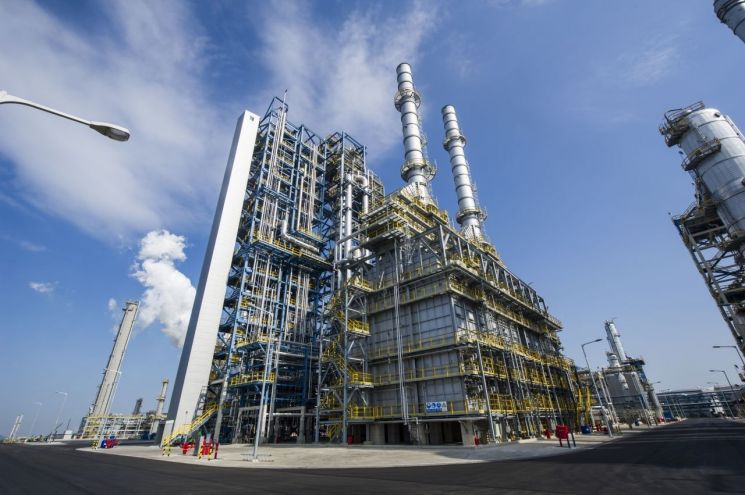
An official from the ministry explained the background of the measures, saying, "Recently, the domestic petrochemical industry is facing an unprecedented crisis due to global oversupply caused by worldwide petrochemical facility expansions. Considering the global trend of facility expansions, there are concerns that the global oversupply will worsen until 2028, and the possibility of market recovery thereafter is uncertain, making urgent business restructuring necessary to secure competitiveness."
Accordingly, the government plans to strengthen the competitiveness of the petrochemical industry by ▲ rationalizing oversupplied naphtha cracking facilities (NCC), ▲ reinforcing global market competitiveness, and ▲ transitioning to high value-added products.
◆ Support for Voluntary Business Restructuring by Companies = The government will support voluntary business restructuring such as facility closures, business sales, joint venture establishment, facility operation efficiency improvements, and mergers and acquisitions (M&A) of new businesses. First, if economic difficulties are expected in regions due to rationalization of facilities aimed at minimizing negative impacts on employment and local economies, these regions will be designated as 'Preemptive Industrial Crisis Response Areas' in the first half of next year. Once designated, partner companies collaborating with large petrochemical firms and workers of small business owners in the area will be eligible for support. Specifically, the sales requirement for employment retention subsidies for partner companies related to the main industry will be relaxed from 15% to 10%. Support for partner companies and small business owners will be strengthened through loan maturity extensions (one year), principal repayment deferrals, emergency management stabilization funds, and guarantees.
An official from the ministry said, "Currently, the criterion for the main industry in the Preemptive Industrial Crisis Response Areas is the number of employees, but this should be revised according to the characteristics of the industry and the region. We plan to amend the related notification and designate areas in the first half of next year after reviewing applications from local governments."
The ministry also revised the Corporate Vitality Act to suit the characteristics of business restructuring in oversupplied industries. In the August revision, in addition to the existing operating profit margin indicator over the past three years used to determine oversupplied industries, a new indicator based on the operating profit margin over the last four quarters was added, and facility reduction or closure was included as a type of business restructuring. To strengthen incentives for business restructuring, the exemption period for holding company regulations under the Corporate Vitality Act for restructuring companies was extended from three to five years, allowing buyers time to comply with shareholding regulations after generating profits. Furthermore, companies approved for business restructuring involving facility closure, reduction, or business transfer that are recognized as facing significant management crises and taking employment retention measures are included in the employment retention subsidy program.
Incentives to encourage companies to make swift business restructuring decisions have also been designed. When establishing joint ventures or pursuing new business M&A, the Fair Trade Commission will actively support pre-consultations, including the scope of document submissions, to expedite corporate merger reviews. Additionally, prior reviews for information exchange between companies to improve facility operation efficiency will be simplified to 15 days. A joint consultation channel between the Ministry of Trade, Industry and Energy and the Fair Trade Commission will be operated to support information exchange scope, procedures, and expedited reviews for industries classified as oversupplied under the Corporate Vitality Act.
Moreover, within the Preemptive Industrial Crisis Response Areas, when assets are sold to repay financial debts or secure investment funds according to business restructuring plans, the tax deferral period will be extended. The government also plans to supply a total of 3 trillion won in policy financial funds to the petrochemical industry.
◆ Strengthening Global Market Competitiveness = The government will also promote raw material and utility cost reductions and regulatory rationalization. To reduce raw material and utility costs, the duty-free period for naphtha and crude oil used for naphtha production will be extended until 2025. Additionally, through amendments to the Enforcement Decree of the Petroleum Business Act and others, refunds will be provided for petroleum import charges on liquefied natural gas (LNG) used as industrial raw materials.
Rationalization of safety regulations within the scope of ensuring safety will also be pursued. For example, processes requiring power outage inspections during regular inspections under the Electrical Safety Control Act will be conducted during company maintenance periods. When replacing transported gases in existing pipelines without load changes or with reduced load, existing seismic regulations will continue to apply instead of strengthened new seismic regulations.
The government plans to conduct an 'Industry Autonomous Consulting Service' early next year to diagnose the future global competitive landscape of the petrochemical industry and derive desirable directions for business restructuring. Through this, the scale of domestic excess facilities will be assessed, and priorities for desirable business restructuring and excess facility reduction will be reviewed to serve as criteria and principles for future government support.
© The Asia Business Daily(www.asiae.co.kr). All rights reserved.
![Clutching a Stolen Dior Bag, Saying "I Hate Being Poor but Real"... The Grotesque Con of a "Human Knockoff" [Slate]](https://cwcontent.asiae.co.kr/asiaresize/183/2026021902243444107_1771435474.jpg)















