Northern Animal Hygiene Testing Center Goat 7 Disease Test Results
Q Fever and Cryptosporidium Antibodies Detected in 18 Goats from 7 Farms
Hospital Testing Recommended to Farm Owners of 7 Farms...Continuous Management Needed
Expansion of 7 Disease Tests Planned for Next Year
The Northern Gyeonggi Animal Hygiene Testing Laboratory announced on the 23rd that the examination of goat diseases raised in farms in northern Gyeonggi Province showed no abnormal findings for zoonotic diseases such as Q fever, tuberculosis, and brucellosis.
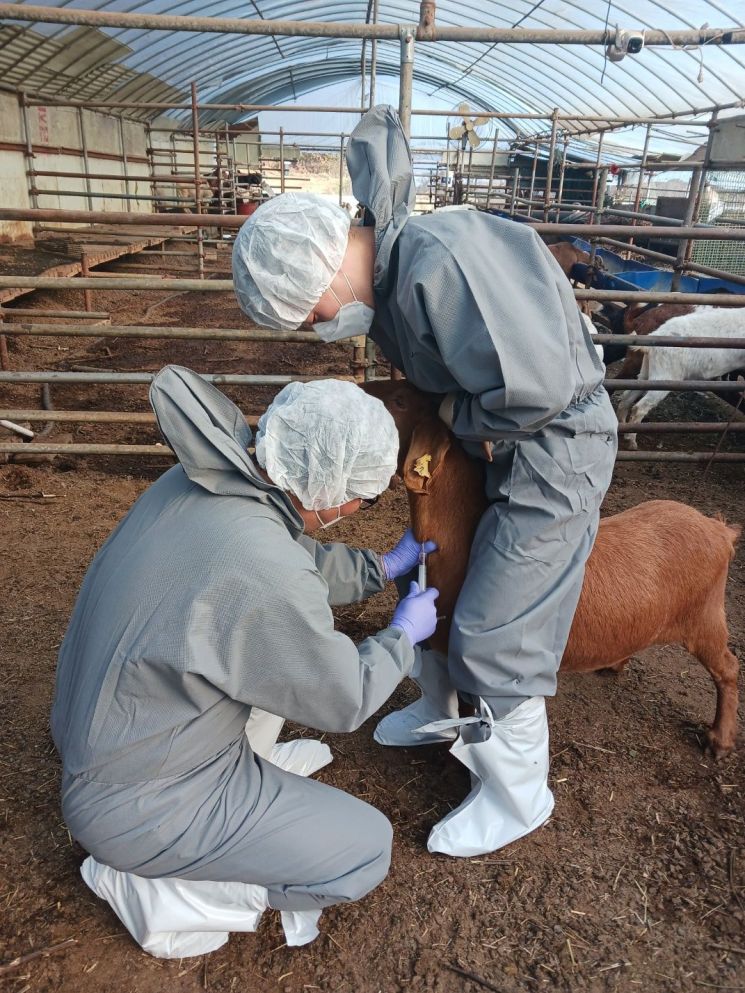 Officials from the Northern Gyeonggi Animal Hygiene Testing Laboratory are collecting blood to conduct clinical surveillance of goat diseases. Provided by Gyeonggi Province
Gyeonggi Province proactively conducted disease inspections on goats, which had been a blind spot in livestock disease prevention, from the 5th to the 28th of last month to prevent the spread of zoonotic diseases and ensure the safety of food distribution.
The inspection items included three zoonotic diseases (Q fever, tuberculosis, brucellosis) that can be transmitted between animals and humans causing fever, headache, muscle pain, and pulmonary tuberculosis; two consumptive diseases causing diarrhea in goats (bovine viral diarrhea, cryptosporidiosis); and two first-class livestock infectious diseases (foot-and-mouth disease, pseudo-rinderpest), totaling seven diseases.
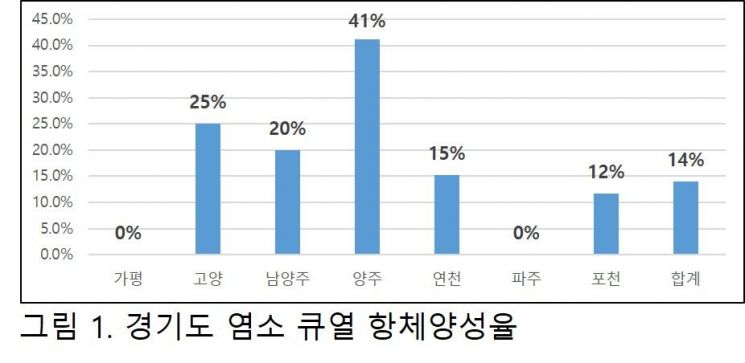
As a result of the tests, among 129 goats from 20 farms, 7 farms (35.0%) with 18 goats (13.9%) tested positive for antibodies against the zoonotic disease Q fever, and 4 farms with 4 goats tested positive for antibodies against the consumptive disease cryptosporidiosis. No antibodies (antigens) were detected for the other diseases. Antibody positivity indicates that antibodies were produced due to past infection with Q fever or cryptosporidiosis.
Clinical symptoms of Q fever in goats can include reproductive disorders such as abortion and stillbirth, while cryptosporidiosis causes diarrhea. Field clinical surveillance of antibody-positive individuals showed no such abnormal symptoms.
However, Gyeonggi Province recommended that farm owners of the 7 farms confirmed to be antibody-positive for the zoonotic disease Q fever undergo hospital examinations. Since antibodies were produced due to infection, farmers were advised and guided to promptly report to livestock quarantine authorities if clinical symptoms such as abortion or stillbirth occur in goats. Especially during winter, when low temperatures can weaken immunity, support was provided to farms with dewormers, immune boosters, and nutritional supplements.
Jung Bong-su, director of the Northern Gyeonggi Animal Hygiene Testing Laboratory, said, “This pilot project for goat disease inspection is expected to help not only in systematic disease management but also in preemptively blocking the transmission of zoonotic diseases such as Q fever to humans.” He added, “In 2025, we plan to expand the volume of tests for seven diseases including Q fever and cryptosporidiosis to enhance the safety of goat meat products.”
© The Asia Business Daily(www.asiae.co.kr). All rights reserved.
![Clutching a Stolen Dior Bag, Saying "I Hate Being Poor but Real"... The Grotesque Con of a "Human Knockoff" [Slate]](https://cwcontent.asiae.co.kr/asiaresize/183/2026021902243444107_1771435474.jpg)
















