Paju City, Gyeonggi Province (Mayor Kim Kyung-il) announced on the 18th that it has thoroughly managed food poisoning prevention this year and achieved the highest grade, S grade, in the 2024 'Food Poisoning Occurrence Management Rate' comprehensive evaluation of cities and counties. In addition, the city urged residents to end the year healthily by adhering to personal hygiene rules and practicing thorough hygiene management to prevent and stop the spread of norovirus food poisoning, which frequently occurs in winter.
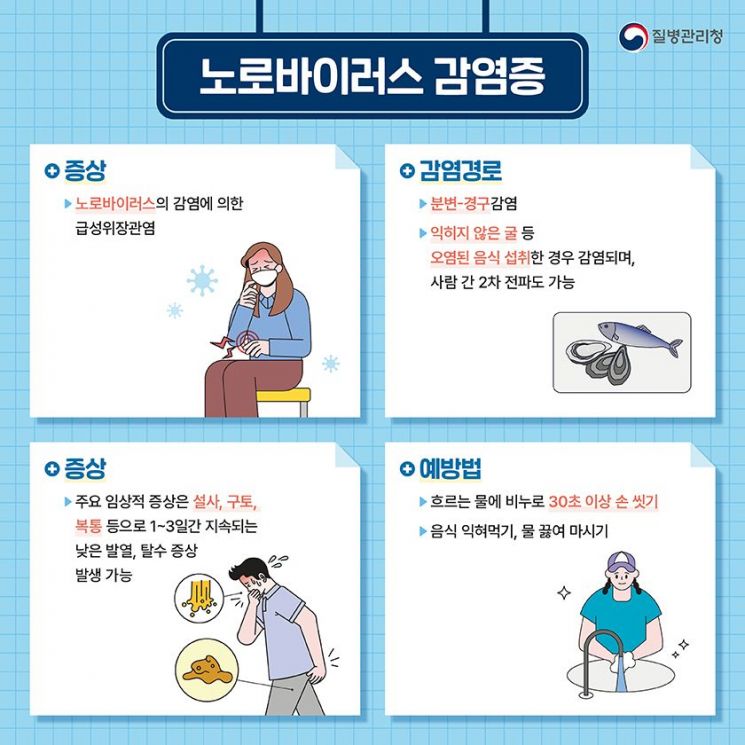 Paju City Urges Caution Against Norovirus Food Poisoning in Winter. Provided by Korea Disease Control and Prevention Agency
Norovirus is transmitted through direct or indirect contact with contaminated food and patients. Unlike common bacteria, it can survive for a long time even in freezing cold weather, and it can easily spread with only a small amount of the virus, making its transmission speed relatively fast.
After infection with norovirus, there is usually an incubation period of 24 to 48 hours, and symptoms mainly include vomiting, abdominal pain, and diarrhea. Symptoms last for 2 to 3 days and then improve on their own. However, in high-risk groups, dehydration can occur if fluids are not sufficiently replenished, so caution is necessary.
To prevent norovirus food poisoning, the following should be observed: ▲ Wash hands with soap under running water for more than 30 seconds after going out, after using the restroom, before eating, and before and after handling ingredients ▲ Cook food thoroughly and drink boiled water ▲ Completely wash raw vegetables with disinfectant ▲ Cook shellfish such as oysters thoroughly (above 85℃) ▲ Prohibit food handlers with suspected symptoms from participating in cooking (for 2 weeks).
Paju City conducts various prevention projects throughout the year to prevent food poisoning accidents, including regular education, guidance, and inspections of group meal facilities (such as schools), large restaurants, and delivery-only establishments; inspecting knives and cutting boards in meal facilities and providing ongoing hygiene consulting; and educating children on proper handwashing.
Jang Yeon-hee, head of the Hygiene Division, stated, “We will manage personal hygiene, which tends to be neglected in winter, more thoroughly and continue to strive for a healthier and better living Paju.”
© The Asia Business Daily(www.asiae.co.kr). All rights reserved.
![Clutching a Stolen Dior Bag, Saying "I Hate Being Poor but Real"... The Grotesque Con of a "Human Knockoff" [Slate]](https://cwcontent.asiae.co.kr/asiaresize/183/2026021902243444107_1771435474.jpg)















