German Auto Industry to Face a Harsher Winter of Challenges Due to Trump President-Elect's Tariff Threats
The struggling German automobile industry is expected to face an even harsher winter of trials with the advent of the Trump 2.0 era next year, according to a report by the U.S. financial media CNBC on the 17th (local time).
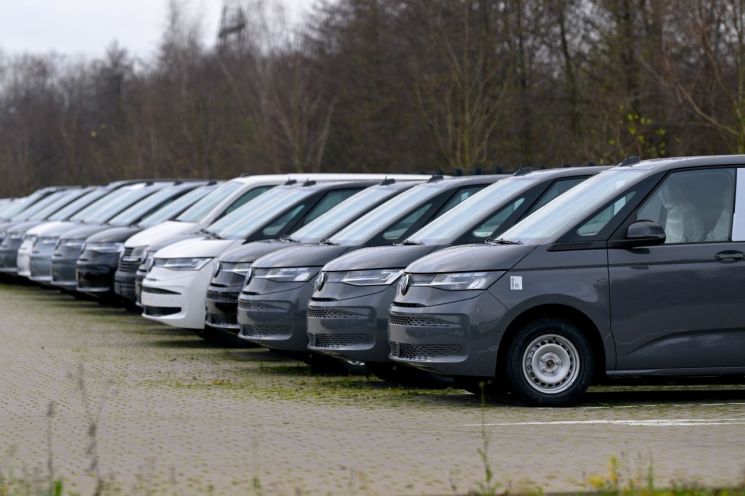
According to CNBC, President-elect Trump said during his presidential campaign in September, "I want German car companies to become American car companies. I want them to build factories here." This is a kind of warning that German automakers will need to invest directly in the U.S. to avoid a 'tariff bomb.' President-elect Trump pledged to impose a 60% tariff on Chinese products and a general tariff of 10-20% on all imports.
Some view President-elect Trump's remarks as a form of bluffing for negotiation, but concerns are growing given that the German automobile industry is already experiencing difficulties such as sluggish sales. German automakers like Volkswagen, Mercedes-Benz, and BMW have been hit hard by intensified competition with Chinese companies leveraging price competitiveness and weak demand due to economic slowdown. Germany, the largest economy in the Eurozone, is expected to experience negative growth for the second consecutive year following last year.
In particular, based on last year, Germany's passenger car exports to the U.S. amounted to 23 billion euros (approximately 34.6 trillion won), the largest among European Union (EU) member countries. This accounts for 15% of Germany's exports to the U.S.
Michael Robinet, Executive Director of Automotive Consulting at S&P Global Mobility, said that President-elect Trump's remarks were "rhetoric during the election campaign," but added, "There will be some pressure through tariffs or other unilateral measures." Rico Luman, an economist at Dutch ING, said, "The German automobile industry is likely to be significantly affected by Trump's tariff threats." Previously, during his first term, President Trump also pushed for high tariffs on German cars, clashing with then-Chancellor Angela Merkel.
The German automobile industry maintains a stance of cautious observation regarding the impact of President-elect Trump's re-election.
A Volkswagen representative said, "We are evaluating President-elect Trump's tariff plan," but emphasized that over 90% of the vehicles sold in the U.S. are produced in North America, thus qualifying for tariff exemption under the United States-Mexico-Canada Agreement (USMCA). However, a variable factor is that President-elect Trump recently announced a 25% high tariff on Mexico and Canada and may pursue renegotiation of the USMCA immediately after taking office to nullify it.
Mercedes-Benz stated that it produces passenger cars and vans in 12 locations within the U.S. and expressed hope for "constructive dialogue with the new U.S. administration." Volkswagen and Mercedes-Benz stocks have fallen 23% and 13%, respectively, since the beginning of this year. These companies are currently pursuing factory closures and job cuts in Germany.
© The Asia Business Daily(www.asiae.co.kr). All rights reserved.
![Clutching a Stolen Dior Bag, Saying "I Hate Being Poor but Real"... The Grotesque Con of a "Human Knockoff" [Slate]](https://cwcontent.asiae.co.kr/asiaresize/183/2026021902243444107_1771435474.jpg)















