Impact of Poor Performance in Manufacturing and Other Industries
Last year, the net profit of domestic companies sharply declined by over 20%, marking a decrease for the second consecutive year. This was due to poor performance in major industries, including manufacturing and semiconductors. The proportion of companies entering new businesses last year also slightly decreased compared to the previous year.
According to the '2023 Corporate Activity Survey' released by Statistics Korea on the 18th, the number of domestic companies last year was 14,550, an increase of 5.3% compared to the previous year. The number of employees rose by 3.7% to 5,163,000. Among all workers, the proportion of regular employees (4,487,000) was 86.9%, down 0.1 percentage points from the previous year.
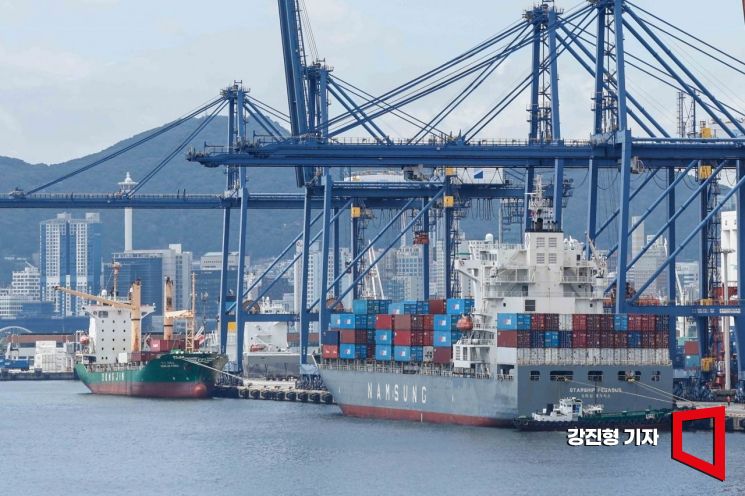
Excluding the financial and insurance sectors, the total sales of surveyed companies amounted to 3,203.5 trillion KRW, a decrease of 1.1% compared to the previous year. By industry, sales declined in transportation and warehousing (-12.2%), electricity and gas (-9.7%), and manufacturing (-2.5%). In particular, manufacturing sales (1,865.7 trillion KRW) accounted for 58.24% of total industry sales, so the impact was relatively significant.
A Statistics Korea official explained, "Looking at industries, manufacturing decreased significantly," adding, "Within manufacturing, the electronics and telecommunications subcategory, which includes semiconductors, was affected due to weak semiconductor sales last year." The official further noted, "Automobile sales increased, but chemical products and petroleum refined products decreased."
Pre-tax net profit of companies was 150.7 trillion KRW, down 23.6% from the previous year. Although it had sharply increased in 2021 (222.3 trillion KRW), it declined again last year following 2022 (197.3 trillion KRW). The pre-tax net profit per 1,000 KRW of sales also fell by 14 KRW to 47 KRW, continuing the negative trend.
Research and development (R&D) expenses of companies excluding financial and insurance sectors increased by 8.8% to 80 trillion KRW, marking a three-year consecutive growth trend. R&D expenses per company rose by 2.9% compared to the previous year. In manufacturing, total R&D expenses (73.4 trillion KRW) increased by 9.0%, and R&D expenses per company (13.7 billion KRW) grew by 2.2%.
Last year, 352 companies entered new businesses, accounting for 2.4% of all companies. This represents a 0.1 percentage point decrease from the previous year. By industry, manufacturing (52.3%) showed a prominent share of new business entries, followed by information and communication (17.3%) and wholesale and retail trade (7.1%).
The number of companies owning subsidiaries last year was 6,117, down 0.7% from the previous year. Domestic subsidiary-owning companies numbered 4,730, a 0.4% decrease, while companies with overseas subsidiaries (3,410) increased by 0.4% compared to the previous year. Subsidiaries were mainly distributed in China (23.1%), the United States (16.1%), and Vietnam (11.8%).
A Statistics Korea official stated, "Looking at the countries where overseas subsidiaries are located, the number in China is decreasing while those in the United States are increasing," adding, "In Asia, although the share is not large, subsidiaries in Japan (11.3%) and Singapore (8.4%) increased relatively significantly last year."
© The Asia Business Daily(www.asiae.co.kr). All rights reserved.
![Clutching a Stolen Dior Bag, Saying "I Hate Being Poor but Real"... The Grotesque Con of a "Human Knockoff" [Slate]](https://cwcontent.asiae.co.kr/asiaresize/183/2026021902243444107_1771435474.jpg)















