Kim Byunghwan, Chairman of the Financial Services Commission, Former Financial Policy Office
Kwon Daeyoung and Lee Hyeongju, IMF-era Ministry of Finance Officers
Current Financial Policy Lineup is 'Superstar'
Shin Jinchang, Director of Financial Policy Bureau, 'Little Giant'
Kang Youngsoo, Financial Policy Section Chief, 'Work Expert'
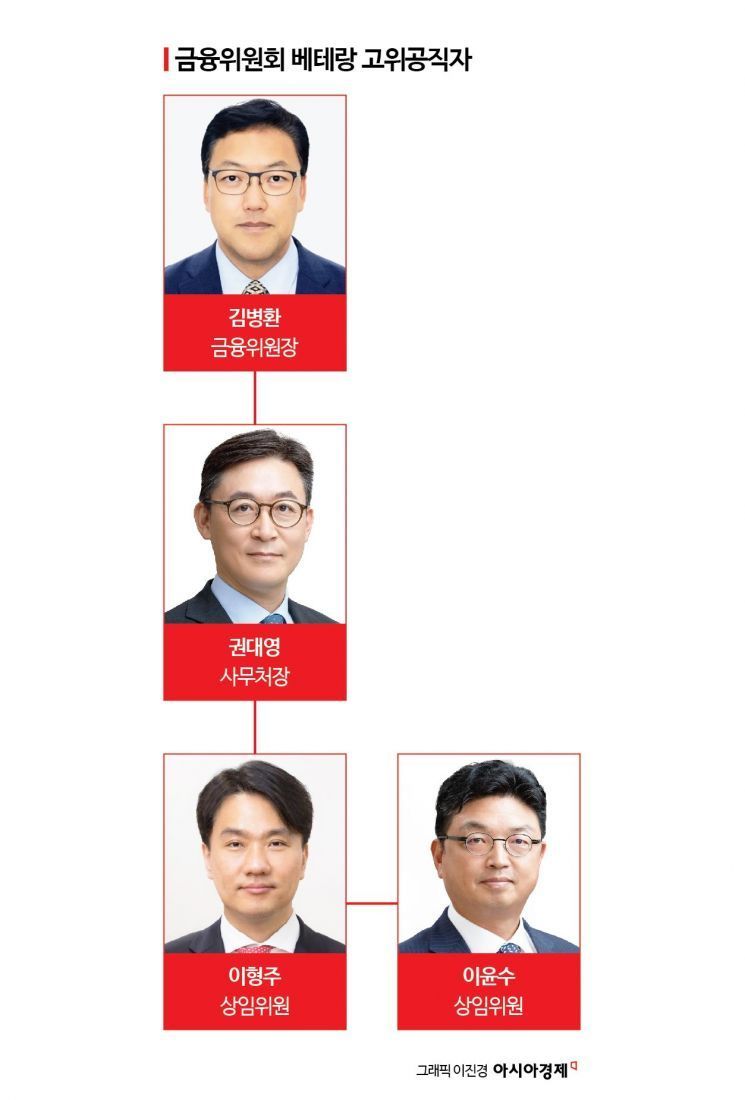
The Financial Services Commission (FSC) has been recognized as a savior of the domestic financial market during times of crisis. Currently, senior officials at the FSC are veteran bureaucrats who have experienced all of Korea's economic emergencies, including the foreign exchange crisis (1997), the credit card crisis (2003?2005), the global financial crisis (2008), the impeachment of former President Park Geun-hye (2016), COVID-19 (2020), and the emergency martial law declaration and impeachment turmoil under President Yoon Seok-yeol (2024). Alongside this, the manpower of the financial policy line is evaluated as standing out more than ever in crisis situations.
At around midnight on the 4th, the firmly closed main gate of the Seoul Government Complex in Gwanghwamun was opened. Those who requested the gate to be opened were the FSC Secretary-General, directors, section chiefs, and officers. Soon after, FSC Chairman Kim Byung-hwan hurried into the complex. They reviewed the foreign exchange market, liquidity situation, stock market opening, preparations for the stock market stabilization fund and bond market stabilization fund, and devised market response measures until 4 a.m. on the 4th.
Together with the Ministry of Economy and Finance and the Financial Supervisory Service, the FSC held an emergency macroeconomic and financial issues meeting at 7 a.m. and a financial situation review meeting at 9 a.m. on the same day, and presented response measures over about two weeks. Since the declaration of martial law and until the presidential impeachment, there was little movement in mid- to long-term foreign capital. Foreign investment bank (IB) officials reportedly praised Chairman Kim for the fact that the market operated normally despite the martial law situation. This signifies that at least the domestic financial market demonstrated trust by operating within a normal system.
Chairman Kim Byung-hwan and Secretary-General Kwon Dae-young Worked at the Ministry of Finance and Economy’s Financial Policy Office During the IMF Crisis
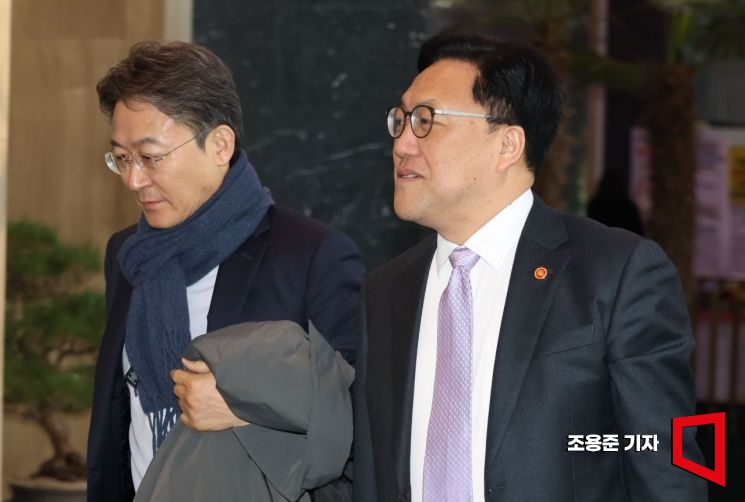 Kim Byung-hwan, Chairman of the Financial Services Commission (right), is arriving at the Government Seoul Office in Jongno-gu, Seoul, on the 10th. Photo by Jo Yong-jun
The FSC’s swift response was partly due to solid manpower from ministers to officers. In particular, Chairman Kim and the first-grade officials directly experienced the foreign exchange crisis during their early days as junior officers. Chairman Kim was a junior officer at the Financial Policy Office of the Ministry of Finance and Economy (now the Ministry of Economy and Finance) during the foreign exchange crisis.
Secretary-General Kwon Dae-young is a representative figure who is called upon during every crisis. He moved to the Foreign Currency Fund Division of the Financial Policy Office at the Ministry of Finance and Economy in 1996 and was part of the youngest line that managed the foreign exchange crisis. Standing Commissioner Lee Hyung-joo witnessed this while working as a junior officer at the Economic Policy Bureau of the Ministry of Finance and Economy in 1997.
A former Ministry of Economy and Finance official said, "Chairman Kim and Secretary-General Kwon are bureaucrats who underwent hard training by directly experiencing the foreign exchange crisis at the Financial Policy Office," emphasizing, "Despite many issues in the financial market such as Legoland, real estate project financing (PF), and martial law, no problems occurred thanks to the FSC."
During the credit card crisis in 2003, Secretary-General Kwon and Standing Commissioner Lee were at the center of the response. Secretary-General Kwon moved from the Securities System Division of the Financial Policy Bureau in 2000 to the Financial Policy Division as a senior officer in 2005, while Standing Commissioner Lee moved to the Financial Policy Division in 2003. For about two years from 2003, they handled the sale of LG Card (now Shinhan Card) and the relief of credit delinquents.
During the 2008 global foreign exchange crisis when financial markets worldwide were in panic, Standing Commissioner Lee was promoted to senior officer of the Financial Policy Division and monitored market conditions. He also prepared response measures as the Financial Policy Division chief during the impeachment of former President Park Geun-hye. During the COVID-19 crisis, Secretary-General Kwon took the lead as the head of the 'COVID-19 New Deal Finance Promotion Support Team.'
Standing Commissioner Lee Yoon-soo began his career in 1995 as an administrative officer in the Aerospace Industry Division of the Ministry of Industry and Resources but moved to the Financial Supervisory Commission in 1999, emerging as a prominent economic bureaucrat. He served as an administrative officer in the Office of the Senior Secretary for Economic Affairs at the Presidential Office in 2009, working on the front lines to help the Korean economy overcome the shock of the global financial crisis.
The Financial Policy Bureau Acts as a 'Special Task Force' During Crises... This Year's Financial Policy Line Stands Out
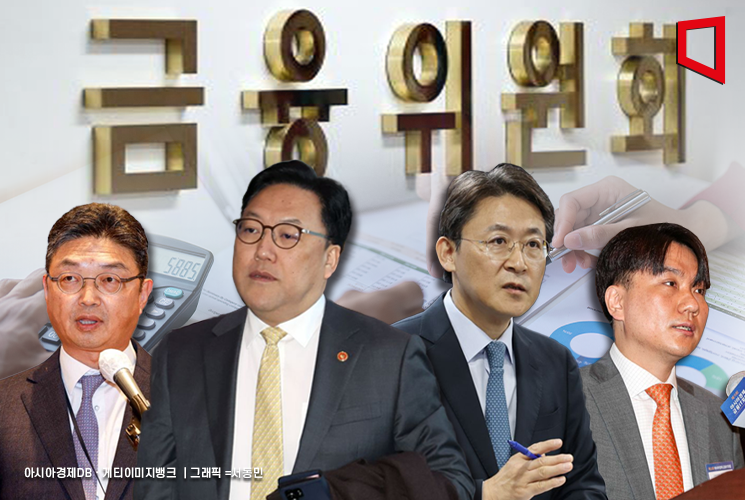
This year, the FSC’s financial policy lineup is particularly notable. The Financial Policy Division is a core department within the FSC organization. Under normal circumstances, it oversees domestic financial policy, and when a crisis occurs, it acts as a special task force. The coordination among the Secretary-General, Financial Policy Bureau chief, Financial Policy Division chief, and Financial Policy senior officers has been especially praised.
An official from the Ministry of Economy and Finance said, "The current financial policy line consists entirely of people known for their excellent work," adding, "In particular, Secretary-General Kwon is considered a 'superstar-level' bureaucrat whose name comes up every time there is a crisis."
Shin Jin-chang, the Financial Policy Bureau chief, is a well-known economic bureaucrat both inside and outside the FSC. Former FSC Chairman Choi Jong-gu reportedly called him a 'little giant.' Former Deputy Minister of Economy and Finance Kim Yong-beom also praised him for his solid work experience and outstanding policy execution skills.
Additionally, the 'F4 Economic Meeting' is also regarded as a masterstroke. The F4 Economic Meeting is a key meeting of Korea’s economic team, convened urgently when economic policy formulation and financial market monitoring are needed. The Deputy Prime Minister for Economy, FSC Chairman, Financial Supervisory Service Governor, and Bank of Korea Governor gather to thoroughly discuss financial market stabilization measures, market sentiment stabilization, and economic structure review.
An FSC official explained, "The F4 economic team was created in 2022 to manage the Legoland crisis, and after overcoming that crisis, the trust among the four has deepened," adding, "The ability to respond swiftly and comprehensively to the stock, bond, and foreign exchange markets has had a significant impact on market stabilization."
© The Asia Business Daily(www.asiae.co.kr). All rights reserved.
![Clutching a Stolen Dior Bag, Saying "I Hate Being Poor but Real"... The Grotesque Con of a "Human Knockoff" [Slate]](https://cwcontent.asiae.co.kr/asiaresize/183/2026021902243444107_1771435474.jpg)

















