"Long-term Sleep Deprivation Affects Obesity, Heart Disease, and More"
A warning has been issued that sleeping less than six hours a day for 25 years could cause our bodies to transform like 'Gollum' from the movie 'The Lord of the Rings.'
On the 15th (local time), according to the New York Post and others, the British bedding brand 'Bensons for Beds' collaborated with sleep expert Dr. Sophie Bostock to predict the 2050 appearance of a woman named 'Hanna,' who averages about six hours of sleep per day. The digital rendering of Hanna resembled the villain character 'Gollum' from the movie 'The Lord of the Rings.' In particular, Hanna's thinning hair, aged skin, and hunched posture were created with reference to academic studies related to the effects of sleep deprivation on the body.
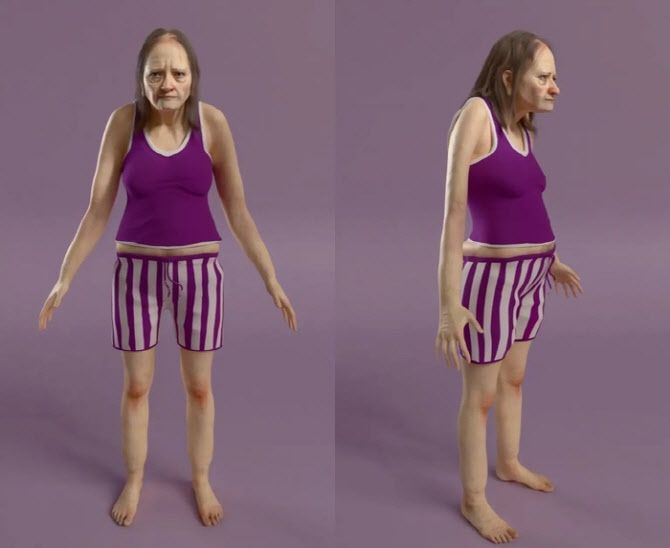
Dr. Bostock said, "Hanna is an example that stimulates thinking about the impact of sleep on overall health," adding, "Research shows that long-term sleep deprivation increases the risk of diseases that can affect the heart, including obesity, heart disease, and type 2 diabetes."
When sleep quality is poor, signs of skin aging worsen, and skin barrier function also declines, leading to lower satisfaction with appearance. Additionally, insufficient sleep can cause fine wrinkles and eye redness. Sleep disorders can also lead to hair loss. When the body does not get enough rest, it produces more cortisol, a stress hormone, which also affects the scalp.

Lack of sleep also decreases leptin and ghrelin, hormones responsible for hunger, which increases appetite. Cognitive dysfunction, high blood pressure, diabetes, depression, and heart and kidney problems have also been found to be related to sleep.
Lisa Richard, Marketing Director of Bensons for Beds, said, "Hanna predicts the worst-case scenario that can occur when all conditions related to sleep, such as poor sleep habits and environment, go wrong," adding, "We want people to think more carefully about sleep and to find signs of their own sleep deprivation by looking at Hanna."
Meanwhile, the average daily sleep time of Koreans was 7 hours and 51 minutes in 2021, ranking among the lowest along with Japan (7 hours and 36 minutes) among OECD member countries. The average sleep time for OECD member countries is 8 hours and 27 minutes.
Also, many people were unable to get enough sleep due to sleep problems. According to the National Health Insurance Service, the number of sleep disorder patients in Korea increased by 28.5% over four years, from 855,000 in 2018 to 1,098,000 in 2022. During the same period, medical expenses also rose by 86%, from 152.6 billion won to 285.1 billion won.
© The Asia Business Daily(www.asiae.co.kr). All rights reserved.
![Clutching a Stolen Dior Bag, Saying "I Hate Being Poor but Real"... The Grotesque Con of a "Human Knockoff" [Slate]](https://cwcontent.asiae.co.kr/asiaresize/183/2026021902243444107_1771435474.jpg)
















