Customs, Defense Cost-Sharing, and North Korean Nuclear Issues Pile Up
Yoon's Impeachment Causes Government Paralysis and Halts Normal Diplomacy
Setbacks Inevitable in Responding to US Diplomacy and Trade Issues
WP: "South Korea's Power Vacuum Weakens Its Position with the US"
With the impeachment motion against President Yoon Seok-yeol, who declared and lifted martial law, passed in the National Assembly on the 14th, South Korea is inevitably facing setbacks in responding to the second Trump administration, which will take office in January next year. Although urgent issues requiring swift response to the U.S., such as high tariffs, increased costs for the stationing of U.S. troops in Korea (defense cost-sharing), and North Korea's nuclear issues, are piling up, concerns are growing that the golden time to respond to the second Trump administration may be lost as normal diplomacy comes to a complete halt amid government paralysis.
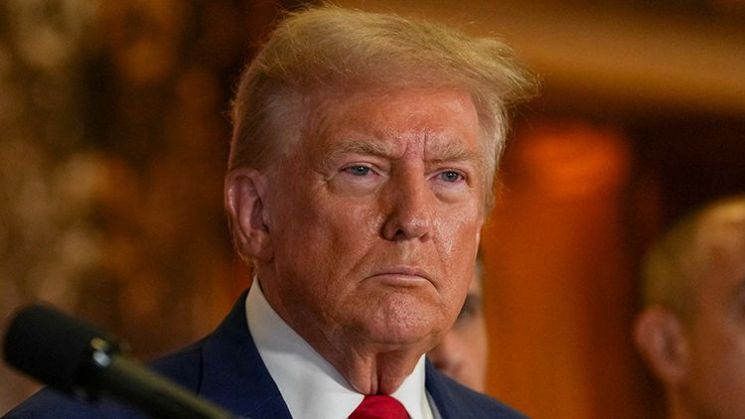
According to the White House and others on the 15th (local time), President Joe Biden spoke with Acting Prime Minister Han Duck-soo and reaffirmed the ironclad U.S.-Korea alliance.
The problem is that the Trump administration, which will take office on January 20 next year, may not recognize the 'dead power' acting president as a counterpart. Earlier, the first Trump administration, which took office in early 2017 during the impeachment crisis of former President Park Geun-hye, stated, "We will not deal with dead powers" and "We will talk with the next government." If the Constitutional Court accepts the impeachment motion against President Yoon passed by the National Assembly, an early presidential election will be held, and Korea's leadership will be replaced, making it unclear whether the second Trump administration will even engage in talks with officials from the current government before then.
There is growing speculation that South Korea will find it difficult to respond quickly and precisely to diplomatic and trade issues with the U.S., including pressure to impose high tariffs expected to be implemented immediately upon Trump's inauguration, reduction or abolition of subsidies under the CHIPS and Science Act (CSA) and the Inflation Reduction Act (IRA), increased defense cost-sharing, and North Korea nuclear issues, both in Korea and within the U.S.

Victor Cha, a Korea chair at the Center for Strategic and International Studies (CSIS) and a Korea expert in the U.S., recently pointed out, "There will be numerous issues that could affect Korea not in Trump's first 100 days, but in the first 100 hours," adding, "Everyone is going to Mar-a-Lago (Trump's residence in Florida) or the White House to attempt individual negotiations, but the problem is that Korea has no one who can do such things."
The U.S. daily Washington Post (WP) analyzed in this regard, "During the Constitutional Court's impeachment review period, Korea is paralyzed, coinciding with the launch of the second Trump administration, causing a leadership vacuum," and "With the power vacuum in Seoul, Seoul's position toward Washington weakens, and Korea's ability to respond swiftly to adjustments in diplomatic and trade policies may also become precarious."
Concerns about Korea being 'passed over' are also growing as the Trump president-elect is reported to have the will for direct North Korea-U.S. talks, just like in his first term. Recently, Trump nominated Richard Grenell, former U.S. Ambassador to Germany, as a special envoy responsible for North Korea and other issues. Grenell, who shares Trump's view that summits can be held even with adversarial countries, is seen as a sign that the possibility of a North Korea-U.S. summit remains open.
There are also concerns that the trilateral cooperation system among South Korea, the U.S., and Japan, which was firmly established under the Biden administration to respond to North Korea's nuclear threat and to check China, could weaken. All three leaders who attended the trilateral summit held at Camp David, the U.S. presidential retreat, in August last year have now been sidelined. In the U.S., there is speculation that if the Constitutional Court accepts the impeachment and an early presidential election is held, and if Lee Jae-myung, leader of the Democratic Party of Korea, wins the presidency, South Korea's diplomatic line will change drastically.
The U.S. economic daily Wall Street Journal (WSJ) stated, "Since President Yoon took office in 2022, Seoul has restored diplomacy with Tokyo, built a deeper relationship with the Biden administration, and achieved unprecedented South Korea-U.S.-Japan military cooperation," and predicted that if Lee becomes the next president, "He will pursue exchanges with North Korea, a more independent stance from the U.S., a balance with China (in diplomacy tilted toward the U.S.), and a tough line toward Japan."
© The Asia Business Daily(www.asiae.co.kr). All rights reserved.
![Clutching a Stolen Dior Bag, Saying "I Hate Being Poor but Real"... The Grotesque Con of a "Human Knockoff" [Slate]](https://cwcontent.asiae.co.kr/asiaresize/183/2026021902243444107_1771435474.jpg)
















