Fed Expected to Cut Interest Rate by 0.25%P on 18th
Key Points: Dot Plot and Economic Outlook
Possibility of Reducing Next Year's Rate Cuts from 4 Times
Strong US Economy and Trump-Driven Inflation Concerns Impact
As the final monetary policy meeting of the year by the U.S. Federal Reserve (Fed) takes place this week, Wall Street's attention is focused on the 'dot plot' and economic outlook that indicate next year's interest rate projections. The market has largely priced in the possibility of a third consecutive rate cut at this meeting, with the scale of rate reductions next year being the key point of interest. With the U.S. economy remaining strong and concerns about 'Trumpflation' (inflation caused by Trump's policies) growing, some on Wall Street speculate that the Fed may reduce its forecast for rate cuts next year from four times to two or three times.
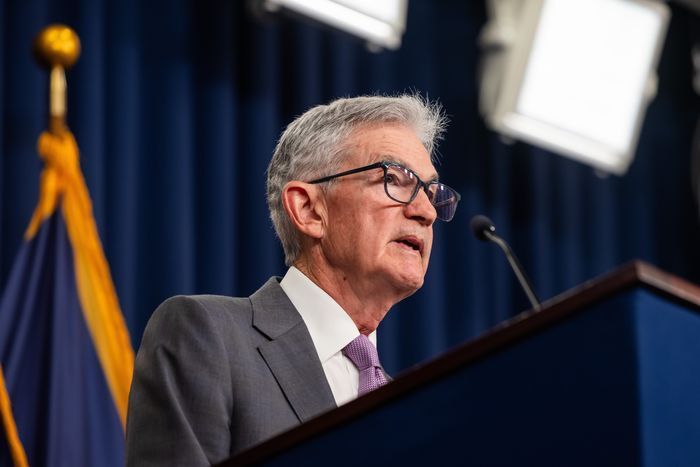
According to the Fed on the 15th (local time), the Federal Open Market Committee (FOMC) will hold its final regular meeting of the year on the 17th and 18th to decide on the benchmark interest rate.
The market is confident about a rate cut by the Fed. According to the Chicago Mercantile Exchange (CME) FedWatch, the federal funds futures market on that day reflects a 96% probability that the Fed will cut rates by 0.25 percentage points at this month's FOMC meeting. The probability of holding rates steady is 4%.
The key focus is the dot plot showing Fed officials' rate projections and the Summary of Economic Projections (SEP), which includes forecasts for growth, inflation, and unemployment. Previously, in September, the Fed's dot plot signaled four rate cuts (100 basis points; 1bp = 0.01 percentage points) in 2025. However, as the pace of inflation slowdown has stalled and the labor market remains robust, some on Wall Street expect the Fed to indicate fewer than three rate cuts next year in the dot plot to be released this time. Even if the Fed cuts rates this month, the prevailing view is that it will be a 'hawkish cut'?a rate reduction that precedes a deliberate slowdown in monetary easing next year.
JP Morgan forecasts three rate cuts next year. Michael Feroli, JP Morgan's Chief U.S. Economist, said, "This (Fed's) economic outlook will show better growth and solid inflation," adding, "The median rate forecast for the end of next year is expected to be revised from the four cuts presented in September to three cuts."
According to Bloomberg data, the market is pricing in two rate cuts next year. The tariff increases and illegal immigration ban policies proposed by President-elect Donald Trump, who will take office in January next year, are also seen as factors that could push inflation higher and make the Fed hesitant to cut rates. David Wilcox, Director of U.S. Economic Research at Bloomberg Economics (BE), said, "President-elect Trump has pledged a series of measures that will affect inflation and economic activity, complicating the Fed's task," and added, "Monetary policymakers will assess the likelihood of implementation of Trump's various policy proposals and balance those risks when deciding rates in the next few meetings."
Aditya Bhave, U.S. Economist at Bank of America (BoA), predicted, "It is highly likely that Fed Chair Jerome Powell will hint at slowing the pace of rate cuts, including a temporary pause in rate cuts in January, during the press conference."
Earlier, Chair Powell stated at an event held in New York on the 4th, "The economy is stronger than we expected in September," signaling an intention to adjust the pace of monetary easing. The rate futures market reflects a 78.3% probability that the Fed will cut rates by 0.25 percentage points this month and hold steady in January next year.
This week, key indicators that can confirm the state of the U.S. economy will be released consecutively. On the 17th, the November retail sales data, which supports two-thirds of the U.S. economy, will be announced, and on the 19th, the final GDP growth rate for the third quarter will be released. On the 20th, the November Personal Consumption Expenditures (PCE) price index, the inflation gauge most closely watched by the Fed, will be published. Major central banks in countries such as Japan and the United Kingdom will also hold monetary policy meetings this week following the U.S. and decide on benchmark interest rates.
© The Asia Business Daily(www.asiae.co.kr). All rights reserved.
![Clutching a Stolen Dior Bag, Saying "I Hate Being Poor but Real"... The Grotesque Con of a "Human Knockoff" [Slate]](https://cwcontent.asiae.co.kr/asiaresize/183/2026021902243444107_1771435474.jpg)















