President Yoon's Impeachment Motion Passed in National Assembly Plenary Session
Democratic Party's Offensive Against People Power Party Reaches Peak
Pro-Impeachment Faction in People Power Party Reduced to Minority
President Yoon Suk-yeol's duties have been suspended due to impeachment by the National Assembly. The People Power Party is heading toward collapse amid the backlash from the impeachment. The Democratic Party of Korea is raising the intensity of its offensive, declaring "this is just the first victory." Where will the political situation flow from here?
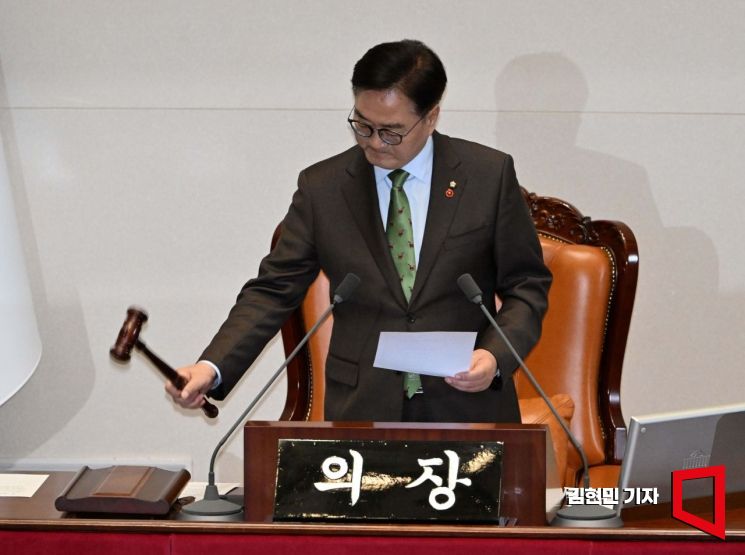 Speaker Woo Won-shik is announcing the passage of the impeachment motion against President Yoon Seok-yeol at the 4th plenary session of the 419th National Assembly (extraordinary session) held at the National Assembly on the 14th. Photo by Kim Hyun-min
On the 14th, the National Assembly passed the impeachment motion against President Yoon. It was 11 days after the December 3 emergency martial law incident. On that day, all 300 members of the National Assembly participated in the vote, with 204 in favor, 85 against, 3 abstentions, and 8 invalid votes, resulting in passage. Considering that the combined seats of independents and opposition parties total 192, at least 12 votes in favor came from the People Power Party. Given that the party's official stance was to reject the motion until the end, this means 23 members defected.
With President Yoon, who was effectively a figurehead president, having his duties suspended, the issue of a power vacuum has been resolved. However, the political situation remains challenging.
While the opposition cheered, there were not many defections from the ruling party. Compared to the 2016 impeachment of former President Park Geun-hye, when at least 62 ruling party members voted in favor, this time the motion barely exceeded the required quorum by 4 votes. Had the ruling party's vote control been better, the first attempt might have failed, and the second impeachment attempt could have also been rejected, potentially leading to unprecedented political chaos.
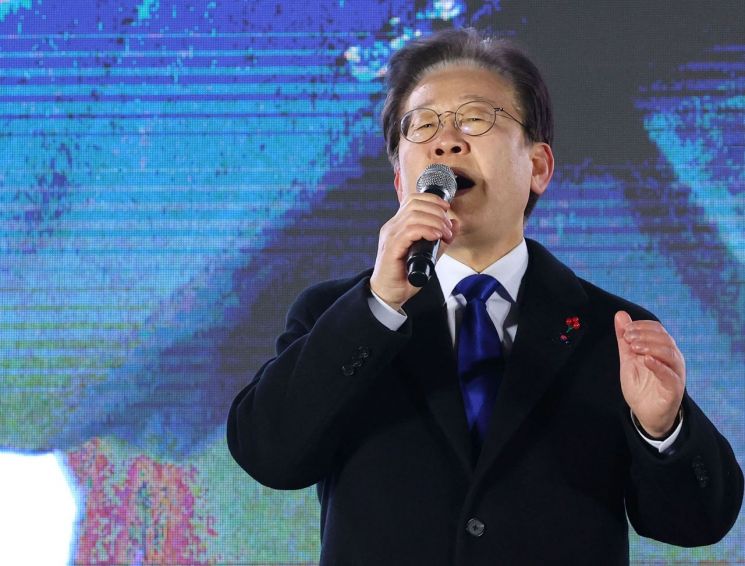
In reality, the opposition openly pressured the ruling party by saying they would push again if the motion failed, but efforts to persuade were insufficient. Even within the opposition, there were criticisms that the impeachment motion was rushed. Although the impeachment motion was ultimately passed, it proceeded only by deepening political divides and causing internal splits within the ruling party.
The offensive from the opposition, including the Democratic Party, is fiercer than expected.
On the day of the motion's passage, Representative Lee expressed in a statement, "We have only just overcome a small mountain," adding, "While we celebrate our victory, they deny a country where the people are the owners and constantly plot to return to a country they control." This revealed a perspective that views the ruling People Power Party not as political partners but as adversaries to be defeated.
Although it ended in failure, during the previous Moon Jae-in administration, there was some expectation of a political alliance between progressives and reformist conservatives in the form of a "candlelight coalition," which seemed to function to some extent. However, the current situation is completely different.
Representative Lee showed no gratitude toward the group within the ruling party that voted in favor of the impeachment, instead expressing resentment with remarks such as "They do not give up" and "They are causing suffering and disaster to the 52 million people of the Republic of Korea for their small interests." In the new democracy Lee envisions, the People Power Party is not a political partner but an enemy to be defeated.
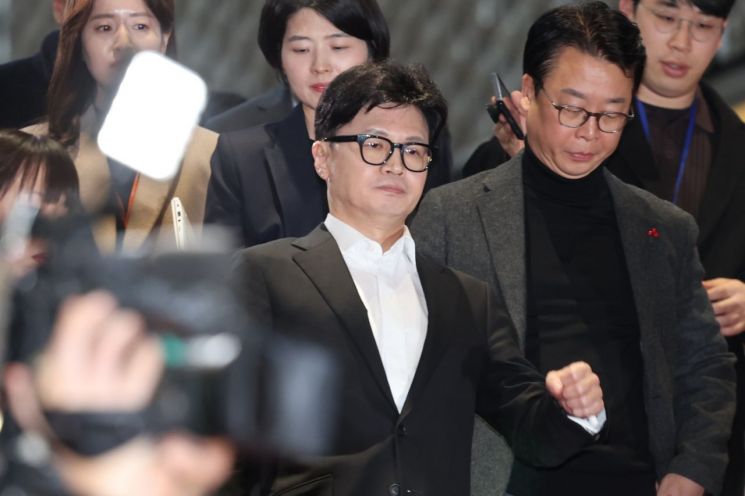
In particular, the Democratic Party strongly suspects former People Power Party floor leader Choo Kyung-ho of conspiring to commit treason in this impeachment motion. The motion submitted to the Constitutional Court states, "Choo Kyung-ho, the floor leader of the ruling People Power Party, convened emergency party meetings outside the National Assembly building and repeatedly changed locations to prevent his party members from going to the plenary session to vote in favor of lifting the emergency martial law, urging People Power Party members to stay at the party headquarters, thereby obstructing the resolution to lift the martial law," and "President Yoon conspired with former floor leader Choo." Ultimately, the People Power Party is portrayed as part of the treasonous forces or as conspirators with them. Dialogue between political forces has become unlikely.
Meanwhile, through this impeachment process, the leadership within the ruling party that might have negotiated with the opposition has been destroyed. All five elected senior members of the People Power Party have expressed their intention to resign, collapsing the Han Dong-hoon leadership. Voices within the People Power Party that could have claimed legitimacy in the post-impeachment phase, having acted during the emergency martial law lifting, are now marginalized within the party and labeled as "traitors."
As the river of impeachment is crossed once again, the ruling and opposition parties are heading toward an even more desperate confrontation ahead of the Constitutional Court's ruling.
© The Asia Business Daily(www.asiae.co.kr). All rights reserved.
![Clutching a Stolen Dior Bag, Saying "I Hate Being Poor but Real"... The Grotesque Con of a "Human Knockoff" [Slate]](https://cwcontent.asiae.co.kr/asiaresize/183/2026021902243444107_1771435474.jpg)


















