"Harder than during Corona... Year-end Special Disappears"
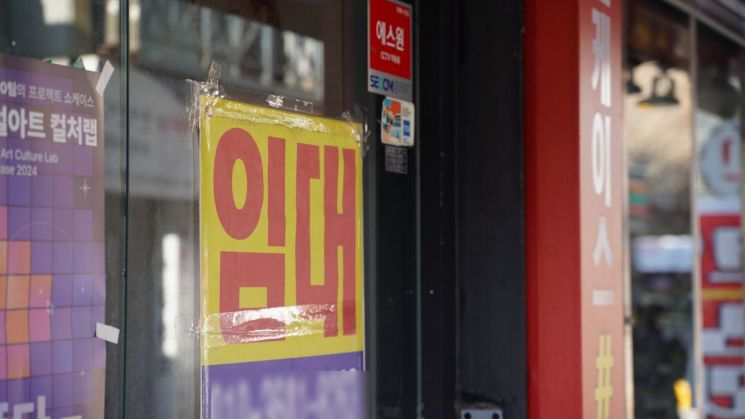 On the 12th, a restaurant in downtown Gwangju closed and put up a rental banner. Photo by Song Bohyun
"I am flustered because something unexpected happened. But what can we do about it?"
On the morning of the 12th, in an alley in Chungjang-ro, Dong-gu, Gwangju, Kim (69), who has been running a restaurant for 30 years, sat on one side of his shop, unable to take his eyes off the TV showing President Yoon Seok-yeol's address.
He said, "Self-employed people and ordinary citizens are struggling with sleepless nights, but (President Yoon) is so confident," adding, "I've been in business for a long time, but it's so hard I feel like dying. Since the martial law, even the reservations we had have been canceled," he sighed deeply.
This situation was not unique to this place. Park (41), who runs a samgyeopsal restaurant passed down through generations, said, "After the December 3 martial law incident, five group reservations were canceled. The impact on group reservations is completely different from regular reservations," adding, "Our restaurant is still doing relatively well, but sales trends keep declining."
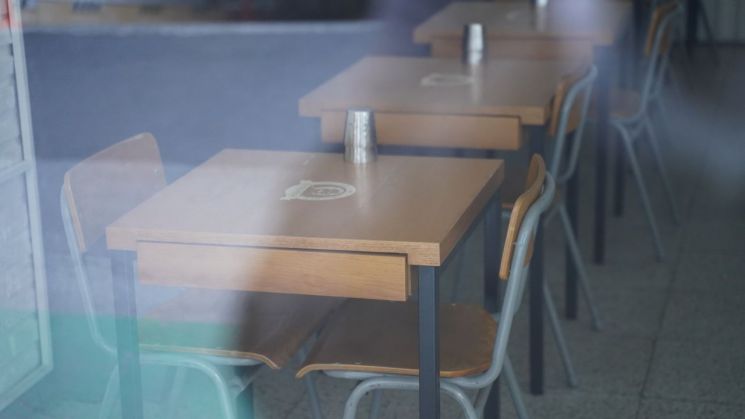 On the 12th, a restaurant on Chungjang-ro, Dong-gu, Gwangju is completely empty. Photo by Song Bohyun
Kim (62), who runs a baekban (set meal) restaurant during the day and operates only when there are group customers at night in Hwajeong-dong, Seo-gu, said, "There is a church that often makes reservations the day after the emergency martial law was declared, with about 20 people, but it was canceled. It's harder than during COVID-19," he said. "I experienced the May 18 Democratic Uprising, so I was a student hiding under a cotton blanket. The fear I feel now comes as a fear for my livelihood," he lamented.
Other self-employed people met on site also expected that business in December this year would not be easy following the impeachment political turmoil. They also said they were on the verge of closing due to inflation, labor costs, and rent.
Supporting this, the business closure rate in the Gwangju area was 11.8% (26,064 people) in 2023, the second highest after Incheon. This is a 12.8% increase compared to 2022 (23,101 people), the largest increase since related statistics have been compiled.
Lee Young-kyung, a senior researcher at the Korea Institute of Finance, explained in a report titled "The Need to Diversify Corporate Pre-Bankruptcy Restructuring Systems," "Companies that had been surviving due to government loan maturity extensions and repayment deferrals after COVID-19 can no longer endure and are reaching their limits, leading to bankruptcy filings."
A citizen met on the street said, "The political situation needs to stabilize as soon as possible. In a situation where ordinary people and self-employed individuals are collapsing one after another, policy support that they can rely on is urgently needed."
© The Asia Business Daily(www.asiae.co.kr). All rights reserved.



















