Offsetting Tariff Impact by Export Price Drop Due to Yuan Weakness
Risk of Backlash from Trade Partners if Excessive
Chinese authorities are reportedly considering allowing a depreciation of the yuan to prepare for the tariff bombshell expected from President-elect Donald Trump next year, according to major foreign media including The Economic Times on the 11th (local time).
Multiple Chinese officials who requested anonymity conveyed this news, explaining that it shows China recognizes the need for stronger economic stimulus measures to counter the threat of U.S. trade actions.
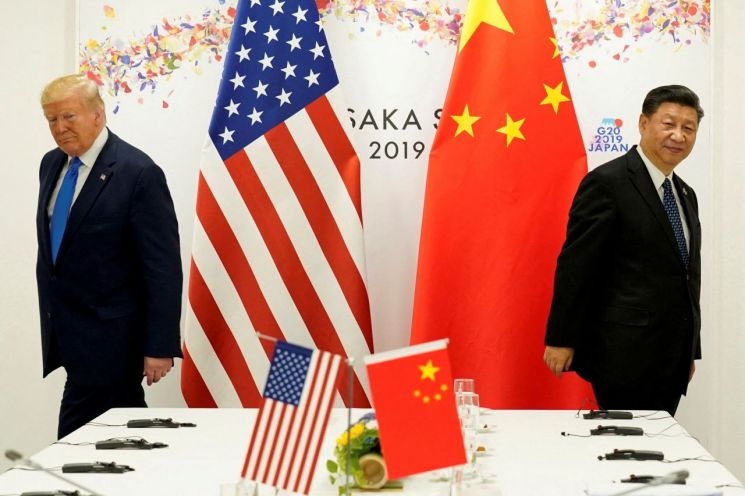
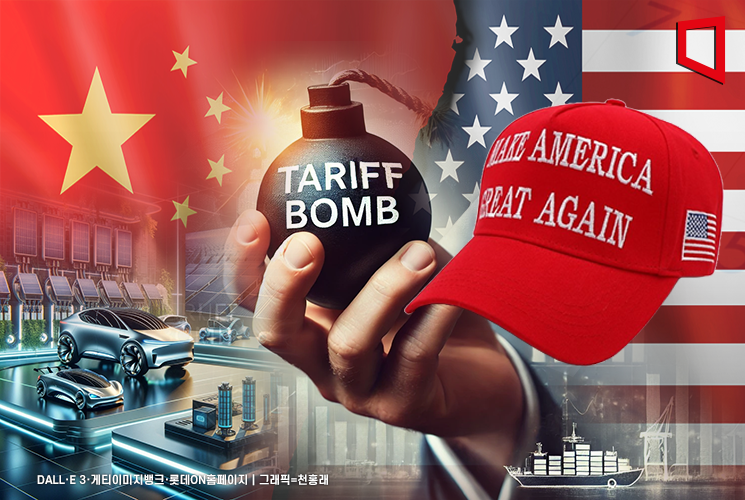
During his presidential campaign, Trump pledged to impose a 60% tariff on Chinese imports. At the end of last month, he announced an additional 10% tariff on China until the drug problem, including fentanyl?referred to as the so-called 'zombie drug'?is resolved.
Typically, the currency of a country subject to tariffs experiences reduced demand in the foreign exchange market, leading to a decline in value. From March 2018 to May 2020, during Trump’s first term, retaliatory tariff measures caused the yuan to depreciate by more than 12% against the dollar. A source said that the People’s Bank of China, the country’s central bank, is even considering the possibility of the yuan falling to 7.5 yuan per dollar in response to trade shocks.
Chinese authorities are interpreted to be allowing the yuan’s value to fall rather than intervening in the market to defend it, aiming to benefit export companies. When the currency depreciates and the exchange rate rises, export prices become cheaper, partially offsetting the impact of tariffs. Additionally, a weaker yuan creates an environment similar to implementing an accommodative monetary policy in China.
In this regard, the People’s Bank of China, which had not issued any specific comments, stated in its self-published Financial News that the yuan exchange rate remains "basically stable" and "solid," forecasting that the yuan will stabilize and strengthen by the end of this year.
A source analyzed, "China allowing yuan depreciation without maintaining exchange rate stability deviates from usual practice," and suggested that rather than publicly revealing a devaluation policy, the People’s Bank of China is likely to give the market more authority in determining the yuan’s value.
Fred Neumann, HSBC’s Chief Asia Economist, pointed out, "Currency adjustment is a policy option that can be used to mitigate the impact of tariffs," but warned, "If used too aggressively, it could provoke backlash from other trade partners, ultimately resulting in outcomes contrary to China’s interests." He explained that if China excessively depreciates the yuan, not only the U.S. but also other trading partners might join in raising tariffs.
Earlier, at the Central Political Bureau meeting held on the 9th, Chinese leadership emphasized boosting domestic demand and stressed the need to "implement a more proactive fiscal policy and appropriately accommodative monetary policy." The market interpreted this as China pivoting its monetary policy to 'accommodative' for the first time in 14 years to stimulate the economy. After the 2008 global financial crisis, the People’s Bank of China adopted a "moderately accommodative monetary policy" stance but shifted to a neutral stance at the end of 2010.
© The Asia Business Daily(www.asiae.co.kr). All rights reserved.
![Clutching a Stolen Dior Bag, Saying "I Hate Being Poor but Real"... The Grotesque Con of a "Human Knockoff" [Slate]](https://cwcontent.asiae.co.kr/asiaresize/183/2026021902243444107_1771435474.jpg)

















