Review of April 2026 Launch
Targeting Corporate Tax, Tobacco Tax, etc.
Foreign media reported on the 11th that the Japanese government is considering starting the tax increase necessary to secure funds for strengthening defense capabilities in April 2026.
According to Kyodo News and NHK, the Japanese government plans to initially impose an additional 4% tax under the name "Special Defense Corporate Tax" (tentative) on corporate tax starting from April 2026.
At the same time, the tax rate on electronic cigarettes will be raised to eliminate the difference with the tax rate on conventional cigarettes, and from April 2027, the tax rates on all cigarettes will be increased in three stages. Income tax will see an additional 1% levy under the name "Special Defense Income Tax" starting from January 2027.
Additionally, the Japanese government is reportedly considering temporarily reducing the tax rate of the Special Reconstruction Income Tax, which is levied for the recovery of areas affected by the Great East Japan Earthquake, by 1% to suppress backlash against the income tax increase.
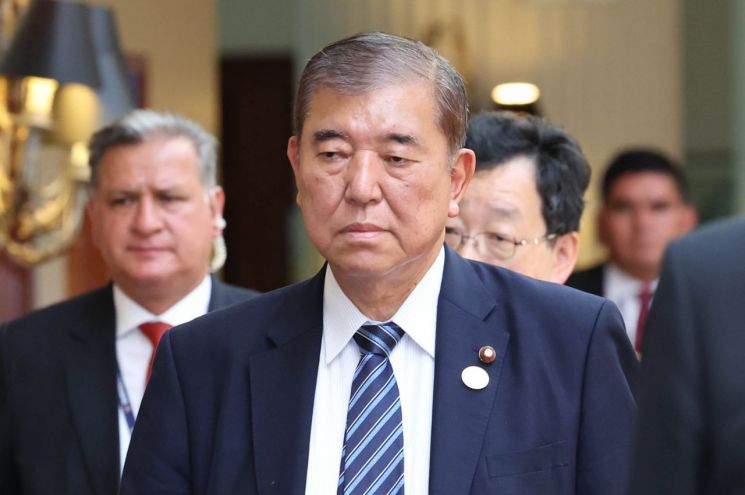
In December 2022, the Japanese government revised the three major security documents and decided to increase the defense-related budget to 2% of the Gross Domestic Product (GDP) in the fiscal year 2027 (April 2027 to March 2028), securing about 43 trillion yen (approximately 407 trillion won) for defense over five years. At that time, it was decided to cover part of the significantly increased defense budget by raising corporate tax, income tax, and tobacco tax, but the timing of the tax increase had not yet been determined.
However, foreign media view that this plan may face opposition from some members of the coalition ruling party Komeito and the third opposition party, the Democratic Party for the People, which is a policy cooperation partner, making the realization of this policy uncertain.
Within Komeito, voices are reportedly emerging that tax increase discussions should be avoided while negotiations are ongoing to raise the exemption threshold for earned income tax, known as the "1.03 million yen wall." The improvement of the 1.03 million yen (approximately 9.74 million won) wall is a policy strongly demanded by the Democratic Party for the People to the ruling party.
© The Asia Business Daily(www.asiae.co.kr). All rights reserved.
![Clutching a Stolen Dior Bag, Saying "I Hate Being Poor but Real"... The Grotesque Con of a "Human Knockoff" [Slate]](https://cwcontent.asiae.co.kr/asiaresize/183/2026021902243444107_1771435474.jpg)















