KCCI Survey on Next Year's Industrial Climate Outlook
Despite increasing trade uncertainties with the inauguration of the second Trump administration next year, an analysis suggests that the semiconductor industry outlook will be bright due to the growth of the artificial intelligence (AI) industry. The shipbuilding industry is also expected to perform well, with orders for energy carriers increasing due to Trump’s fossil fuel revival policies. The automobile sector is forecasted to struggle due to trade risks under the Trump administration and the growth of Chinese industries.
On the 11th, the Korea Chamber of Commerce and Industry (KCCI) announced the results of the "2025 Industry Weather Outlook Survey" reflecting these points. The survey was conducted with 11 major industry associations and organizations.
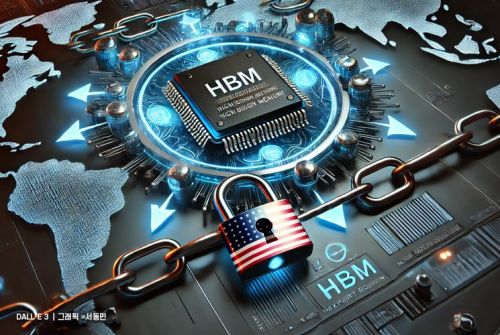
The semiconductor sector was forecasted as "mostly clear" (good). Semiconductors are expected to maintain a strong upward trend driven by continuous investment in AI industry infrastructure such as data centers and servers, and the launch of high value-added semiconductors for AI devices. Although uncertainties remain due to U.S. export restrictions and tariff increases targeting China, a sharp market downturn is not anticipated.
Exports are expected to decline slightly. The Korea Semiconductor Industry Association stated, "This year’s exports are expected to exceed initial estimates, reaching around $139 billion (approximately 198 trillion KRW), a 41% increase from last year. Next year, exports are projected to slightly decrease by 2.9% to $135 billion (approximately 193 trillion KRW)." Capital investment is expected to increase instead. Ko Jong-wan, Director of Strategic Planning at the Semiconductor Industry Association, said, "Global semiconductor capital investment next year is forecasted to rise by 7.9% from this year to $187.2 billion (approximately 267 trillion KRW), supported by major countries’ support measures. Korea is also expected to increase capital investment centered on the Yongin semiconductor cluster."
The display sector was also forecasted as mostly clear. The application of AI functions in smartphones is expected to accelerate replacement demand, and shipments of premium organic light-emitting diode (OLED) TVs are expected to increase. The Korea Display Industry Association said, "Next year’s exports are expected to increase by about 4% from this year to $19.48 billion (approximately 28 trillion KRW)," but added, "The deepening U.S.-China trade dispute triggered by Trump and concerns over the declining market share of domestic panel companies’ clients (such as Apple) in China pose significant downside risks."
Shipbuilding, bio, and machinery sectors were also forecasted as mostly clear. Shipbuilding is expected to see increased orders for energy carriers (tankers, LNG carriers) due to Trump’s fossil fuel revival policies. Cooperation with the U.S. is expected to increase in construction, repair, and ship export sectors. Next year’s ship exports are projected to reach $26.76 billion (approximately 38 trillion KRW), a 9.1% increase from this year. However, potential downside factors include reduced demand for eco-friendly ship replacement due to weakened greenhouse gas emission reduction efforts and concerns over decreased international trade due to U.S. tariff policies.
The bio sector is expected to see increased opportunities for domestic companies to enter the global biosimilar market due to the Trump administration’s drug price reduction policies and encouragement of prescription switching in the European Union (EU) and the U.S. The machinery sector is expected to see a slight increase in exports due to the substitution effect of Chinese products in the U.S. market under Trump’s trade policies and increased global semiconductor capital investment.
The automobile, secondary battery, steel, petrochemical, textile & fashion, and construction sectors were forecasted as "cloudy" (difficult). The automobile sector is expected to face threats from deteriorating trade conditions following Trump’s election and the expansion of the Chinese automobile industry. Next year’s exports are expected to decline by 3.1% to 2.7 million units. The Korea Automobile Mobility Industry Association noted, "There are positive factors such as the elimination of a 5% tariff following the Korea-Philippines Free Trade Agreement (FTA) and the increasing export trend of hybrid vehicles," but added, "Uncertainties are greater due to the possibility of additional tariffs on automobiles and parts with the largest U.S. trade surplus, increased inventories in major countries due to post-COVID pent-up demand exhaustion, and increased localization due to protectionist policies."
The battery (secondary battery) sector’s biggest downside risk is the negative impact on exports caused by low-priced products overproduced in China being sold in major markets such as Europe. China’s battery global market share (excluding China) has surged from 18.2% in 2021 to 38% in the first half of this year, leveraging price competitiveness. However, recent rapid growth in energy storage system (ESS) demand in major countries, resulting in increased orders, and the reflective benefits of high tariffs imposed on China are expected to act as positive factors.
The steel sector is expected to face overlapping negative factors such as concerns over tariffs and import quota reductions under the second Trump administration, sluggish demand in automobile and construction industries, and below-cost export offensives due to oversupply from China. The petrochemical sector is unlikely to see a dramatic market turnaround in the short term due to accumulated new capacity and structural oversupply. The textile & fashion sector is expected to be negatively affected by Trump administration’s high tariffs on China, which may encourage increased dumping of Chinese products in Korea and Southeast Asia. The construction industry is also expected to continue its downturn.
Kang Seok-gu, Head of the KCCI Research Division, said, "Industry concerns are high that intensified U.S.-China trade conflicts, Chinese low-price offensives, and ongoing domestic political instability could further depress overall growth trends," emphasizing, "The National Assembly needs to promptly pass urgent economic bills, including practical diplomatic efforts by the government and support for building advanced industrial infrastructure."
© The Asia Business Daily(www.asiae.co.kr). All rights reserved.
![Clutching a Stolen Dior Bag, Saying "I Hate Being Poor but Real"... The Grotesque Con of a "Human Knockoff" [Slate]](https://cwcontent.asiae.co.kr/asiaresize/183/2026021902243444107_1771435474.jpg)















