Decision on Next Year's Economic Policy Direction
Facing challenges both domestically with sluggish consumption and externally with the threat of high tariffs from the United States, the Chinese government is expected to hold the China Economic Work Conference over two days starting on the 11th to determine the economic policy direction for 2025. Ahead of the conference, at a Central Politburo meeting chaired by President Xi Jinping, keywords such as "more interest rate cuts" and "more proactive fiscal policy" were presented, raising the key question of whether a strong stimulus package that satisfies the market will be introduced. Investors agree that concrete measures and clarity in execution are crucial.
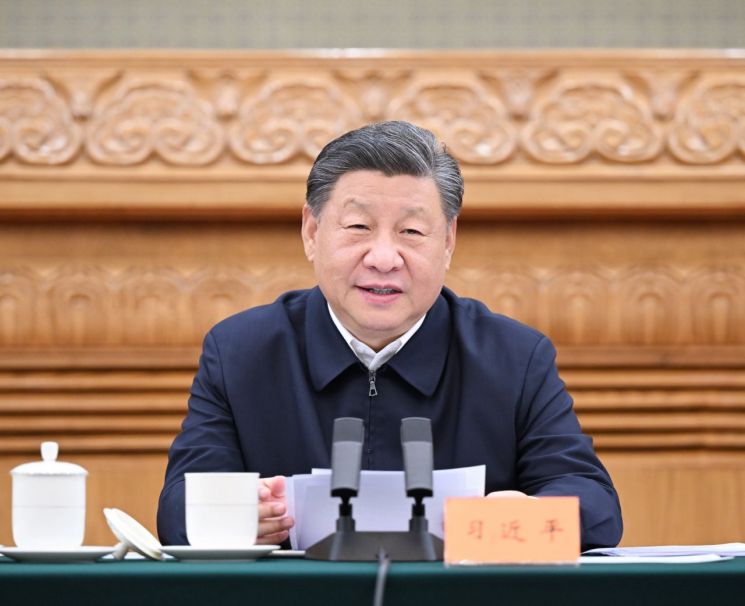
According to reports from foreign media including Bloomberg, China will hold the closed-door Economic Work Conference starting today, attended by President Xi and other top Chinese leaders and senior financial officials. This meeting will concretize and finalize the economic policy direction for next year, which was discussed at the Central Politburo meeting chaired by President Xi on the 9th. Typically, China does not announce the schedule of the Economic Work Conference held in December in advance, confirming the event through the state media "Gongbao" after the meeting concludes. Last year, the conference was held on December 11-12, a few days after the Central Politburo meeting on December 8.
Notably, this conference is drawing attention as it takes place amid heightened external economic uncertainties surrounding China ahead of the inauguration of U.S. President-elect Donald Trump in January next year. The day before, President Xi expressed confidence in achieving this year’s economic growth target and warned that there are "no winners" in the U.S.-China tariff and technology wars. Consequently, it is widely expected that next year’s growth target will be set around 5%, similar to this year. Furthermore, a more aggressive stimulus package, including fiscal support, is anticipated to follow.
The Chinese leadership, at the Central Politburo meeting held before the Economic Work Conference, directly promised to stabilize the sluggish real estate market and stock market while prioritizing consumption stimulation. Particularly regarding monetary policy, the wording shifted from "prudent (穩健, neutral)" to "appropriate easing (適度寬松)," signaling that more interest rate cuts are expected throughout next year. This suggests a policy shift toward monetary easing for the first time in about 14 years. Additionally, the promise of a "more proactive fiscal policy" emphasized the intention to inject more money into the market.
Facing the second term of the Trump administration, which has threatened tariffs as high as 60%, China is preparing with a stimulus package encompassing both fiscal and monetary policies. Robin Singh, an economist at Morgan Stanley, described it as "the most aggressive stimulus tone in a decade." Zhao Xingfeng, chief strategist at Australia and New Zealand Banking Group, noted that the Politburo meeting used "unprecedented expressions," reflecting "strong confidence in the face of Trump’s threats."
Accordingly, market attention is focused on how concretely these policy directions will be defined at this Economic Work Conference, which will finalize next year’s economic policy stance. Bloomberg pointed out that the Chinese leadership added the word "more" to fiscal policy, analyzing that "next year’s fiscal deficit target could be set at 3.5?4% of GDP, higher than usual." However, another Bloomberg article noted that although the Chinese stock market rose after the Politburo meeting, the global markets did not show a clear reaction. This signals that investor expectations for China’s economic recovery remain uncertain.
Mirzal Gunarto, an analyst at Malayan Banking, Malaysia’s largest commercial bank, pointed out, "It is still insufficient to support China’s economic growth, which will be hit by the trade war with the U.S." Charu Chanana, chief investment strategist at Saxo Markets, emphasized, "There is a lack of concrete measures and clarity in execution," adding, "For investors looking to add to their portfolios by year-end, continuous announcements and confirmation of practical and executable measures are important."
Meanwhile, in a speech to the heads of ten major international economic organizations including the International Monetary Fund (IMF), World Bank (WB), and World Trade Organization (WTO) the day before, President Xi criticized U.S. sanctions against China, stating, "Tariff wars, trade wars, and technology wars go against historical trends and economic rules, and there can be no winners." He also reaffirmed his existing stance on maintaining dialogue, saying, "I hope the U.S. will face China directly."
© The Asia Business Daily(www.asiae.co.kr). All rights reserved.
![Clutching a Stolen Dior Bag, Saying "I Hate Being Poor but Real"... The Grotesque Con of a "Human Knockoff" [Slate]](https://cwcontent.asiae.co.kr/asiaresize/183/2026021902243444107_1771435474.jpg)















