Tesla Intraday Hits $409, Nearing All-Time High
GM Halts Funding to Subsidiary Cruise
The fortunes of companies competing in the robotaxi race are diverging. Tesla's stock price is on the verge of an all-time high, buoyed by expectations for the 'Cybercap' and Wall Street optimism, while General Motors (GM) has decided to halt funding for its autonomous driving subsidiary 'Cruise,' effectively announcing its withdrawal from the business. Although there is a dropout in the race to dominate the robotaxi market, competition among big tech companies is expected to intensify.
Last week, Tesla's stock price, which hit a 52-week high after revealing detailed specifications and cost reduction plans for the Cybercap, surged again on the 10th (local time) amid continued Wall Street optimism. Morgan Stanley analyst Adam Jonas predicted that the incoming Donald Trump administration would provide policy support for autonomous driving technology, naming Tesla as the 'Top Pick' in the automotive sector, expecting it to be a beneficiary.
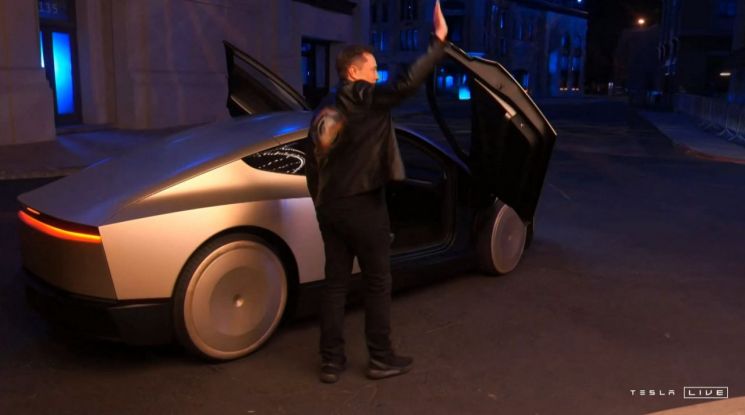
On this news, Tesla's stock closed at $400.99, up 2.87% from the previous day, on the New York Stock Exchange. During the session, it soared to $409.73, setting a new 52-week high. Tesla's stock has been rising for five consecutive days since the 4th and is now close to its all-time closing high of $409.97 recorded in November 2021.
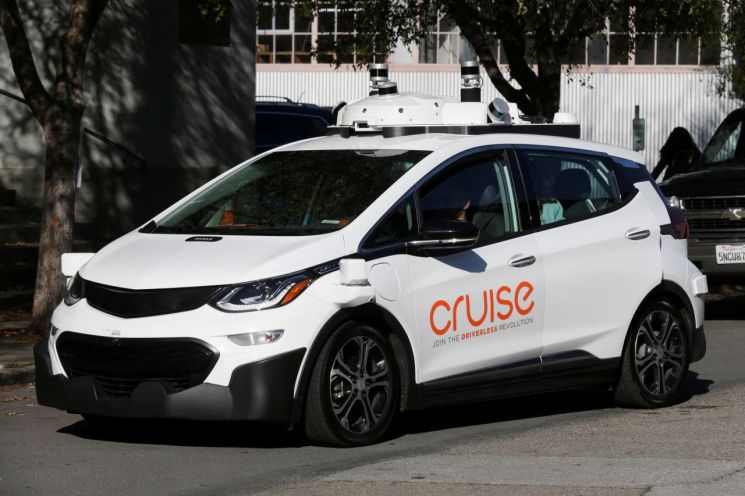
On the other hand, competitor GM announced in a statement that it would stop funding Cruise's robotaxi business, effectively withdrawing from the venture. GM explained, "This decision was made considering the significant time and resources required to expand the business and the increasingly fierce competition in the robotaxi market." However, it added that it plans to continue developing advanced driver safety technologies, including autonomous driving, and intends to increase its stake in Cruise from 90% to 97%.
Previously, GM acquired Cruise for $1 billion in 2016 and has since invested over $10 billion (approximately 14 trillion won) solely in robotaxi development. Last year, the business showed promise after obtaining permission to operate the autonomous shuttle 'Origin' in San Francisco, but production has been indefinitely delayed following a series of accidents. Bloomberg highlighted GM's decision as a "retreat from a market that caused huge costs and reputational damage," noting that massive development costs, safety incidents, and regulatory sanctions are burdens weighing on robotaxi companies.
Although a leading automaker has dropped out of the 'robotaxi race,' competition is expected to become even fiercer. John Murphy, an analyst at Bank of America (BoA), assessed that Tesla is close to a stage where it can safely operate robotaxi services and could raise over $50 billion (approximately 72 trillion won) through capital increases. Earlier, Tesla CEO Elon Musk announced plans to start robotaxi services in California and Texas as early as next year.
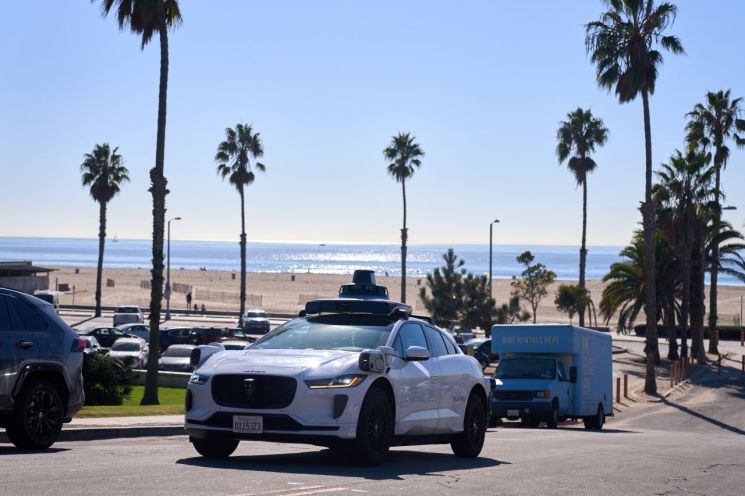
Currently, Google's autonomous driving subsidiary 'Waymo,' the only company operating robotaxi services commercially in the U.S., announced plans to expand its service to Miami, Florida, by 2026, following its operations in the western U.S. Ensuring the safety of robotaxi operations in the eastern U.S., where rainfall is heavier and weather changes are more severe compared to the West, is considered another challenge for the autonomous driving industry. Google's parent company Alphabet has pledged to invest an additional $5 billion (approximately 7 trillion won) in Waymo over several years. Additionally, 'Wave,' backed by SoftBank, and 'Zoox,' owned by Amazon, are testing robotaxis in San Francisco.
© The Asia Business Daily(www.asiae.co.kr). All rights reserved.
![Clutching a Stolen Dior Bag, Saying "I Hate Being Poor but Real"... The Grotesque Con of a "Human Knockoff" [Slate]](https://cwcontent.asiae.co.kr/asiaresize/183/2026021902243444107_1771435474.jpg)

















