Unrest Spreads in Financial Markets Following Failed National Assembly Impeachment
FSS Strengthens Communication by Responding in Real Time to Overseas Institutions
Government Initiates Proactive Communication with Diplomatic and Economic Authorities Led by MoEF
Amid growing concerns in the financial markets following President Yoon Suk-yeol's emergency martial law situation and the National Assembly's failed impeachment attempt, economic and financial authorities are strengthening communication with foreign investors and overseas diplomatic and economic authorities, centered on the Ministry of Economy and Finance. In particular, the Financial Supervisory Service (FSS) is actively maintaining communication by directly responding to inquiries from overseas financial and supervisory authorities.
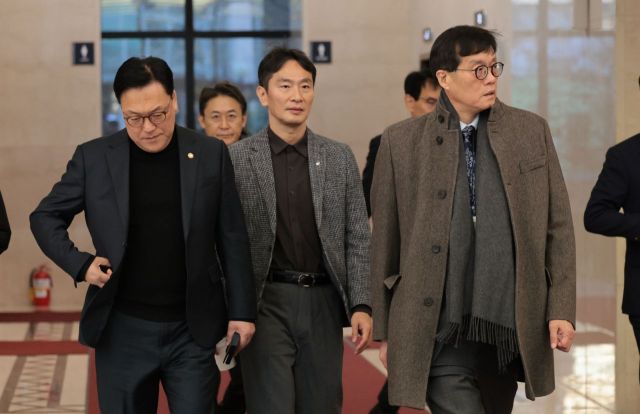
According to a comprehensive report by Asia Economy on the 11th, the FSS has been confirmed to have strengthened communication by responding in real-time to inquiries from overseas institutions following the martial law situation. When global diplomatic and financial authorities, as well as investors, investment institutions, and investment banks (IBs), ask about the economic and financial impact of the emergency martial law, the FSS conveys its commitment to implementing market stabilization policies and addressing current issues.
The economic and financial authorities are making every effort to enhance communication channels because political uncertainty is increasing, deepening negative views on Korean won assets. The KOSPI index recently fell to 2360.58, marking a new yearly low on a closing basis. The won-dollar exchange rate also continued its sharp rise, closing at 1,437.0 won, the highest level in 2 years and 1 month.
An FSS official explained, “What they are most curious about is the overall stability of the economy and financial markets, including the capital market,” adding, “Not only the United States but the entire world is paying attention to our country's economy and financial markets.” The official further stated, “We are delivering the message that Korea has experience in overcoming difficulties well,” and added, “There are concerns about whether current issues such as the Value-Up Program will proceed properly, so the financial authorities aim to guide that they will do their best to consistently implement policies.”
Recently, the FSS has significantly expanded the role of its overseas offices to strengthen global communication channels. Since immediately after the martial law situation, overseas offices have been monitoring local procurement and capital market conditions 24 hours a day and relaying global evaluations of our market back to Korea. In this process, a hotline has been established to report any unusual findings to the Commissioner in real-time.
Separately from the FSS, the government has unified the ministry responsible for global communication related to financial markets under the Ministry of Economy and Finance to proactively respond to international concerns. A government official stated, “The Ministry of Economy and Finance handles international finance, the Financial Services Commission manages domestic finance, and communication with foreign investors is overseen by the Ministry of Economy and Finance.”
Accordingly, the government plans to send a letter under the name of Deputy Prime Minister and Minister of Economy and Finance Choi Sang-mok to international credit rating agencies, international financial organizations, overseas investors, finance ministers of major countries, and international IBs at the emergency macroeconomic and financial issues meeting (F4 meeting). The government also announced plans to dispatch international financial cooperation ambassadors to international organizations and major countries to minimize the impact on external credibility.
Deputy Prime Minister Choi also met with Koichi Mizushima, the Japanese Ambassador to Korea, to work on resolving uncertainties arising from the emergency martial law situation and the impeachment political turmoil. Choi said, “Given the recent political situation, I believe there are considerable concerns from Korean companies in Korea as well as from their home countries,” adding, “We will continue policy responses as usual to prevent foreign companies’ investment and economic activities from shrinking, and we will spare no effort to maintain trust and promote economic cooperation between the two countries.”
Financial Services Commission Chairman Kim Byung-hwan also met with the chairmen of the five major financial holding companies (KB, Shinhan, Hana, Woori, NH Nonghyup) at the ‘Expanded Financial Situation Review Meeting’ and said, “You are at the forefront in terms of external credibility,” urging them to “actively use overseas networks such as foreign financial companies and investors to promote not only the stability of each holding company but also the resilience of our financial system.” He also stated that financial policy issues such as the Value-Up Program and the establishment of a short-selling system will be consistently pursued according to the original schedule and plan. FSS Commissioner Lee Bok-hyun also holds daily financial situation review meetings and said, “We will consistently implement key policies necessary to stabilize investment sentiment, such as capital market advancement measures and the abolition of the financial investment tax, while strengthening communication with overseas investors and global IBs and actively explaining our commitment to capital market advancement.”
© The Asia Business Daily(www.asiae.co.kr). All rights reserved.
![Clutching a Stolen Dior Bag, Saying "I Hate Being Poor but Real"... The Grotesque Con of a "Human Knockoff" [Slate]](https://cwcontent.asiae.co.kr/asiaresize/183/2026021902243444107_1771435474.jpg)















